Whole-Home Surge Protection — the short answer
Whole-home surge protection adds a device at the panel that helps limit voltage spikes before they travel through household circuits to electronics and appliances. VoltReach USA connects homeowners with independent local electricians to discuss whether it fits their home. Below: the signs that point to this job, how the work itself runs, and what shapes its scale.
A power surge is a brief spike in voltage above the level your home wiring and devices are built to use. Some surges are large and obvious, such as those linked to lightning or utility switching, while many are small, frequent, and invisible, generated inside the home when large appliances cycle on and off. A single big event can damage equipment outright, while repeated smaller spikes can wear on sensitive electronics over time. Modern homes carry more electronics than ever: computers, televisions, kitchen appliances with digital controls, heating and cooling systems, washers, and chargers all contain boards and components that do not respond well to voltage they were not designed for.
Whole-home surge protection addresses the problem at the point where power enters and spreads through the home: the electrical panel. A surge protective device installed there watches the incoming supply and reacts in a fraction of a second when voltage rises sharply, diverting excess energy away from household circuits. It does not make a home immune to every event, and a direct lightning strike can overwhelm any protective device, but panel-level protection reduces the size of spikes that reach your wiring and everything plugged into it. That is the key difference from a plug-in strip, which guards only the items connected to that one strip and does nothing for hardwired equipment such as furnaces, well pumps, or built-in appliances.
Homeowners usually consider this protection after a scare or a loss: a storm that took out a television, a utility event that damaged a control board, or a new investment in equipment they want to look after. It is also a natural topic during other panel work, a renovation, or the installation of equipment with sensitive electronics, such as a heat pump or a home EV charger. Thinking in layers is the practical approach. Panel protection handles the whole system at the entry point, and point-of-use protection can still guard especially sensitive or valuable items at the outlet. The two work together rather than competing, and an electrician can explain how that layering applies to the way your home is actually set up.
VoltReach USA is a referral service and does not install equipment itself. Through the service, you can connect with an independent local electrician who can look at your panel, talk about the surges your home is exposed to, and explain what a panel-mounted device would and would not do in your situation. That conversation should be grounded in your panel's condition, space, and configuration, because installation details vary from home to home. You will come away understanding where spikes come from, what protection at the panel covers, and how it pairs with the strips or outlet devices you may already own, so any decision you make is based on a clear picture rather than on fear after a storm.
Signs you could benefit from whole-home surge protection
- You have lost or damaged electronics or appliance controls after a storm, an outage, or power returning to the home.
- Your home contains a growing amount of sensitive equipment, such as computers, entertainment systems, smart devices, and appliances with digital control boards.
- Lights dim briefly when large appliances start, suggesting frequent internal voltage changes as motors and compressors cycle on and off.
- Important equipment is hardwired rather than plugged in, such as a furnace, heat pump, well pump, or water heater, so plug-in strips cannot protect it.
- You rely on home office equipment, medical devices, or network gear that you want shielded at the panel as well as at the outlet.
- Your area sees regular thunderstorms, utility switching, or brief outages followed by power returning suddenly to the whole home at once.
- You are planning panel work, a renovation, or new equipment with electronic controls, making it a natural moment to discuss protection at the source.
- Plug-in protectors in the home are old, have warning lights showing, or cover only a small share of what actually runs on household circuits.
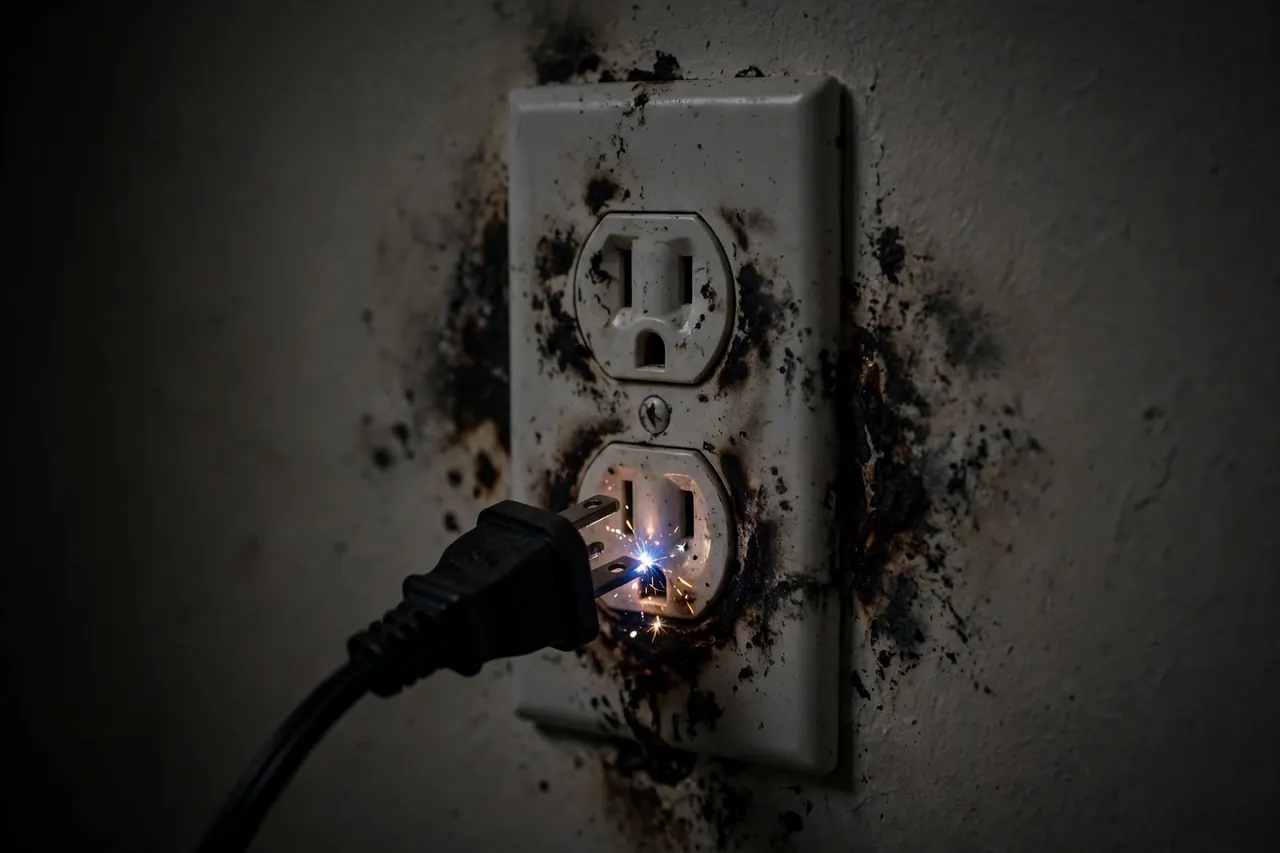 PROBLEM
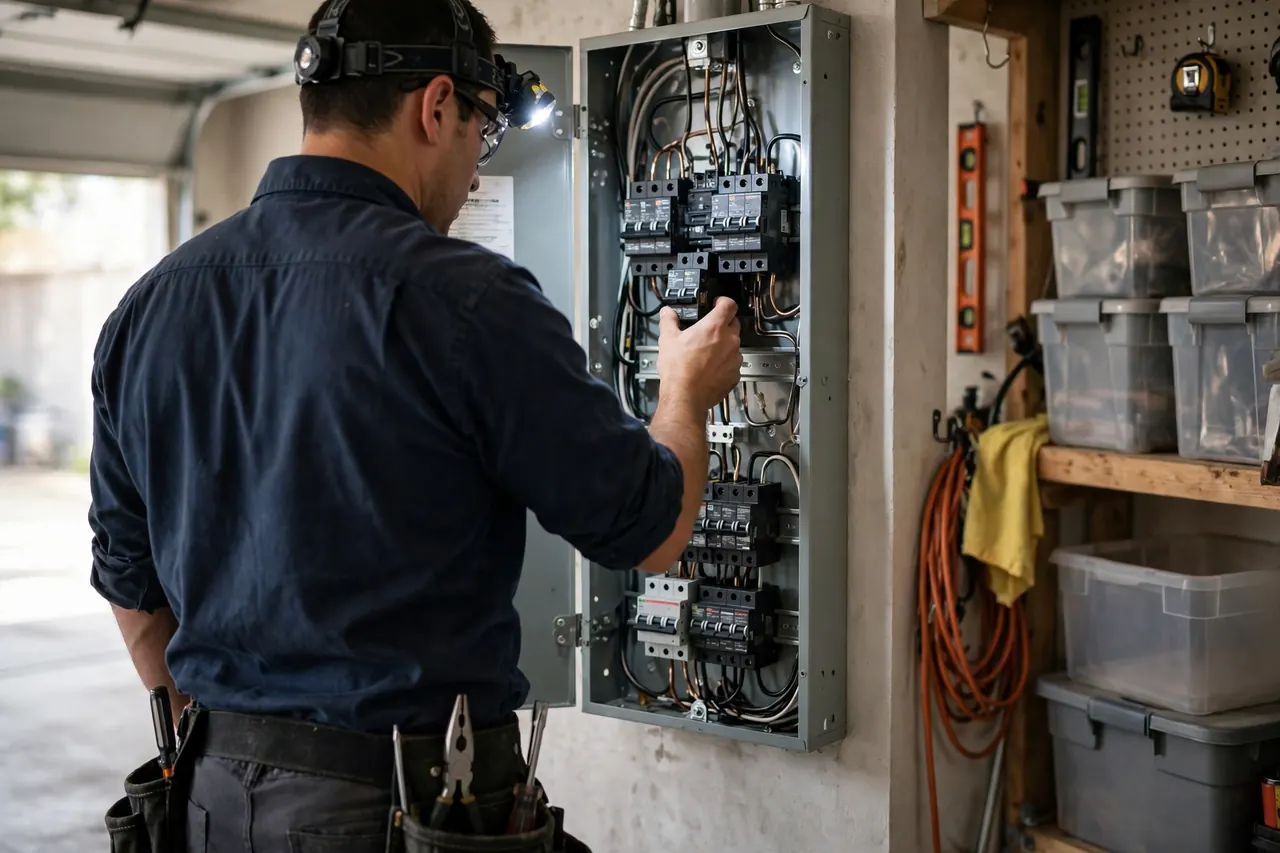 SOLUTION
How whole-home surge protection works
- Start by listing the equipment you most want to protect, including hardwired systems, so the conversation covers the whole home rather than a few outlets.
- Note any past surge damage or unexplained electronics failures, since that history helps the electrician understand the exposure your home has had.
- Share details about your panel, its age, and any planned electrical work when you contact VoltReach USA about surge protection for your home.
- The service connects you with an independent local electrician, who inspects the panel to confirm its condition, available space, and configuration.
- The electrician explains how a panel-mounted surge protective device works in your setup, what it covers, and how it pairs with point-of-use protection.
- If you decide to proceed, the device is installed at the panel and connected as the equipment and panel require, then checked for correct operation.
- The electrician shows you the status indicators to watch and explains what a changed indicator means, so you know how to monitor the device over time.
Plug-in surge protectors vs Whole-home surge protection
Plug-in surge protectors
- Protects only items plugged into that strip
- Covers one outlet location at a time
- Cannot guard hardwired equipment
- Wears out quietly as events are absorbed
- Useful second layer for delicate electronics
Whole-home surge protection
- Installed at the panel for all circuits
- Acts on surges before they spread indoors
- Covers hardwired systems like furnaces
- Status indicators show protection at work
- Forms the first layer of a layered setup
What shapes the job
- The condition and capacity of your panel shape the work, because the device needs a sound panel with a suitable connection point and room to mount correctly.
- How your home is supplied matters, including the service configuration at the panel and whether there are subpanels serving areas such as a garage or addition.
- The equipment you want to protect influences the discussion, since homes with extensive electronics and hardwired systems approach protection differently from simpler setups.
- Local exposure plays a role, including storm patterns, the condition of the supply in your area, and how often outages and restorations occur at your home.
- Whether other electrical work is planned at the same time affects sequencing, such as panel repairs, new circuits, or equipment with sensitive electronic controls.
- Existing point-of-use protection is part of the picture, because layering panel and outlet protection works when the two are chosen to complement each other.
- Indicator monitoring and eventual device replacement are part of ownership, since a surge device can wear through the events it absorbs and needs checking over time.
Panel protection and plug-in protection, working in layers
Understanding where surges come from makes protection decisions clearer. External surges enter from the supply side. Lightning near lines, utility switching, and power returning after an outage can all push a spike into the home through the service connection. Internal surges start inside, when equipment with motors or compressors, such as air conditioners, refrigerators, and washers, switches on and off and briefly disturbs voltage on household circuits. No single device erases every spike, which is why electricians talk about layers and about reducing energy rather than promising total immunity. A panel-mounted device is the first layer because it sits where power divides into every circuit in the home. It reacts to incoming spikes and trims them down before they spread, which also reduces what reaches hardwired equipment that no outlet strip can ever guard. Smaller spikes generated inside the home are then a much more manageable problem for the wiring and for point-of-use devices at individual outlets.
Plug-in surge strips still have a real role, and it helps to know its limits. A strip protects only what is plugged into it, only on that one outlet, and only while the strip itself is in good condition. Strips wear out through the events they absorb, and many keep passing power long after their protective parts are spent, sometimes with only a small indicator light to tell you. They also do nothing for the furnace, the well pump, the built-in microwave, or any equipment connected directly to household wiring. Whole-home protection covers the system those appliances belong to. Used together, the panel device handles large incoming events and the strips refine protection for delicate electronics such as computers and entertainment gear. An electrician can help you judge which items in your home merit that second layer and which are adequately covered at the panel alone, based on what the equipment is and how it connects.
Setting realistic expectations is part of a good installation conversation. A surge protective device responds in a tiny fraction of a second and diverts excess energy, but it cannot stop a direct lightning strike's full force, and it does not correct other power quality issues such as sustained low voltage or a lost neutral, which are separate problems with separate handling. What it does is reduce the everyday and storm-related spikes that damage boards, shorten equipment life, and cause puzzling failures that seem to come from nowhere. After installation, the device's indicator becomes part of your awareness, much like a filter reminder on a heating system. If an indicator shows the device has absorbed a major event or reached the end of its protective life, that is the time to discuss replacement. Thinking of surge protection as maintained equipment, rather than a one-time purchase to forget, is what keeps the protection real over the years your electronics depend on it.
Questions about whole-home surge protection
How is whole-home protection different from a power strip?
Can surge protection stop lightning damage completely?
Do I still need plug-in protectors if I install whole-home protection?
How do I know if my surge device is still working?
When is a good time to add whole-home surge protection?
Find whole-home surge protection in your city
Alabama: Birmingham, Huntsville, Mobile, Montgomery, Tuscaloosa, Daphne–Fairhope, Auburn, Decatur, Florence–Muscle Shoals, Dothan
Alaska: Anchorage
Arizona: Phoenix, Tucson, Prescott, Lake Havasu City, Yuma, Flagstaff
Arkansas: Little Rock, Fayetteville–Springdale–Rogers, Fort Smith
California: Los Angeles, Riverside–San Bernardino, San Francisco, San Diego, Sacramento, San Jose, Fresno, Bakersfield, Oxnard–Ventura, Stockton, Modesto, Santa Rosa, Visalia, Vallejo, Santa Barbara, Salinas, Merced, San Luis Obispo, Santa Cruz, Chico, Yuba City, Redding, El Centro, Hanford
Colorado: Denver, Colorado Springs, Greeley, Fort Collins, Boulder, Pueblo, Grand Junction
Connecticut: Hartford, Bridgeport–Stamford, New Haven, Waterbury, Norwich–New London
Delaware: Dover
District of Columbia: Washington
Florida: Miami, Tampa, Orlando, Jacksonville, North Port–Sarasota, Cape Coral–Fort Myers, Lakeland, Daytona Beach, Palm Bay–Melbourne, Port St. Lucie, Pensacola, Ocala, Naples, Tallahassee, Gainesville, Crestview–Fort Walton Beach, Panama City, Punta Gorda, Sebastian–Vero Beach, Homosassa Springs, The Villages
Georgia: Atlanta, Augusta, Savannah, Columbus, Macon, Gainesville, Athens, Warner Robins, Valdosta, Dalton, Albany
Idaho: Boise, Coeur d'Alene, Idaho Falls
Illinois: Chicago, Peoria, Rockford, Champaign, Springfield, Bloomington
Indiana: Indianapolis, Fort Wayne, South Bend, Evansville, Lafayette, Elkhart, Terre Haute, Bloomington
Iowa: Des Moines, Davenport, Cedar Rapids, Iowa City, Waterloo, Sioux City
Kentucky: Louisville, Lexington, Bowling Green
Louisiana: New Orleans, Baton Rouge, Lafayette, Shreveport, Slidell, Lake Charles, Monroe, Houma, Alexandria
Maryland: Baltimore, Hagerstown, Lexington Park
Massachusetts: Boston, Worcester, Springfield, Barnstable Town, Amherst
Michigan: Detroit, Grand Rapids, Lansing, Flint, Ann Arbor, Kalamazoo, Saginaw, Muskegon, Jackson, Traverse City, Monroe, Niles
Minnesota: Minneapolis–St. Paul, Duluth, Rochester, St. Cloud
Mississippi: Jackson, Gulfport–Biloxi, Hattiesburg
Missouri: St. Louis, Kansas City, Springfield, Columbia, Joplin, Jefferson City
Montana: Billings
New Hampshire: Manchester
New Jersey: Trenton, Atlantic City, Vineland
New Mexico: Albuquerque, Las Cruces, Santa Fe
New York: New York, Buffalo, Rochester, Albany, Poughkeepsie, Syracuse, Utica, Binghamton, Kingston
North Carolina: Charlotte, Raleigh, Greensboro, Winston-Salem, Durham, Wilmington, Asheville, Fayetteville, Hickory, Jacksonville, Burlington, Greenville, Rocky Mount
North Dakota: Fargo
Ohio: Cincinnati, Columbus, Cleveland, Dayton, Akron, Toledo, Youngstown, Canton
Oklahoma: Oklahoma City, Tulsa
Oregon: Portland, Salem, Eugene, Bend, Medford
Pennsylvania: Philadelphia, Pittsburgh, Allentown, Harrisburg, Scranton, Lancaster, York, Reading, Erie, Chambersburg, State College, Lebanon
Rhode Island: Providence
South Carolina: Greenville, Charleston, Columbia, Myrtle Beach, Spartanburg, Hilton Head Island, Florence
South Dakota: Sioux Falls, Rapid City
Tennessee: Nashville, Memphis, Knoxville, Chattanooga, Clarksville, Kingsport, Johnson City, Jackson
Texas: Dallas–Fort Worth, Houston, San Antonio, Austin, McAllen, El Paso, Killeen–Temple, Corpus Christi, Brownsville, Beaumont, Lubbock, Waco, Longview, College Station, Laredo, Amarillo, Tyler, Midland, Abilene, Odessa, Sherman–Denison, Wichita Falls, Texarkana
Utah: Salt Lake City, Provo, Ogden, St. George, Logan
Vermont: Burlington
Virginia: Virginia Beach–Norfolk, Richmond, Roanoke, Lynchburg, Charlottesville, Blacksburg, Winchester
Washington: Seattle, Spokane, Kennewick, Olympia, Bremerton, Yakima, Bellingham
West Virginia: Huntington, Charleston, Morgantown
Wisconsin: Milwaukee, Madison, Green Bay, Appleton, Racine, Eau Claire, Oshkosh, La Crosse, Kenosha, Janesville
Need whole-home surge protection help?
One call routes you to an independent local electrician who handles this work in your area.