Lighting Installation — the short answer
Lighting installation covers recessed lights, pendants, chandeliers, under-cabinet and bathroom fixtures, outdoor lighting, and the switches and dimmers that control them, planned around how each room is used. VoltReach USA connects homeowners with independent local electricians who design and install home lighting. Below: the signs that point to this job, how the work itself runs, and what shapes its scale.
Lighting shapes how every room in your home feels and how well it works, yet in many houses it is an afterthought left over from the original construction: one fixture in the center of the ceiling, a switch by the door, and shadows exactly where you need to see. Lighting installation covers the full range of changing that picture, from recessed lights and pendants to under-cabinet task lighting, bathroom fixtures, chandeliers, outdoor and landscape lighting, and the dimmers and switches that control them. Done thoughtfully, new lighting makes a kitchen easier to cook in, a bathroom mirror honest, and a front path welcoming after dark.
The planning matters as much as the fixtures. Good lighting is layered: comfortable general light for the room, focused light on the surfaces where work happens, and softer accent light that gives a space depth. It is also matched to the room's real life, because the office that hosts video calls, the living room that hosts movie nights, and the hallway a child crosses at night all ask for different things. An electrician can help translate that into fixture types, spacing, and switching, and can spot the practical constraints, joist positions, existing wiring, circuit capacity, before positions are committed and ceilings are opened.
There is also a safety and workmanship side that goes beyond picking attractive fixtures. Fixtures must be supported by boxes built for their weight, connections made in accessible junction boxes, and circuits protected appropriately, with ground-fault protection where fixtures and outlets serve wet areas. Outdoor fixtures need weather specifications suited to their exposure. Older homes add their own wrinkle: cloth-insulated wiring, crowded boxes, and switch locations without a neutral wire can all surface during lighting work, and a professional will flag them rather than bury them. Quality installation is invisible in the finished room, and that is the point.
VoltReach USA is a referral service, not an electrical company, and it does not install lighting itself. We connect homeowners with independent local electricians who can look over your rooms in person, propose a lighting plan in plain language, and install the fixtures and controls you choose together. Whether the project is a single statement fixture over the dining table or a whole-home update, this page explains the signs that a room's lighting deserves attention, how installation typically proceeds, and the factors that shape the work in your home.
Signs your lighting could work better
- Rooms rely on a single central ceiling fixture, leaving work surfaces, corners, and reading chairs in shadow while the middle of the room is overlit.
- Kitchen counters sit in your own shadow because the only light source is behind you, making prep work and cleaning harder than they should be.
- Fixtures are visibly dated, damaged, flickering, or fitted with bulbs that no longer suit the room, and replacements keep being postponed because the mounting or wiring looks complicated.
- Bathrooms have harsh or poorly placed light at the mirror, so faces are shadowed or washed out, and there is no softer option for nighttime use.
- There are no dimmers anywhere, so living spaces are either fully bright or fully dark, with nothing between for dining, conversation, or watching a film.
- Hallways, stairs, porches, or paths are dim enough to feel unsafe at night, and guests have to pick their way to your front door.
- You are renovating a kitchen, bathroom, or basement and want the lighting planned as part of the project rather than patched in afterward.
- Closets, laundry rooms, garages, and work areas have weak or bare-bulb lighting that makes everyday tasks slower and less comfortable than they need to be.
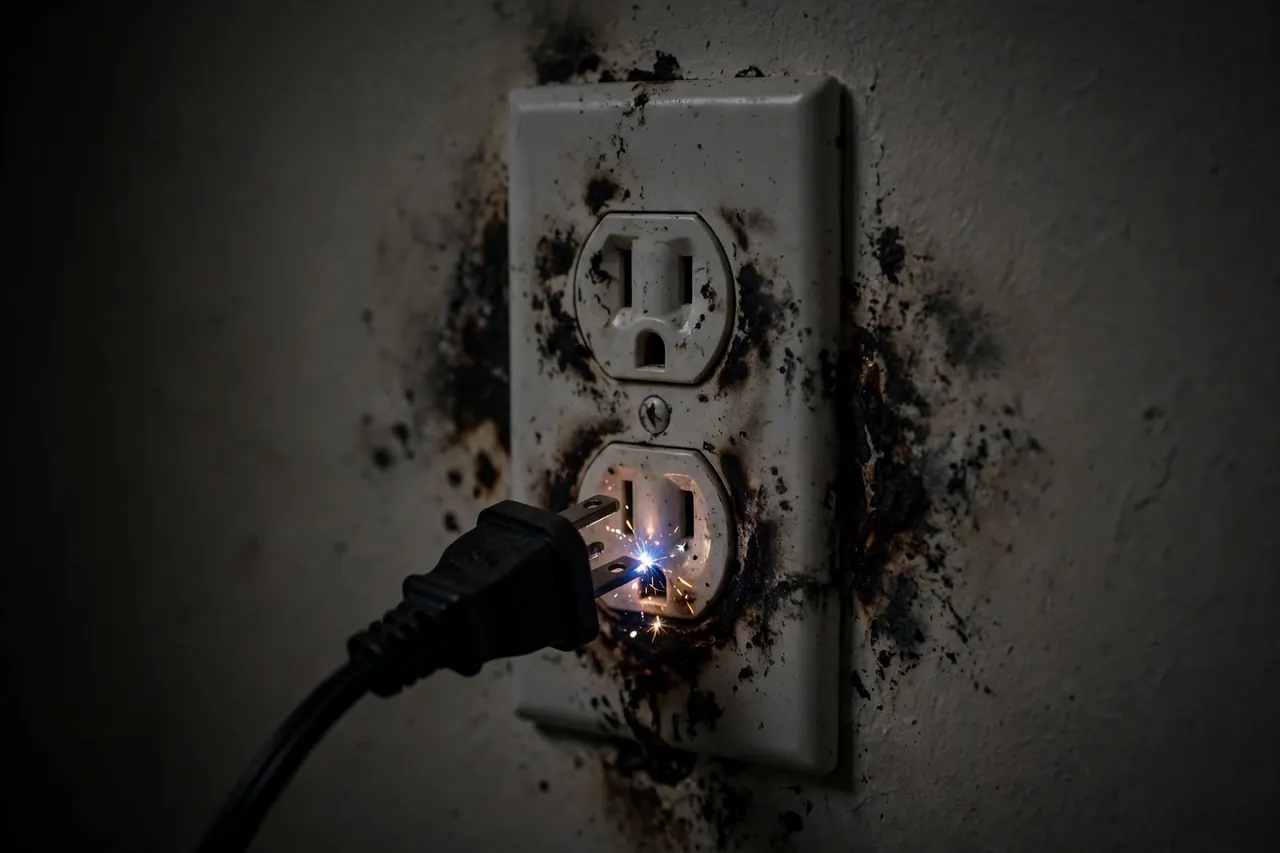 PROBLEM
 SOLUTION
How lighting installation works
- The project starts with a walkthrough of the rooms involved, where you and the electrician talk about how each space is used, what feels too dark or too harsh, and what mood and function the new lighting should serve.
- From that conversation comes a layout: fixture types and positions, spacing for recessed lights, which lights group together on each switch, and where dimmers or other controls make sense.
- You choose fixtures and controls with compatibility in mind, confirming that dimmers suit the LED fixtures selected and that heavy fixtures have proper support planned.
- You and the electrician agree on the scope in writing, including any new circuits, switch changes, or access openings in ceilings and walls, and how patching will be handled.
- The electrician explains any local permitting or inspection steps that apply to the scope, particularly where new circuits are added, and the installation is scheduled.
- Installation day covers the wiring, boxes, and fixtures: cable is run, supports are fitted, fixtures and controls are installed and connected, and circuits are checked as work proceeds.
- The job finishes with testing and adjustment: every switch and dimmer is tried, recessed trims and fixture aiming are set, bulbs or modules are confirmed, and you are shown how the new controls behave before the electrician leaves.
What shapes the job
- The number and type of fixtures set the scale of the project, from a handful of pendants and a dimmer to a full floor of recessed lights with new switching throughout.
- Ceiling and attic access strongly affect how new fixture locations and cable runs are handled, since an attic above makes adding recessed lights far simpler than a finished floor overhead.
- Existing wiring condition matters in older homes, where new fixtures may uncover small boxes, older cable, or switch loops without a neutral that limit control choices until addressed.
- Whether new circuits are needed, or existing circuits can carry the added fixtures, depends on the load already on those circuits and what the lighting plan adds to them.
- Fixture selection itself plays a role: integrated LED units, retrofit trims, chandeliers, and specialty fixtures each have different mounting, box, and support requirements, especially heavy fixtures that need proper bracing.
- Controls add scope in a good way: dimmers matched to the fixtures, three-way switching, occupancy sensors, or smart controls each involve specific wiring and compatibility checks.
- Outdoor work brings its own factors, including weatherproof fixtures and boxes, ground-fault protection for exterior circuits, and trenching or conduit where landscape lighting runs through the yard.
Designing light in layers that work
Good lighting design works in layers, and understanding the layers helps you talk with an electrician about any room. Ambient lighting is the general fill that lets you move through a space comfortably, often from ceiling fixtures or recessed lights. Task lighting is focused light where work happens: over a kitchen counter, a reading chair, a bathroom mirror, a workbench. Accent lighting adds depth and draws the eye, highlighting artwork, shelving, architectural details, or landscaping. Most rooms feel wrong when one layer is asked to do all three jobs, which is exactly the condition of the classic single ceiling fixture. A lighting plan assigns each layer its role, then chooses fixtures, spacing, and switching to match, so the room can be bright for cleaning and soft for the evening with the same installed equipment.
Recessed lighting has its own set of practical rules. Spacing is planned from ceiling height and the fixture's beam spread so pools of light overlap evenly instead of leaving bright spots and dark gaps. Placement respects joists, ducts, and plumbing hidden in the ceiling, which is one reason a pre-installation look matters. In ceilings below insulated attics, fixtures need a specification that allows insulation contact, and in kitchens and baths, steam and splashes argue for trims suited to damp locations. LED recessed fixtures are often sealed units rather than bulbs in cans, which affects how a future failure is handled: the module or trim is replaced as a unit. Your electrician can explain the type being installed and how it is serviced later, before anything goes into the ceiling.
Switching and controls quietly decide whether a good layout gets used well. A single switch that turns on every light in a room at full brightness wastes the point of layering, while separate controls for ambient and task groups, dimmers where they suit, and three-way switches at both ends of a hall or stairway make the system natural to live with. Smart controls add scheduling, remote control, and scenes, but they depend on compatible wiring at the switch box, including a neutral conductor that older switch loops may not have. That is a common discovery in older homes and one an electrician can check before controls are chosen. Planning switches with the same care as fixtures is what turns a lighting installation from new hardware into a room that works better every day.
Questions about lighting installation
How should kitchen lighting be planned so it actually helps with cooking?
Can any dimmer be used with LED lights?
Can recessed lights be added to a ceiling that is already finished?
I want smart lighting controls. Does my older home's wiring support them?
What outdoor lighting should a home have, and where?
Find lighting installation in your city
Alabama: Birmingham, Huntsville, Mobile, Montgomery, Tuscaloosa, Daphne–Fairhope, Auburn, Decatur, Florence–Muscle Shoals, Dothan
Alaska: Anchorage
Arizona: Phoenix, Tucson, Prescott, Lake Havasu City, Yuma, Flagstaff
Arkansas: Little Rock, Fayetteville–Springdale–Rogers, Fort Smith
California: Los Angeles, Riverside–San Bernardino, San Francisco, San Diego, Sacramento, San Jose, Fresno, Bakersfield, Oxnard–Ventura, Stockton, Modesto, Santa Rosa, Visalia, Vallejo, Santa Barbara, Salinas, Merced, San Luis Obispo, Santa Cruz, Chico, Yuba City, Redding, El Centro, Hanford
Colorado: Denver, Colorado Springs, Greeley, Fort Collins, Boulder, Pueblo, Grand Junction
Connecticut: Hartford, Bridgeport–Stamford, New Haven, Waterbury, Norwich–New London
Delaware: Dover
District of Columbia: Washington
Florida: Miami, Tampa, Orlando, Jacksonville, North Port–Sarasota, Cape Coral–Fort Myers, Lakeland, Daytona Beach, Palm Bay–Melbourne, Port St. Lucie, Pensacola, Ocala, Naples, Tallahassee, Gainesville, Crestview–Fort Walton Beach, Panama City, Punta Gorda, Sebastian–Vero Beach, Homosassa Springs, The Villages
Georgia: Atlanta, Augusta, Savannah, Columbus, Macon, Gainesville, Athens, Warner Robins, Valdosta, Dalton, Albany
Idaho: Boise, Coeur d'Alene, Idaho Falls
Illinois: Chicago, Peoria, Rockford, Champaign, Springfield, Bloomington
Indiana: Indianapolis, Fort Wayne, South Bend, Evansville, Lafayette, Elkhart, Terre Haute, Bloomington
Iowa: Des Moines, Davenport, Cedar Rapids, Iowa City, Waterloo, Sioux City
Kentucky: Louisville, Lexington, Bowling Green
Louisiana: New Orleans, Baton Rouge, Lafayette, Shreveport, Slidell, Lake Charles, Monroe, Houma, Alexandria
Maryland: Baltimore, Hagerstown, Lexington Park
Massachusetts: Boston, Worcester, Springfield, Barnstable Town, Amherst
Michigan: Detroit, Grand Rapids, Lansing, Flint, Ann Arbor, Kalamazoo, Saginaw, Muskegon, Jackson, Traverse City, Monroe, Niles
Minnesota: Minneapolis–St. Paul, Duluth, Rochester, St. Cloud
Mississippi: Jackson, Gulfport–Biloxi, Hattiesburg
Missouri: St. Louis, Kansas City, Springfield, Columbia, Joplin, Jefferson City
Montana: Billings
New Hampshire: Manchester
New Jersey: Trenton, Atlantic City, Vineland
New Mexico: Albuquerque, Las Cruces, Santa Fe
New York: New York, Buffalo, Rochester, Albany, Poughkeepsie, Syracuse, Utica, Binghamton, Kingston
North Carolina: Charlotte, Raleigh, Greensboro, Winston-Salem, Durham, Wilmington, Asheville, Fayetteville, Hickory, Jacksonville, Burlington, Greenville, Rocky Mount
North Dakota: Fargo
Ohio: Cincinnati, Columbus, Cleveland, Dayton, Akron, Toledo, Youngstown, Canton
Oklahoma: Oklahoma City, Tulsa
Oregon: Portland, Salem, Eugene, Bend, Medford
Pennsylvania: Philadelphia, Pittsburgh, Allentown, Harrisburg, Scranton, Lancaster, York, Reading, Erie, Chambersburg, State College, Lebanon
Rhode Island: Providence
South Carolina: Greenville, Charleston, Columbia, Myrtle Beach, Spartanburg, Hilton Head Island, Florence
South Dakota: Sioux Falls, Rapid City
Tennessee: Nashville, Memphis, Knoxville, Chattanooga, Clarksville, Kingsport, Johnson City, Jackson
Texas: Dallas–Fort Worth, Houston, San Antonio, Austin, McAllen, El Paso, Killeen–Temple, Corpus Christi, Brownsville, Beaumont, Lubbock, Waco, Longview, College Station, Laredo, Amarillo, Tyler, Midland, Abilene, Odessa, Sherman–Denison, Wichita Falls, Texarkana
Utah: Salt Lake City, Provo, Ogden, St. George, Logan
Vermont: Burlington
Virginia: Virginia Beach–Norfolk, Richmond, Roanoke, Lynchburg, Charlottesville, Blacksburg, Winchester
Washington: Seattle, Spokane, Kennewick, Olympia, Bremerton, Yakima, Bellingham
West Virginia: Huntington, Charleston, Morgantown
Wisconsin: Milwaukee, Madison, Green Bay, Appleton, Racine, Eau Claire, Oshkosh, La Crosse, Kenosha, Janesville
Need lighting installation help?
One call routes you to an independent local electrician who handles this work in your area.