This is New Orleans's electrical page, built from New Orleans's own numbers: Census housing figures, the metro's ZIP codes and its NOAA climate record. VoltReach USA routes your call to an independent local electrician; the homework below is here so you know your home's likely problems before you ever make it.
71
ZIP codes covered
7
Counties in the metro
397,029
Households (Census ACS)
1973
Median year home built
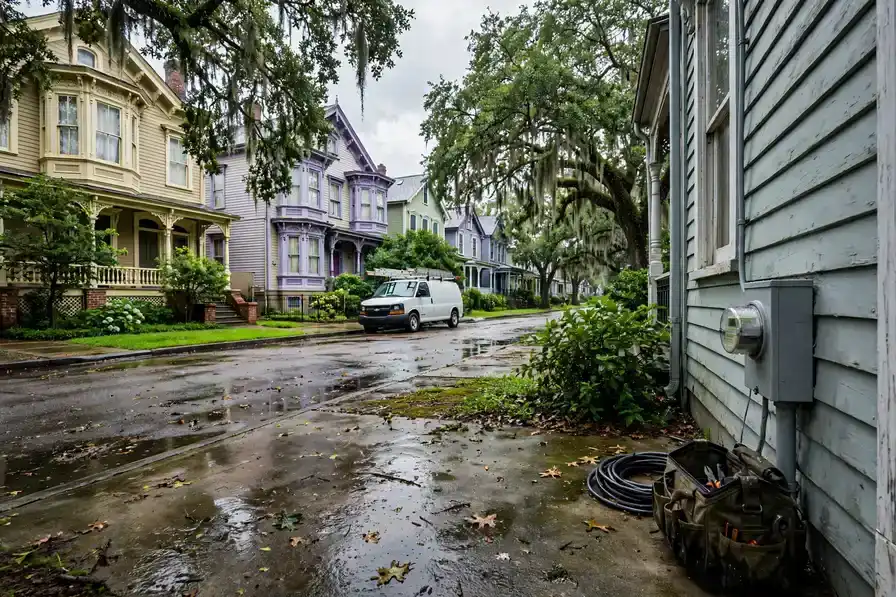
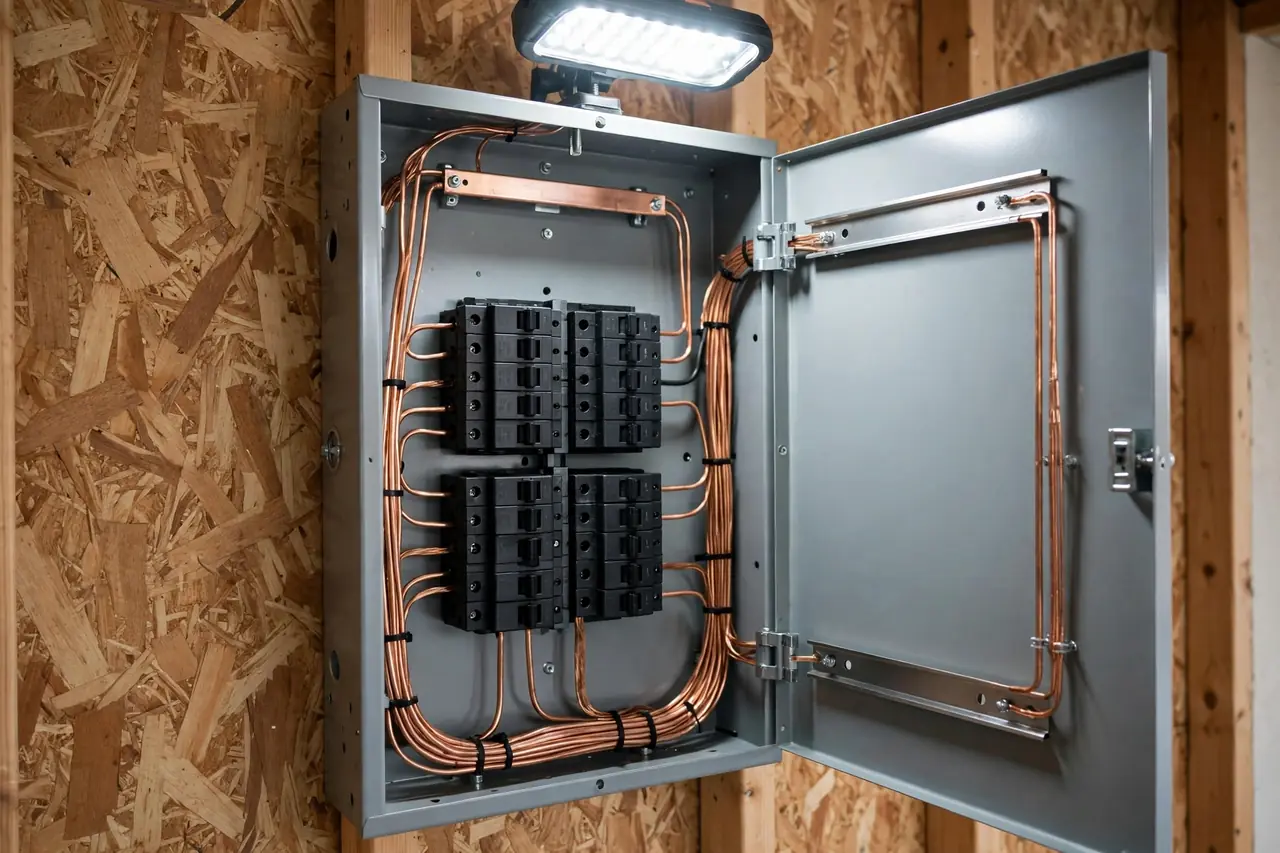
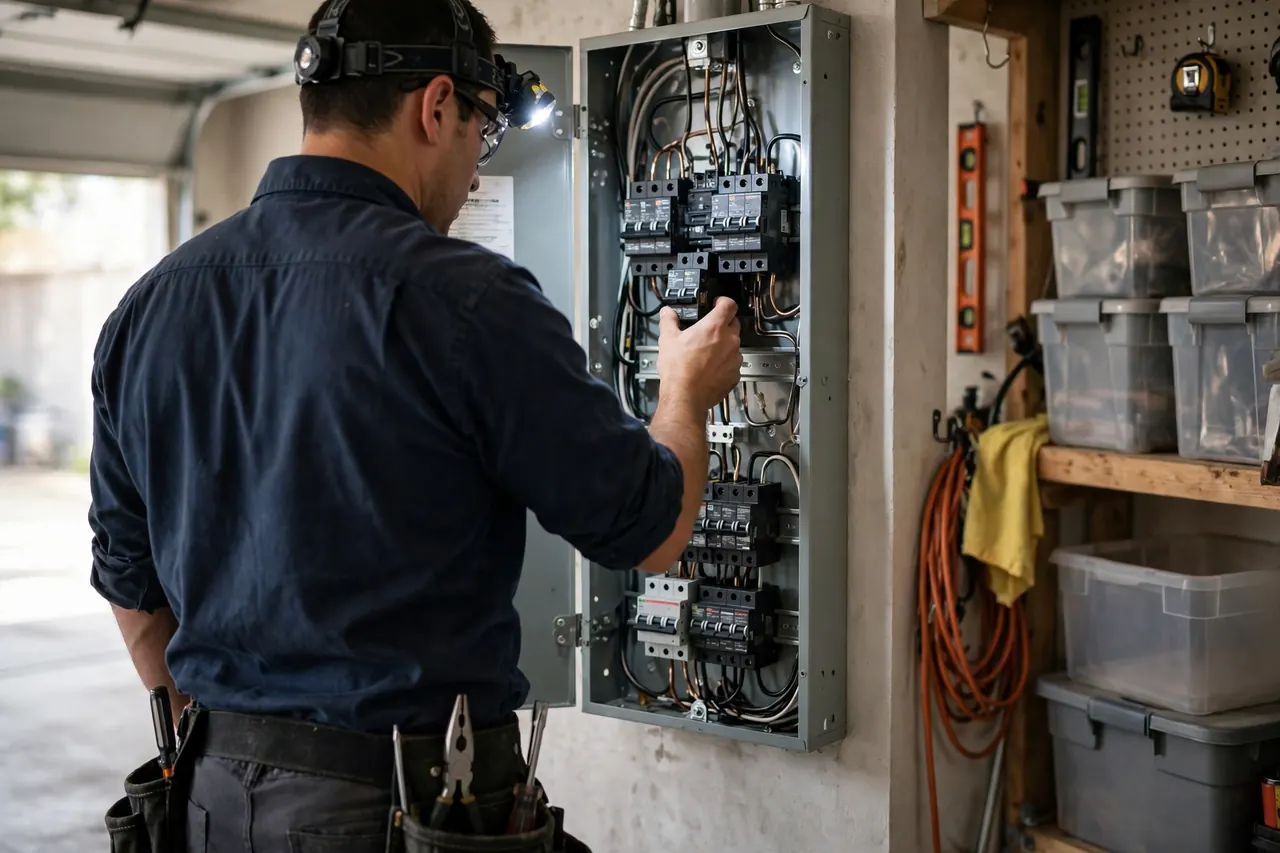
New Orleans, LA — electrical help across the metroLocal electricians serving New Orleans neighbourhoodsUpgrading a panel in a New Orleans home
New Orleans electrical work, in brief
The median New Orleans home was built in 1973; 64.7% of the stock predates 1980, and the pattern this metro's own data ranks first is overloaded circuits in new orleans. VoltReach USA is a referral service, not an electrical company: one call connects you with an independent local electrician serving your ZIP code.
The New Orleans housing stock, and what it means for wiring
Every metro is really several, stacked by decade. New Orleans's stack, per the Census, reads: 31.2% of homes from before 1960, a thick middle from the growth decades, and 15.3% from 2000 onward — 463,532 housing units in all, wrapped around a median build year of 1973. Wiring follows the stack faithfully. Each layer went in with its era's panels and materials, and each layer is now ageing in its era's characteristic order. This page keeps the layering in view throughout, because in a stacked metro the first diagnostic question is never what failed — it is which layer the home belongs to.
By now, most of New Orleans's pre-1980 homes are on their second electrical lives in part: a panel replaced, a heavy-up done for a remodel, a run of new circuits for a kitchen — while the remainder of the original system carries on into its sixth and seventh decades. The 299,905 homes in that stock are therefore not uniformly old; they are individually old, each with its own archaeology of repairs. That is why the pre-1980 districts reward inspection over inference: the street's average says little about the house in front of you, whose real history is written in its panel directory and its junction boxes.
Uniformity is the newer stock's defining trait. A subdivision in Metairie or Kenner went up in a handful of years, fitted with one generation of panels, one approach to circuit layouts, one set of devices. That uniformity writes a calendar the whole street shares: the first GFCI failures, the first breaker replacements and the first EV-charger capacity questions arrive together, years before the same streets need anything structural. With 15.3% of the metro built since 2000, that calendar governs a large and growing share of New Orleans's electrical work — predictable work, if a household reads the calendar early.
One more record sits over the whole metro, and it is the one the wiring itself keeps: the weather's. NEW ORLEANS ALVIN CALLENDER FL, LA US logs 63.8 inches of precipitation in an average year and swings between 64.4 days at 90 degrees or more and 10.8 nights at or below freezing. Heating and cooling equipment rides that swing in its run hours; panels ride it in their load cycles; outdoor outlets and service equipment ride it at the extremes. Cross the swing with the housing ages above and the selection of problems further down this page stops looking like a list and starts looking like an arithmetic result.
The New Orleans electrical profile in numbers
The metro's building eras on one side, its weather record on the other — and its wiring where the two meet.
The distribution, in one breath: of every hundred New Orleans homes, 31.2 were standing before 1960, 33.5 went up in the two decades after, 19.9 in the two after that, and 15.3 have arrived since 2000. Percentages flatten the picture, so hold the counts beside them — 144,622 oldest-era homes, 70,920 newest — and the metro's electrical systems stop being an abstraction: that many panels, that many wiring generations, ageing in that order.
The mid-century decades gave New Orleans its electrical character. The 155,283 homes built from 1960 to 1979, the metro's largest band, were wired when household demand meant a furnace, a range and a few lamps per room, and their early breaker panels and circuit layouts still reflect that assumption in New Orleans, Metairie and Kenner. Where aluminium branch wiring was used, its connections deserve knowledgeable attention. In Jefferson Parish, the typical project conversation for New Orleans, Louisiana starts from this mismatch: a fundamentally mid-century installation being asked, daily, to behave like a contemporary one under far heavier and more sensitive loads. Across the wider metro, that pattern repeats in smaller pockets wherever this era clusters, giving independent local electricians a recognisable starting point before they examine the individual system in front of them.
The runner-up era in New Orleans is also pre-1960 stock, adding depth to the 144,622 homes built before 1960 and keeping the median year at 1973. For electrical work, a strong second band of early housing means more homes with layered modifications, junctions from several decades and grounding that needs verification in Kenner and Marrero as well as the oldest core. Homeowners in New Orleans benefit when independent local electricians in Jefferson Parish explain which generation of wiring is present in each part of a house, because in this metro the answer often differs between the original rooms and later additions in Louisiana.
Freeze nights deserve their own place in the New Orleans climate profile, because they load the system in a distinctive way. On the 10.8 days at or below freezing at NEW ORLEANS ALVIN CALLENDER FL, LA US, heating runs continuously, auxiliary heat adds heavy draw, and households in Metairie and Kenner supplement with space heaters on ordinary circuits. The 1,425 heating degree days behind those nights explain why panels in New Orleans that seem adequate in autumn can trip in January. Independent local electricians in Jefferson Parish weigh that winter peak alongside the summer cooling peak of 2,615 degree days when they assess a New Orleans, Louisiana home as a whole. For planning, the useful question is not whether a system copes today, but whether it copes on the hardest local day of its year.
The method behind this profile is deliberately simple for New Orleans: rank the housing eras by their share of the stock, rank the climate loads by the NEW ORLEANS ALVIN CALLENDER FL, LA US record, and read the two together. Where the largest era and the heaviest load overlap in New Orleans, Kenner and Marrero, the characteristic electrical questions of New Orleans, Louisiana appear. That is why two metros with similar housing can feel different in practice, and why independent local electricians in Jefferson Parish ground their assessments in both the build year of the home and the seasons it must endure.
Electrical problems New Orleans homes actually get
Selected and ranked from this metro's housing-age profile and climate record — not copied from another city's page.
Overloaded Circuits in New Orleans
Kitchen circuits illustrate the principle well in New Orleans. Modern small appliances draw heavily: many kettles, microwaves, air fryers and coffee machines each pull a large share of a general circuit on their own. Two running together on the same circuit in a New Orleans kitchen can cross its capacity even though each appliance is in perfect order. Current practice gives kitchens dedicated small appliance circuits for this reason, but homes in Kenner and Marrero built in earlier eras often have fewer circuits serving more counter. An electrician assessing trips here will list what shares the counter circuit and recommend added or redistributed circuits where the arithmetic demands it, restoring a kitchen that can cook a full meal at once.
Bathrooms and laundry rooms round out the usual circuit pressure points in New Orleans. Hair dryers are among the heaviest plug in loads in a house, and a bathroom circuit shared across two bathrooms in older Jefferson Parish homes can trip when both are in morning use. Laundry areas combine washers, dryers on electric circuits in some homes, and irons or steamers. None of these appliances is faulty for drawing what it draws. The finding is simply that the circuit plan predates the routine. Dedicated circuits for these rooms, where an assessment supports them, end the morning negotiation over who dries hair first in a New Orleans household.
Season sharpens the pattern in New Orleans. During the hottest stretches, when the seasonal average reaches 68.2 and air conditioning runs for long hours, circuits and panels carry their heaviest sustained loads of the year. The same weeks bring guests, cooking and laundry peaks in many New Orleans homes. Breakers that stayed quiet all spring begin tripping in July, not because they weakened over winter but because the load finally crossed their limit and stayed there. Electricians serving Jefferson Parish, Orleans Parish, Plaquemines Parish, St. Bernard Parish, St. Charles Parish, St. James Parish, St. John the Baptist Parish see this timing every year. A homeowner who notices trips clustering on the hottest afternoons has already gathered the most useful clue an electrician could ask for: when, and with what running.
Buying and selling often brings this topic forward in New Orleans, and it helps to keep it in proportion. A home inspection may note aluminum branch wiring in a 1960s or 1970s house in Kenner or Laplace, and the note can sound more alarming than the underlying finding. The useful next step for either side is documentation: has the wiring been assessed, were connections remediated with listed methods, and is there a record of that work? VoltReach USA connects New Orleans homeowners with independent local electricians who can inspect and explain, giving a transaction a factual basis. Clear documentation serves the current owner as much as the next one, whatever the timing of any sale.
If you are planning work in a New Orleans home from this era, sequence matters. Have the wiring identified before walls are opened for other trades, before new devices are chosen, and before a remodel budget is fixed around assumptions. Early knowledge lets a homeowner in New Orleans choose devices rated appropriately, plan any remediation alongside the renovation access, and avoid reopening finished walls later. Independent local electricians can usually identify wiring type quickly during an assessment, and that early clarity is inexpensive in effort compared with the disruption of discovering mixed or deteriorated connections halfway through a project in New Orleans.
Nothing about this pattern asks a New Orleans homeowner to panic, and this page will not pretend otherwise. Many homes with aluminum branch wiring have given ordinary service for decades, and many have already had their connections addressed during past renovations or device replacements. The concern is narrower and well understood: connections made or remade over the years with devices or connectors not rated for aluminum can deteriorate quietly inside boxes. Because the deterioration is hidden, the sensible response in New Orleans is not worry and not dismissal, but a professional look at a sample of outlets, switches and junctions to establish what is actually installed.
Surges at restoration are the quiet companion of outages in New Orleans, and they link this pattern to protection choices. When supply returns after a fault, voltage can overshoot briefly, and switching elsewhere on the network adds smaller surges over time. Modern New Orleans homes concentrate the equipment most sensitive to those events: HVAC control boards, appliance electronics, computers and entertainment systems. Point of use protectors help individual devices, while a whole home device at the panel addresses surges entering through the service. After a stormy season in Louisiana, many homeowners use the experience to assessment that layered protection with an electrician, turning a rough week into a concrete improvement before the next event.
If a service drop or meter equipment at a New Orleans home is damaged in a storm, the division of responsibility matters and confuses many homeowners. Some equipment belongs to the utility, some to the homeowner, and the boundary usually sits around the meter and service mast. An electrician can identify which parts are the homeowner's to repair and coordinate the sequence so utility reconnection happens once work passes inspection where required. Knowing that sequence in New Orleans prevents the frustration of arranging the wrong repair first. When in doubt after storm damage in Metairie or Laplace, ask an electrician to identify ownership of the damaged part before authorising any work.
The damage pattern in New Orleans often begins after the storm, not during it. Wind and water do their visible work first — branches on lines, water finding its way into an exterior panel or a basement in Marrero — but the electrical consequences surface at restoration, when a surge travels through the system as supply returns, and in the following days, when damp connections corrode and breakers that took in moisture begin to misbehave. Homeowners in New Orleans who understand that timeline watch their systems more carefully in the week after an event, and mention the storm history promptly when an electrician visits for what looks like an unrelated fault.
It is equally useful to state what surge protection does not do for a New Orleans home. It does not guard against a direct lightning strike's full energy, it does not replace sound wiring or a healthy panel, and plug in strips with a surge label vary widely — some offer genuine protection with indicators, others little more than extra outlets. Protection also cannot help data and signal lines unless those are addressed as well, something an electrician can advise on for home offices in Laplace. Keeping those boundaries clear serves New Orleans homeowners. Whole home protection is a strong, defined measure against a defined exposure, and it earns its place most honestly when it is not oversold as a shield against every electrical event.
HVAC equipment deserves specific mention in New Orleans, because its control boards are among the more consequential surge casualties in a modern home. When a board fails after an electrical event in Jefferson Parish, the household loses heating or cooling entirely until the part is replaced, often during the very weather that caused the event. Protection at the panel reduces the exposure of that equipment along with everything else in the house, and some electricians also discuss dedicated protection at the unit itself. A New Orleans homeowner assessing surge options should name the HVAC system, refrigerator, laundry pair and office equipment aloud, so the plan reflects the electronics whose loss would actually disrupt the household.
Homeowners in New Orleans often meet surges through a pattern of small, unexplained losses. An HVAC board replaced after a storm in Marrero. A garage door opener that stopped responding when power flickered in Laplace. Appliances whose displays glitch after thunderstorms roll through Jefferson Parish. Any single failure could be age or chance, and this page will not claim otherwise for any individual case. The pattern across a household — electronics failing around electrical events, repeatedly, over seasons — is what prompts a protection conversation. An electrician can assessment that history with a New Orleans homeowner and assess what protection, if any, the panel currently has.
Watch for
Garage opener or smart devices dying after storms
Frequent small flickers affecting electronics
Panel grounding of uncertain condition
Plug strips offering outlets but little protection
Repeated board failures across different appliances
Charger or smart home equipment lost after an event
Generator safety is the centre of hurricane season guidance in New Orleans, and it cannot be repeated too plainly. A portable generator runs outdoors, far from windows, doors and vents, so its exhaust never enters the home. It connects to the house only through a transfer switch or listed interlock installed by an electrician — never through an improvised cord arrangement that can send power back into the grid and endanger crews working to restore New Orleans. Fuel is stored and handled with the unit cool. Standby systems, properly installed, handle the transfer themselves and start automatically. Whichever arrangement a New Orleans household in Marrero or Laplace chooses, hurricane season is when its rules matter most, under the worst conditions for improvising.
Hurricane season in New Orleans, Louisiana brings outages, restoration surges and moisture close to electrical equipment. The NEW ORLEANS ALVIN CALLENDER FL, LA US record of 63.8 annual precipitation concentrates in intense events that can leave panels and exterior fittings damp, flood low areas in Jefferson Parish and interrupt power across Jefferson Parish, Orleans Parish, Plaquemines Parish, St. Bernard Parish, St. Charles Parish, St. James Parish, St. John the Baptist Parish for hours or longer. Homeowners should keep clear of any equipment that has been submerged, never run a portable generator in an enclosed space, and expect surges when power returns. Independent local electricians can inspect affected panels in New Orleans after an event, check for moisture damage and help households reconnect loads safely and gradually.
A closer look: overloaded circuits in new orleans in New Orleans
A deeper look at New Orleans housing helps explain why this pattern spans newer homes too. Open plan living gathers load: one large room in New Orleans may combine kitchen appliances, entertainment, lighting and device charging where three smaller rooms once spread the same uses across circuits. Finished basements and garage workshops in Jefferson Parish, Orleans Parish, Plaquemines Parish, St. Bernard Parish, St. Charles Parish, St. James Parish, St. John the Baptist Parish add tools, heaters and second refrigerators to circuits that were roughed in for a light bulb and a freezer. Each addition is reasonable alone. The circuit map, unchanged, quietly becomes inaccurate as a description of the house. Electricians call the correction rebalancing and adding capacity where the panel allows. For a New Orleans homeowner the practical takeaway is that overload is usually a success story outgrowing its wiring — a house being used more fully than its layout predicted — and the fix is to bring the map back in line with the life.
Strip the pattern down to its inputs and the ranking stops being mysterious: 397,029 households drawing on systems installed across a median build year of 1973, in a climate that swings between 64.4 days of serious heat and 10.8 freezing nights. Whatever pattern a metro with those inputs manufactures most, it manufactures here — the lead position is less a title than a consequence, recalculated from the same public records any sceptic can check.
On a first visit for this pattern, a local electrician's checks run in a practised order:
Map every outlet and light on the problem circuit
List appliance combinations running at trip times
Inspect breaker condition and termination tightness
Check devices for heat, wear or discoloration
Distinguish overload from short or fault trips
Assess panel capacity for an added circuit
Electrical services in New Orleans
Ordered by what this metro's data says its homes need most.
Circuit Breaker Repair in New Orleans
Many New Orleans homes were built around 1973, long before today's appliance loads. When a breaker in Jefferson Parish starts tripping under everyday use, VoltReach USA connects the homeowner with an independent local electrician who checks the panel, the load, and the wiring as one picture.
A breaker that trips repeatedly in New Orleans is reporting something about the circuit behind it, and the housing stock explains why reports are common. With 64.7 of homes built before 1980 and a median year of 1973, many panels in Jefferson Parish contain breakers that have operated for decades, protecting circuits loaded very differently today than at installation. Homes in New Orleans, Metairie and Kenner show the full range, from early panels to recent equipment. Independent local electricians can test a suspect breaker, inspect the circuit it protects in a New Orleans home, and distinguish a tired breaker from an overloaded or faulting circuit before recommending next steps. Keeping a simple note of when trips occur in Marrero, and what was running, gives the visiting electrician a head start on arrival. Across 71 ZIP codes in New Orleans, Louisiana, homeowners who start with a clear evaluation, grounded in the age of the property and its 1973 era context, are well placed to decide what should happen now and what can be planned for later with independent local electricians.
Panels across New Orleans span several generations because the housing does: 31.2 built before 1960, 33.5 from 1960 to 1979 and 19.9 from 1980 to 1999, across 463,532 housing units in Jefferson Parish. Breaker age and type in a New Orleans, Louisiana home therefore vary widely. Independent local electricians can identify the equipment present and test a suspect breaker in that context.
Homeowners in New Orleans, Louisiana dealing with Overloaded Circuits in New Orleans or aluminum wiring in New Orleans homes sometimes learn the cause sits inside the walls. Rewiring replaces worn or outdated cable and gives the home grounded, protected circuits laid out for modern use. Replacing a worn circuit removes a nagging worry owners often carry for years, especially in bedrooms and in rooms where children sleep at night.
For rewiring, the safety case is made quietly by age alone in New Orleans. Homes counted in 299,905 built before 1980 may contain wiring types, junctions or modifications from several different decades, sometimes added by different hands over many years. Brittle insulation, ungrounded runs and overloaded circuits are not problems to guess at from the living room. Homeowners in New Orleans and Metairie who notice warm outlets, frequent trips or unexplained flicker are usually advised to seek an evaluation promptly. Independent local electricians can test circuits, open accessible points for inspection in New Orleans, Louisiana homes, and explain, without alarm, which sections merit priority on safety grounds alone. Keeping a clear record of renewed runs and junctions helps future work in Metairie proceed without guesswork about what lies hidden. A New Orleans home's electrical story, its 1973 median era, its panel, its grounding and its climate load, is individual, and independent local electricians serving Louisiana can read that story on site and explain the options it leaves open for the household.
In New Orleans, 33.5 of homes date from 1960 to 1979 and 31.2 from before 1960, together 299,905 homes whose wiring generations predate current expectations. Across 463,532 housing units in Jefferson Parish, that makes wiring age a routine topic. Independent local electricians can identify which generation is present in a given New Orleans, Louisiana home and where it remains in service.
Winter in Jefferson Parish brings 10.8 days at or below freezing, and a long outage can cool a New Orleans house toward pipe-freezing temperatures. Backup power for the heating system is the reason many local owners call first. An automatic system also protects the house when nobody is home, which matters for owners who travel or spend part of the winter elsewhere each year.
The case for backup power in New Orleans, Louisiana is written in its weather record. Data from NEW ORLEANS ALVIN CALLENDER FL, LA US showing 63.8 of precipitation, 10.8 freezing days, 64.4 hot days and 1,425 heating degree days describe a metro where outages can coincide with the very conditions a household can least afford to sit through without power. Refrigeration, medical equipment, sump and well equipment where present, heating controls and simple lighting all become priorities at once. Homeowners across Jefferson Parish, Orleans Parish, Plaquemines Parish, St. Bernard Parish, St. Charles Parish, St. James Parish, St. John the Baptist Parish often explore generator installation after a memorable outage. Independent local electricians can help a New Orleans household rank essential loads honestly and size a plan around those priorities. Households in Kenner that rely on well or sump equipment usually place those circuits high on their essential list from the outset. Residents of Metairie (138,995), Kenner (65,113) and Marrero share the same NEW ORLEANS ALVIN CALLENDER FL, LA US weather and the same broad housing eras, so a conversation with independent local electricians about a New Orleans home can usefully begin with when it was built and how it is loaded in peak season.
Housing age matters for generator placement in New Orleans: 299,905 homes built before 1980 and 92,243 built from 1980 to 1999 present varied panel locations and lot layouts across 71 ZIP codes. Independent local electricians can survey a New Orleans property in Jefferson Parish, note panel configuration and clearances, and explain how transfer arrangements would fit that particular home rather than a generic layout.
With 71 ZIP codes and housing from several eras, New Orleans panels vary a lot in space and condition. VoltReach USA refers homeowners to independent local electricians who confirm what their specific panel can support.
The modern load argument for surge protection in New Orleans grows stronger each year. A single home may now contain smart thermostats, network equipment, variable-speed heating and cooling controls, premium appliances, entertainment systems and vehicle charging electronics, representing a large combined value on circuits throughout the house. With 60.3 owner occupancy and 463,532 housing units, owners in Jefferson Parish increasingly treat protection as part of stewardship of the home itself. Independent local electricians can inventory the sensitive loads in a New Orleans home, discuss layered protection honestly, and clarify what panel-level devices can and cannot do so expectations stay realistic. Owners in Metairie who add a generator or vehicle charger later should mention their surge arrangement, because systems interact at the panel. For households in New Orleans, Metairie and across Jefferson Parish, the practical next step is an assessment by independent local electricians who can relate the work to a New Orleans home built in the 1970s and to the loads it carries today.
Homes in New Orleans divide between 299,905 built before 1980, where grounding may need verification, and 70,920 built since 2000, where electronics density is highest. Both profiles appear across New Orleans, Metairie and Kenner. Independent local electricians can assess service type, panel and grounding at a New Orleans address and explain a layered approach suited to that combination rather than a one-size recommendation.
In New Orleans, Louisiana, panels installed for the the 1970s era often meet today's loads in Jefferson Parish. VoltReach USA connects homeowners with independent local electricians who can evaluate capacity and condition in person.
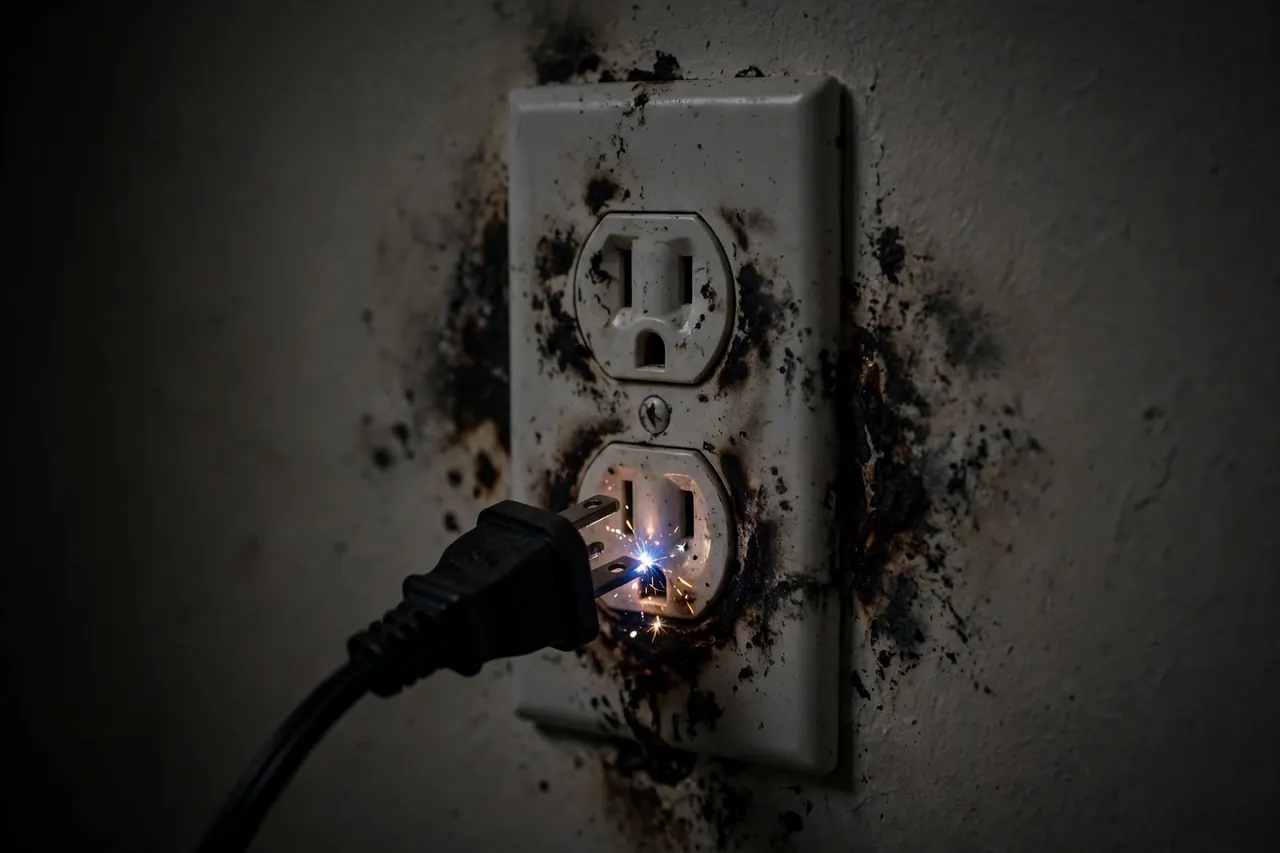
In New Orleans, Louisiana, a burning smell or hot panel is an emergency sign. VoltReach USA routes your details to an independent local electrician who can inspect the problem in person.
In New Orleans, the distance from panel to garage and the panel's spare capacity shape every charging installation. Local electricians serving New Orleans and Metairie can measure both and explain your options.
Outdoor and indoor lighting projects in New Orleans start with how each space is used. Homeowners across 7 counties use VoltReach USA to reach independent local electricians for lighting installation and planning.
A fan is only as good as its mounting and sizing. Homeowners in New Orleans use VoltReach USA to reach independent local electricians who match fan size to the room in New Orleans, Metairie, and across Jefferson Parish.
In New Orleans, loose, warm, or crackling devices should be replaced, not tolerated. VoltReach USA connects you with an independent local electrician who can renew outlets and switches safely.
In New Orleans, every level and sleeping area needs working detectors. VoltReach USA connects homeowners with independent local electricians who install, interconnect, and test units across the home.
Recurring trips or lighting failures in New Orleans premises deserve a whole-site assessment. VoltReach USA connects you with an independent local electrician who explains findings in plain language.
There is a plainer way to say what this page's ranking means in practice: most calls in New Orleans are two calls. The first answers Overloaded Circuits in New Orleans; the second answers aluminum wiring in New Orleans homes. Between them they account for the shape of a local electrician's week here — the districts visited, the parts stocked, the diagnoses made fastest because they are made most often. The remaining services divide the rest of the diary among them, essential but episodic, the supporting work around two leading patterns.
From problem to fixed, in New Orleans
PROBLEMAn electrical problem inside a New Orleans home
➔
SOLUTIONThe same system in New Orleans after professional repair
Areas covered in the New Orleans metro
New Orleans
Population 376,035
Metairie
Population 138,995
Kenner
Population 65,113
Marrero
Population 31,866
Laplace
Population 28,480
Terrytown
Population 25,844
Chalmette
Population 22,447
Harvey
Population 21,710
Gretna
Population 17,468
Estelle
Population 16,761
Luling
Population 13,873
River Ridge
Population 13,170
Also in the New Orleans metro: Destrehan (population 11,786), Woodmere (population 11,775).
The communities in the grid are not suburbs of the page; they are its subject as much as New Orleans is. Metairie (138,995 residents) and Kenner (65,113) carry their own building decades, their own panel generations and their own positions in the problem ranking's logic — a circuit under a Metairie street answers to the same data as one in the centre, but to a different era of it. Coverage here is defined by the ZIP list below; understanding is defined street by street, and this page's figures are the metro-wide version of a story each community tells in its own numbers.
Also on the New Orleans map: Marrero (31,866), Laplace (28,480), Terrytown (25,844), Chalmette (22,447), Harvey (21,710) — communities spread across Jefferson Parish, Orleans Parish, Plaquemines Parish, St. Bernard Parish, St. Charles Parish, St. James Parish, St. John the Baptist Parish, each with housing from its own growth years. An electrician routed through VoltReach USA to any of them is working from this same page: the metro data does not change at the city limit, but the housing on your street — its age, its wiring, its panel — is what the visit is really about.
The metro's weight is not evenly spread. New Orleans holds 376,035 of the 988,763 residents; Metairie and Kenner add 138,995 and 65,113; and the remainder scatters across the smaller places above, some no bigger than a few thousand people. Electrical work follows the weight — most calls come from where most homes are — but era matters more than size: a small community of 1960s housing generates older-system work than a large new subdivision does.
The metro answers to 7 county governments (Jefferson Parish, Orleans Parish, Plaquemines Parish, St. Bernard Parish, St. Charles Parish, St. James Parish, St. John the Baptist Parish), a patchwork that matters at permit time rather than at the panel. Jefferson Parish County carries the centre; the others carry the growth rings and the older outlying towns. An electrician routed through this page works inside that patchwork daily — the current does not care about the boundaries, but the job's paperwork does.
This page ends at the metro boundary, but the region does not: Slidell, LA, Houma, LA and Baton Rouge, LA continue the coverage in their own directions, each with a profile built from its own Census and NOAA figures. If your home sits near the line between metros, go by your ZIP code — it places you in the dataset that describes your housing.
The region around New Orleans is a set of variations on its theme: Slidell, LA, 40 miles off, runs a median build year of 1995 on a metro population of 279,108; Houma, LA (44 miles) medians 1982 on 199,668; Baton Rouge, LA (79 miles) medians 1989 on 888,699. Nearness is not sameness — a few decades of median build year separate their wiring as surely as the miles separate their maps.
Count the metro per unit of itself: 6,529 housing units per covered ZIP code; 56,718 households per county; 14 communities sharing 7 county governments. Then weigh the generations against each other — 4.2 older homes for each newer one — and the service pattern on this page stops being a list and becomes a proportion: that much of the diary written by ageing systems, the rest by young ones wearing in.
The New Orleans record in one line — median home age: 53 years · owner-occupied homes: 239,408 · renter-occupied homes: 157,621 · pre-1960 homes per covered ZIP code: 2,037 · heating-to-cooling degree-day ratio: 0.55 · average rainfall: 1,621 mm a year.
New Orleans electrical questions
Is my neighbourhood in New Orleans inside the VoltReach USA coverage area?
You can settle coverage before you make any contact. Compare the ZIP code on your utility bill or panel paperwork with the 71 codes shown for New Orleans, then compare your county with Jefferson Parish, Orleans Parish, Plaquemines Parish, St. Bernard Parish, St. Charles Parish, St. James Parish, St. John the Baptist Parish. Both matching means you are in the area this page serves. The model matters here: VoltReach USA is a referral service, not the firm that will stand in front of your breaker panel. It maintains the New Orleans research, keeps the coverage list current and routes your call. An independent local electrician then handles the conversation about your home, the inspection of your wiring and circuits, and any work you decide to go ahead with. The population behind the boundary underlines its scale: 397,029 households in 463,532 homes across Jefferson Parish, Orleans Parish, Plaquemines Parish, St. Bernard Parish, St. Charles Parish, St. James Parish, St. John the Baptist Parish, with 60.3% owner-occupied, means the coverage list is not a token gesture toward New Orleans but a working map of where local homeowners actually live, street by street and code by code, throughout the metro this page describes in its housing and weather research above. For the record in its most compressed form, 70001, 70002, 70003, 70005 open the code list for New Orleans, the era ledger runs from 144,622 pre-1960 homes onward, and the largest community, New Orleans, counts 376,035 residents within a metro population of 988,763 recorded for this page. Stated as a list of codes: the codes run 70001, 70002, 70003, 70005 and 70006 among the 71 on the list, spread over Jefferson Parish, Orleans Parish, Plaquemines Parish, St. Bernard Parish, St. Charles Parish, St. James Parish, St. John the Baptist Parish. Read it against a median build year of 1973 and a 64.7% share of homes from before 1980. The footprint takes in Plaquemines Parish, St. Bernard Parish and Jefferson Parish - 7 covered counties in all, each with its own page on this site. All of it describes the New Orleans–Metairie metro as the Census defines it - 988,763 residents in 463,532 housing units. The housing ledger behind it counts 144,622 homes from before 1960 and 70,920 built since 2000 across the metro. The coverage behind this answer spans ZIP codes 70001 through 70031 - the ZIP list published on this page.
Does the age of my New Orleans home change how closely I should watch its electrics?
The honest answer is that the watch list in New Orleans is long, because the housing stock leans older. With 64.7% of homes predating 1980 and an era profile centred on the 1970s, many households are living with wiring and panels that predate the loads now placed on them every day. Give closest attention to homes that combine age with change: an older panel plus a remodelled kitchen, an older circuit layout plus new heating or cooling equipment, older wiring plus rooms converted to offices full of equipment. Those combinations are where demand quietly outgrows design. Keep a simple note of trips, flicker, dead outlets and warm fittings, with dates. That note turns a vague worry into evidence an electrician can act on. Geography sharpens that watch list across the New Orleans metro, because the oldest stock is not spread evenly: it concentrates in and around New Orleans and the earlier-settled parts of Jefferson Parish, while the places that grew later, among them Marrero and Laplace, carry younger panels and wiring on average, so two streets with the same postal city can sit a generation apart electrically across the 71 codes and 7 counties this page covers. The ownership figures add a practical edge to the watch list, because with 60.3% of 397,029 households owning their homes in New Orleans, most of the older stock is looked after by the people living in it, and the panel and wiring decisions for 299,905 pre-1980 homes rest with those households directly, which makes an honest yearly watch a normal part of owning an older New Orleans home. The compressed watch list for New Orleans reads by numbers: codes from 70001 to 70005 contain districts where 144,622 pre-1960 homes and 155,283 homes from 1960 to 1979 cluster, while New Orleans, at 376,035 residents, holds the densest share of the oldest wiring in the metro. For the watch list stated by community: the community ledger reads New Orleans (376,035 residents), Metairie (138,995), Kenner (65,113), Marrero (31,866) and Laplace (28,480), out of 988,763 residents metro-wide. The coverage behind this answer spans ZIP codes 70001 through 70031 - the ZIP list published on this page. The footprint takes in Plaquemines Parish, St. Bernard Parish and Jefferson Parish - 7 covered counties in all, each with its own page on this site. Run the same ranking for nearby Lafayette and its leading pattern is overloaded circuits - a different order from New Orleans's, which is why this site keeps a separate page for every metro. Read it against a median build year of 1973 and a 64.7% share of homes from before 1980. The weather record behind it is NEW ORLEANS ALVIN CALLENDER FL, LA US's: 1,425 heating degree-days against 2,615 cooling degree-days in an average year.
What is the most common electrical problem in New Orleans homes?
The most common problem identified for New Orleans is Overloaded Circuits in New Orleans, and the runner-up is aluminum wiring in New Orleans homes. Both make sense against the local backdrop. Homes around the median year of 1973 have panels and wiring that have served through many changes of ownership, appliances and room use, while the climate adds its own steady pressure through heating and cooling seasons. Electrical systems rarely announce decline all at once. They hint: a trip here, a flicker there, an outlet that works only sometimes. The leading problem is usually the hint that the largest number of local homes share. If your hints match it, say so plainly when you make contact, including when they happen and which circuit is involved. That detail shortens the path to a proper check. Put the leading problems against the ownership and era figures and the order steadies further: in a metro where 60.3% of homes are owner-occupied and 64.7% were built before 1980, the faults of ageing panels and circuits are not edge cases but the central experience of the stock, which is precisely the experience the ranking, led by Overloaded Circuits in New Orleans and followed by aluminum wiring in New Orleans homes, was assembled to describe for New Orleans. Behind the podium in compressed form: the code run 70001, 70002, 70003, 70005 spans districts built across every era in the ledger, New Orleans alone holds 376,035 residents, and the load figures at NEW ORLEANS ALVIN CALLENDER FL, LA US, 1,425 heating and 2,615 cooling degree days, keep the circuits behind Overloaded Circuits in New Orleans working hard. With the leading problem stated by community: the community ledger reads New Orleans (376,035 residents), Metairie (138,995), Kenner (65,113), Marrero (31,866) and Laplace (28,480), out of 988,763 residents metro-wide. The footprint takes in Plaquemines Parish, St. Bernard Parish and Jefferson Parish - 7 covered counties in all, each with its own page on this site. The weather record behind it is NEW ORLEANS ALVIN CALLENDER FL, LA US's: 1,425 heating degree-days against 2,615 cooling degree-days in an average year. Run the same ranking for nearby Slidell and its leading pattern is overloaded circuits - a different order from New Orleans's, which is why this site keeps a separate page for every metro. Read it against a median build year of 1973 and a 64.7% share of homes from before 1980. It is written for a metro whose largest places are New Orleans (376,035 residents), Metairie (138,995) and Kenner (65,113).
Why does the weather in New Orleans matter for household electrics?
Weather reaches a home electrical system mainly through load and through exposure. In New Orleans the record at NEW ORLEANS ALVIN CALLENDER FL, LA US shows an average temperature of 68.2, with 1,425 heating degree days and 2,615 cooling degree days across a typical year. Those two totals describe how hard heating and cooling equipment works, and that equipment is among the heaviest demand on a panel. Long heating and cooling runs keep circuits busy for extended stretches, which exposes weak breakers and tired connections that light use might never reveal. Rain, at 63.8 across the year, tests outdoor outlets, exterior lighting circuits and any fitting whose seal has aged. Weather rarely breaks a sound system outright. It stresses a marginal one until the weakness shows. That weather story also changes across the metro itself, from the denser streets of New Orleans to the more open ground around Marrero and Laplace: exposed service lines, older outdoor fittings and long cooling or heating runs are distributed unevenly across Jefferson Parish, Orleans Parish, Plaquemines Parish, St. Bernard Parish, St. Charles Parish, St. James Parish, St. John the Baptist Parish, so a storm or a heat spell that barely troubles one part of New Orleans can be the event that exposes tired circuits and weathered outdoor outlets in another part of the same metro. The household numbers give the climate figures their human scale in New Orleans: 397,029 households experience the same 1,425 heating degree days and 2,615 cooling degree days through very different buildings, from pre-1960 homes with original circuit layouts to post-2000 homes built for present loads, so identical weather produces gentle service in one home and repeated breaker trips in the next, purely through the building it passes through. The station figures in their densest form for New Orleans are these: NEW ORLEANS ALVIN CALLENDER FL, LA US records 68.2 on average, 64.4 days at the top of the heat range, 10.8 at freezing or below, and 63.8 of precipitation, numbers that between them govern load, cycling and moisture for every circuit in the metro. With the weather load stated against the era count: the era ledger reads 144,622 homes before 1960, 155,283 from 1960-1979, 92,243 from 1980-1999 and 70,920 since 2000 — 463,532 units, 397,029 households, 60.3% of them owner-occupied. The weather record behind it is NEW ORLEANS ALVIN CALLENDER FL, LA US's: 1,425 heating degree-days against 2,615 cooling degree-days in an average year. The coverage behind this answer spans ZIP codes 70001 through 70031 - the ZIP list published on this page. The footprint takes in Plaquemines Parish, St. Bernard Parish and Jefferson Parish - 7 covered counties in all, each with its own page on this site. Read it against a median build year of 1973 and a 64.7% share of homes from before 1980. All of it describes the New Orleans–Metairie metro as the Census defines it - 988,763 residents in 463,532 housing units.
What are the first safe steps when an outlet sparks or smells of burning in the New Orleans metro?
A burning smell from an outlet means heat is being produced where it should not be, so the first steps are about removing load and removing people, not about fixing anything. Stop using the outlet and its circuit. Keep the area clear. Do not spray anything, do not touch the outlet face if it is warm or discoloured, and do not attempt to open it. Turning the breaker off is appropriate only if you can do it safely: dry conditions, an undamaged panel, no smoke or flame between you and it. If that safe route does not exist, leave the electrics alone and leave the home if the smell is strengthening. Emergency services handle fire and immediate danger. The utility handles lines and equipment outside the home. An independent electrician, reached through the connection on this page, handles the circuit once the danger has passed. If this happens in your New Orleans home, remember that help is organised locally: the coverage area on this page spans 71 ZIP codes across Jefferson Parish, Orleans Parish, Plaquemines Parish, St. Bernard Parish, St. Charles Parish, St. James Parish, St. John the Baptist Parish, from New Orleans to Laplace, and the electrician you are connected with works in that same territory, so give your ZIP code and your community name when you make contact after the immediate danger has passed, because that detail routes your enquiry to the right part of the metro without delay. Once the immediate danger has passed, the details you pass on help more than you might expect: your ZIP code within the 71 listed for New Orleans, the room involved, whether water was anywhere nearby, and whether the breaker stayed off, together let the independent electrician arrive understanding the circuit's story, and in a metro of 397,029 households that clarity is what separates a focused first visit from a second one. In the compressed local record, incidents like this are read against 299,905 pre-1980 homes, a code list opening 70001, 70002, 70003, 70005, and a station history of 64.4 hot days loading older circuits hard, context that explains frequency without ever changing the safe first steps themselves. After an incident, stated for the record by community: the community ledger reads New Orleans (376,035 residents), Metairie (138,995), Kenner (65,113), Marrero (31,866) and Laplace (28,480), out of 988,763 residents metro-wide. The Census identity of this metro, New Orleans–Metairie with 988,763 residents, 60.3% owner-occupied and a median build year of 1973, explains why such incidents cluster in older circuits here compared with Slidell, LA at 40, Houma, LA at 44 and Baton Rouge, LA at 79: the podium faults Overloaded Circuits in New Orleans, aluminum wiring in New Orleans homes and storm and outage damage in New Orleans all grow from the same ageing stock that makes conservative first steps so important locally. The code walk also helps the electrician who follows up in New Orleans: naming where in the sequence 70001, 70002, 70003, 70005, 70006, 70030, 70031 your home falls, together with the circuit involved and whether the breaker was left off, places the incident on the metro map at once, shortening the first conversation and letting the visit begin with the faulty circuit rather than with geography. It is written for a metro whose largest places are New Orleans (376,035 residents), Metairie (138,995) and Kenner (65,113). All of it describes the New Orleans–Metairie metro as the Census defines it - 988,763 residents in 463,532 housing units. Run the same ranking for nearby Baton Rouge and its leading pattern is overloaded circuits - a different order from New Orleans's, which is why this site keeps a separate page for every metro. The coverage behind this answer spans ZIP codes 70001 through 70031 - the ZIP list published on this page. The weather record behind it is NEW ORLEANS ALVIN CALLENDER FL, LA US's: 1,425 heating degree-days against 2,615 cooling degree-days in an average year.
When does a New Orleans home need rewiring rather than another repair?
Another repair makes sense while faults stay isolated and explicable. Rewiring becomes the honest option when the same story keeps repeating: the wiring generation in the walls is reaching the end of its serviceable life, and each repair simply moves the weakest point to the next section. Clues include repeated warm outlets on one wiring run, protection tripping without a new load to explain it, two-prong outlets throughout an older home, and evidence of many past alterations layered onto original circuits. In a metro where the median home dates to 1973, plenty of New Orleans houses sit exactly at this crossroads. An electrician making the call will look at the panel, test representative outlets and inspect accessible wiring runs before recommending a scope. Expect that reasoning, and ask for it, rather than accepting a recommendation without the inspection behind it. The rewiring question lands differently across New Orleans depending on which ring of the metro a home occupies: the pre-1960 core around New Orleans and the older streets of Jefferson Parish produce the pattern cases most often, the 1960 to 1979 suburbs through Metairie and Kenner produce the material cases, and the newer ground toward Marrero and Laplace produces mostly isolated repairs, a geography written by the 299,905 homes built before 1980 across 71 codes. The era percentages translate the rewiring judgement into local proportions for New Orleans: 33.5% of homes from 1960 to 1979 and 31.2% from before 1960 together form the pool where system-wide findings concentrate, while the 19.9% from 1980 to 1999 and the share built since 2000 produce them far less often, so the same fault history carries different weight depending on which slice of the local stock your home occupies. Compressed, the renewal case in New Orleans rests on the ledger: 144,622 homes before 1960, 155,283 from 1960 to 1979, districts running from code 70001 to code 70005, and a largest community, New Orleans, whose 376,035 residents live amid the oldest wiring generations in the metro. On renewal, stated by the communities in question: the community ledger reads New Orleans (376,035 residents), Metairie (138,995), Kenner (65,113), Marrero (31,866) and Laplace (28,480), out of 988,763 residents metro-wide. The housing ledger behind it counts 144,622 homes from before 1960 and 70,920 built since 2000 across the metro. It is written for a metro whose largest places are New Orleans (376,035 residents), Metairie (138,995) and Kenner (65,113). The footprint takes in Plaquemines Parish, St. Bernard Parish and Jefferson Parish - 7 covered counties in all, each with its own page on this site. The coverage behind this answer spans ZIP codes 70001 through 70031 - the ZIP list published on this page. Read it against a median build year of 1973 and a 64.7% share of homes from before 1980. The local starting point is the dominant era - 1960-1979 homes are 33.5% of the stock here - so the findings above are read against that generation's panels and circuits first.
Who actually does the work when I contact VoltReach USA in the New Orleans metro?
No company from this website will arrive at your door, because VoltReach USA is not a company that does electrical work. It is a referral service with a research library attached. The library part is this page and its sister pages: era-by-era housing analysis for New Orleans, climate context from NEW ORLEANS ALVIN CALLENDER FL, LA US, and plain-language guides to faults and checks. The referral part is a routing step: your enquiry goes to an independent electrician local to New Orleans, who operates separately from VoltReach USA. Any conversation about your home, any visit, any findings and any work happen between you and that electrician. If that distinction ever feels unclear during the process, return to this answer. VoltReach USA publishes and connects. The independent electrician attends and works. Those are the roles, without embellishment. That division of roles holds in every community this page covers, from New Orleans through Metairie, Kenner, Marrero and Laplace, across all 71 ZIP codes and 7 counties listed for New Orleans: VoltReach USA publishes and routes in each of them, and in each of them the attending work belongs to an independent local electrician, so the model a homeowner in the oldest core street meets is exactly the model a homeowner on the newest edge street meets. The scale of the publishing side is worth picturing: this one page summarises a metro of 988,763 residents, 463,532 homes and 71 ZIP codes for a reader deciding whom to contact, and that summary work, repeated across 300 city pages nationally, is the whole of what VoltReach USA does, while the whole of what happens inside a home in New Orleans belongs to the independent electrician the referral connects you with. Count the roles by their numbers and the distinction stays plain: VoltReach USA's side of New Orleans is counted in pages, codes and datasets, 71 codes and 463,532 homes researched, while the electrician's side is counted in visits, circuits tested and panels opened, and no figure from the first list ever appears on the second side of the ledger. On who does the work, stated by coverage codes: the codes run 70001, 70002, 70003, 70005 and 70006 among the 71 on the list, spread over Jefferson Parish, Orleans Parish, Plaquemines Parish, St. Bernard Parish, St. Charles Parish, St. James Parish, St. John the Baptist Parish. The housing ledger behind it counts 144,622 homes from before 1960 and 70,920 built since 2000 across the metro. It is written for a metro whose largest places are New Orleans (376,035 residents), Metairie (138,995) and Kenner (65,113). The footprint takes in Plaquemines Parish, St. Bernard Parish and Jefferson Parish - 7 covered counties in all, each with its own page on this site. The coverage behind this answer spans ZIP codes 70001 through 70031 - the ZIP list published on this page. The weather record behind it is NEW ORLEANS ALVIN CALLENDER FL, LA US's: 1,425 heating degree-days against 2,615 cooling degree-days in an average year.
Which electrical checks should I do each year in my New Orleans home?
A good yearly list for a New Orleans home reads like a walk, not a project. Begin where water and electricity meet: kitchens, bathrooms, laundry areas and outdoor outlets, testing GFCI protection with the buttons provided. Continue to detectors, testing each one and noting expiry dates. Continue to the panel for a visual pass only, checking for warmth, odour, corrosion and breakers that feel loose or fail to stay set when exercised. Walk the rooms themselves last, looking at heavily used outlets behind appliances and entertainment equipment for discolouration or loose plugs. Nothing on this walk requires a tool beyond a finger on a test button, and that is by design. Opening panels, testing circuits under load and judging wiring condition are professional work. When your walk finds something, this page can connect you with an independent electrician to take it further. Carry that yearly walk through the whole geography of your own home the way this page covers the metro, from the centre to the edges: homes in the older parts of New Orleans, around New Orleans and the early streets of Jefferson Parish, earn extra attention on panel condition and outlet warmth, while homes in Marrero, Laplace and the newer subdivisions across Jefferson Parish, Orleans Parish, Plaquemines Parish, St. Bernard Parish, St. Charles Parish, St. James Parish, St. John the Baptist Parish earn the same detector, GFCI and outdoor-cover discipline, because protection checks matter in every one of the 71 codes equally. Timing the round to the local year helps it stick: many New Orleans households pair the checks with the turn into the heavy-load season their NEW ORLEANS ALVIN CALLENDER FL, LA US record implies, whether that is the cooling load of the 64.4 hottest days or the heating load across the 10.8 coldest, because testing GFCI protection and exercising breakers just before the system works hardest is when a failure found at the panel still leaves time to arrange a professional visit. Densest form: a stock profiled at 64.7% pre-1980, a station record of 10.8 freezing days and 64.4 hot days at NEW ORLEANS ALVIN CALLENDER FL, LA US, and 397,029 households each holding a short annual list of button tests and visual checks together amount to the metro's widest electrical safety net, provided the findings are handed onward. For the yearly round, stated by the housing it covers: the era ledger reads 144,622 homes before 1960, 155,283 from 1960-1979, 92,243 from 1980-1999 and 70,920 since 2000 — 463,532 units, 397,029 households, 60.3% of them owner-occupied. The coverage behind this answer spans ZIP codes 70001 through 70031 - the ZIP list published on this page. The housing ledger behind it counts 144,622 homes from before 1960 and 70,920 built since 2000 across the metro. The weather record behind it is NEW ORLEANS ALVIN CALLENDER FL, LA US's: 1,425 heating degree-days against 2,615 cooling degree-days in an average year. Run the same ranking for nearby Alexandria and its leading pattern is overloaded circuits - a different order from New Orleans's, which is why this site keeps a separate page for every metro. The footprint takes in Plaquemines Parish, St. Bernard Parish and Jefferson Parish - 7 covered counties in all, each with its own page on this site. In New Orleans the 1960-1979 generation dominates (33.5% of homes), which is why this page's version of the check leans toward that era's failure modes before the newer ones.
What data sits behind the New Orleans problem ranking on this page?
The ranking was built from public data about New Orleans itself, scored the same way for every metro on this site. The housing half comes from the Census American Community Survey: how many homes fall into each build era, which sets how much of the stock carries each generation of wiring and panel design. The climate half comes from NOAA normals for NEW ORLEANS ALVIN CALLENDER FL, LA US: heating and cooling degree days, temperature and precipitation, which set how hard those systems work across a year. Each known problem is then scored against the eras and loads actually present. A fault tied to pre-1960 wiring scores heavily where pre-1960 homes are numerous and barely registers where they are rare. That is why rankings differ between cities even though the method does not. The method is uniform; the inputs are local, and the local inputs decide the order. The locality of the method shows in its geography as much as its arithmetic: the Census figures are drawn for the New Orleans–Metairie as a whole and the weather figures from NEW ORLEANS ALVIN CALLENDER FL, LA US, the station serving New Orleans, so the ranking blends conditions across New Orleans, Metairie, Kenner and every community in Jefferson Parish, Orleans Parish, Plaquemines Parish, St. Bernard Parish, St. Charles Parish, St. James Parish, St. John the Baptist Parish into one metro judgement, detailed enough to separate New Orleans from its neighbours, while honestly averaging across the 71 codes rather than pretending to street-level precision it does not have. The two sources also discipline each other usefully for New Orleans: the ACS prevents the ranking from drifting into weather generalities by anchoring it to counted homes in counted eras, 144,622 before 1960 through 70,920 since 2000, while the NOAA normals prevent it from drifting into pure housing commentary by anchoring it to measured load, 1,425 heating degree days against 2,615 cooling degree days at NEW ORLEANS ALVIN CALLENDER FL, LA US. Strip the method to its tokens and it remains local: 70001, 70002, 70003, 70005 for place, 1973 for the median home, 31.2%, 33.5% and 19.9% for the era shape, and 68.2 with 63.8 for the climate, a set of figures no other metro on this site shares in exactly this combination. For the method, stated through its code geography: the codes run 70001, 70002, 70003, 70005 and 70006 among the 71 on the list, spread over Jefferson Parish, Orleans Parish, Plaquemines Parish, St. Bernard Parish, St. Charles Parish, St. James Parish, St. John the Baptist Parish. Comparison with neighbouring metros is the method's own sanity check: Slidell, LA at 40, Houma, LA at 44 and Baton Rouge, LA at 79 were scored by the identical process, yet their podiums reorder Overloaded Circuits in New Orleans, aluminum wiring in New Orleans homes and storm and outage damage in New Orleans differently, which is the expected result when one fixed method meets genuinely different housing eras and climates across a region rather than copying one city's answer onto the next. A second code-level reading underlines the same point for New Orleans: from 70001 at one end of the published list through 70002, 70003, 70005 and 70006 to 70030 and 70031 at the other, the homes counted in the Census inputs and the homes living under the NEW ORLEANS ALVIN CALLENDER FL, LA US climate inputs are the same homes, which is why the ranking can claim to describe the whole metro rather than a sampled corner of it. All of it describes the New Orleans–Metairie metro as the Census defines it - 988,763 residents in 463,532 housing units. The footprint takes in Plaquemines Parish, St. Bernard Parish and Jefferson Parish - 7 covered counties in all, each with its own page on this site. The housing ledger behind it counts 144,622 homes from before 1960 and 70,920 built since 2000 across the metro. Read it against a median build year of 1973 and a 64.7% share of homes from before 1980. The weather record behind it is NEW ORLEANS ALVIN CALLENDER FL, LA US's: 1,425 heating degree-days against 2,615 cooling degree-days in an average year.
What are the electrical systems like in New Orleans's oldest homes?
The oldest homes in New Orleans cluster where the city began, and their electrical systems tell the story of demand growing faster than design. The pre-1960 core, 144,622 homes metro-wide, often began with few circuits, small panels and wiring methods of their day, sometimes including knob-and-tube runs in the oldest survivors and early cable in later ones. Around that core sits the 1960 to 1979 ring, 155,283 homes, where panels grew but some branch wiring of that period now needs careful handling at every connection. Newer rings added circuits, capacity and protection in step with the appliances arriving in each decade. Walking outward from the centre of New Orleans is therefore close to walking forward through electrical history, which is why two homes a short drive apart can need entirely different conversations. That ring pattern is visible on the ground across New Orleans: the pre-1960 fabric holds firmest around New Orleans and the earliest streets of Jefferson Parish, the 1960 to 1979 fabric fills much of Metairie and Kenner, and the later fabric spreads toward Marrero and Laplace near the edges of Jefferson Parish, Orleans Parish, Plaquemines Parish, St. Bernard Parish, St. Charles Parish, St. James Parish, St. John the Baptist Parish, so a drive across the metro, through its 71 codes, crosses the same sequence of panel sizes, circuit counts and wiring generations that the era ledger records in numbers. Population helps date the rings as surely as architecture does in New Orleans: the long-settled weight of New Orleans at 376,035 residents reflects the pre-1960 and mid-century building that still defines its streets, while the growth recorded in Marrero and Laplace reflects later rings, so the community sizes quoted on this page and the era counts beside them are two readings of the same history of how the metro filled its 463,532 homes. The oldest-homes story compressed to its tokens for New Orleans: codes beginning 70001, 70002, 70003, 70005, an era ledger opening at 144,622 pre-1960 homes, a core community New Orleans of 376,035 residents, and a median build year of 1973 that places half the metro's homes on the older side of the line. For the oldest homes, stated through their codes: the codes run 70001, 70002, 70003, 70005 and 70006 among the 71 on the list, spread over Jefferson Parish, Orleans Parish, Plaquemines Parish, St. Bernard Parish, St. Charles Parish, St. James Parish, St. John the Baptist Parish. This metro's Census identity, New Orleans–Metairie with 988,763 residents, 60.3% owner-occupied and a median build year of 1973, frames its oldest districts against Slidell, LA at 40, Houma, LA at 44 and Baton Rouge, LA at 79: a lower median year means a deeper bench of old-core homes, more surviving early wiring, and more of the Overloaded Circuits in New Orleans, aluminum wiring in New Orleans homes and storm and outage damage in New Orleans pattern that checks in those districts keep confirming. Run the same ranking for nearby Alexandria and its leading pattern is overloaded circuits - a different order from New Orleans's, which is why this site keeps a separate page for every metro. Read it against a median build year of 1973 and a 64.7% share of homes from before 1980. All of it describes the New Orleans–Metairie metro as the Census defines it - 988,763 residents in 463,532 housing units. The coverage behind this answer spans ZIP codes 70001 through 70031 - the ZIP list published on this page. The housing ledger behind it counts 144,622 homes from before 1960 and 70,920 built since 2000 across the metro.
Which findings come up most during an electrical check in New Orleans?
The findings repeat across New Orleans because the housing stock repeats its conditions. Breakers that trip under combined appliance loads are flagged where older panels meet modern kitchens and laundry rooms. GFCI outlets that have quietly failed, passing power while offering no protection, are flagged in bathrooms, kitchens and outdoor positions. Warm outlet faces and discoloured covers are flagged where connections have loosened over years of heat cycling. Panels reveal double-tapped breakers and circuits labelled so vaguely that no one can say what they feed. Detectors are found missing, expired or concentrated in one part of the home while sleeping areas go uncovered. None of these findings is exotic. Together they describe systems that grew by addition rather than by plan, which is the normal history of a home in a metro with a median build year of 1973. Expect the balance of those findings to shift as you move across New Orleans: checks in the older core around New Orleans and Jefferson Parish flag panel and wiring findings most heavily, checks through Metairie and Kenner flag a mix of load and protection findings, and checks toward Marrero and Laplace flag proportionally more detector and outdoor findings, a spread that follows directly from the era map spread across 71 ZIP codes and 7 counties on this page. The podium problems and the check findings are two views of one reality in New Orleans: Overloaded Circuits in New Orleans leads the ranking because the conditions behind it are what checks keep finding, and aluminum wiring in New Orleans homes follows in both lists for the same reason, so a homeowner who reads the ranking first and then hears similar findings at their own panel is watching the metro-level evidence and the house-level evidence agree, each lending the other credibility. Compressed, the check findings for New Orleans map onto the ledger without forcing: 299,905 pre-1980 homes behind codes 70001 to 70005, load figures of 1,425 heating and 2,615 cooling degree days at NEW ORLEANS ALVIN CALLENDER FL, LA US, and a core of 376,035 residents in New Orleans living in the stock where heat, protection and panel findings concentrate. For check findings, stated by the communities checked: the community ledger reads New Orleans (376,035 residents), Metairie (138,995), Kenner (65,113), Marrero (31,866) and Laplace (28,480), out of 988,763 residents metro-wide. The footprint takes in Plaquemines Parish, St. Bernard Parish and Jefferson Parish - 7 covered counties in all, each with its own page on this site. Read it against a median build year of 1973 and a 64.7% share of homes from before 1980. The coverage behind this answer spans ZIP codes 70001 through 70031 - the ZIP list published on this page. All of it describes the New Orleans–Metairie metro as the Census defines it - 988,763 residents in 463,532 housing units. It is written for a metro whose largest places are New Orleans (376,035 residents), Metairie (138,995) and Kenner (65,113). Start from the stock itself: 33.5% of New Orleans homes are 1960-1979 builds, the metro's dominant era, and the check is written for what that generation of wiring does as it ages.
 PROBLEM
 SOLUTION