Electrical Panel Upgrade — the short answer
An electrical panel upgrade replaces an older or undersized breaker panel with a modern panel that can safely carry the load of today's appliances, heating and cooling systems, and electronics. VoltReach USA connects homeowners with independent local electricians who handle this work. Below: the signs that point to this job, how the work itself runs, and what shapes its scale.
Your electrical panel is the control center of your home's wiring. Every circuit in the house runs through it, and every breaker inside it is there to stop power to a circuit when that circuit draws more current than the wiring can safely carry. When the panel itself is too small, too old, or in poor condition, the whole system works under strain. Lights dim when large appliances start, breakers trip during ordinary use, and there may simply be no open slots left when you want to add a circuit for a renovation, a workshop, or new equipment in the kitchen, laundry room, or garage.
Many homes were built when household demand was far lower than it is now. A house wired decades ago might have been designed around a refrigerator, a few lights, and a television, not around central air conditioning, an electric range, a clothes dryer, a home office, and multiple large screens running at the same time. A common upgrade path is moving from an older 60-amp or 100-amp service to a 200-amp service, which gives the home more total capacity and more breaker spaces. The right size for your home depends on its actual load, its square footage, and what you plan to add in the coming years.
A panel upgrade is not only about capacity. Older panels can develop worn breakers, loose connections, corrosion on the bus bars, and heat damage that is not visible from the outside. Some older panel designs found in homes across the country are known in the trade for breakers that fail to trip when they should, which removes an important layer of protection. Replacing the panel gives an electrician the chance to inspect the service entrance cable, the grounding system, and the connections where utility power enters the home, and to correct problems that may have developed quietly over many years of use.
VoltReach USA is a referral service, not an electrical company, and it does not perform panel work itself. We connect homeowners with independent local electricians who can evaluate the existing panel in person, explain whether repair, partial work, or full replacement makes sense, and carry out the work you agree on together. Electrical panel work involves live utility power and serious risk, so it belongs in trained hands. This page explains the warning signs to watch for, how a typical upgrade unfolds, and the factors that shape the job, so you can have an informed conversation before any work begins.
Signs you may need an electrical panel upgrade
- Breakers trip repeatedly during normal use, such as when the air conditioner starts while the dryer is running, and resetting them has become a regular household routine.
- Lights flicker or dim noticeably when a large appliance cycles on, which can point to a service that is working close to its limit or to loose connections in the panel.
- Your home still uses a fuse box instead of breakers, and you find yourself replacing fuses or working around circuits that were never designed for modern loads.
- The panel feels warm to the touch, gives off a burning or fishy odor, or makes buzzing or crackling sounds, all of which call for prompt professional attention.
- You see rust, corrosion, or water staining inside or below the panel, suggesting moisture has reached equipment that should stay dry and clean.
- There are no open breaker slots left, or you find tandem breakers and doubled-up wires crowded into spaces that were meant to hold a single circuit.
- You are planning a renovation, an addition, a hot tub, a workshop, or new major appliances, and the existing panel has no capacity left to support them.
- The panel is an older design that an electrician or home inspector has flagged, or breakers in it no longer trip reliably when a circuit is overloaded.
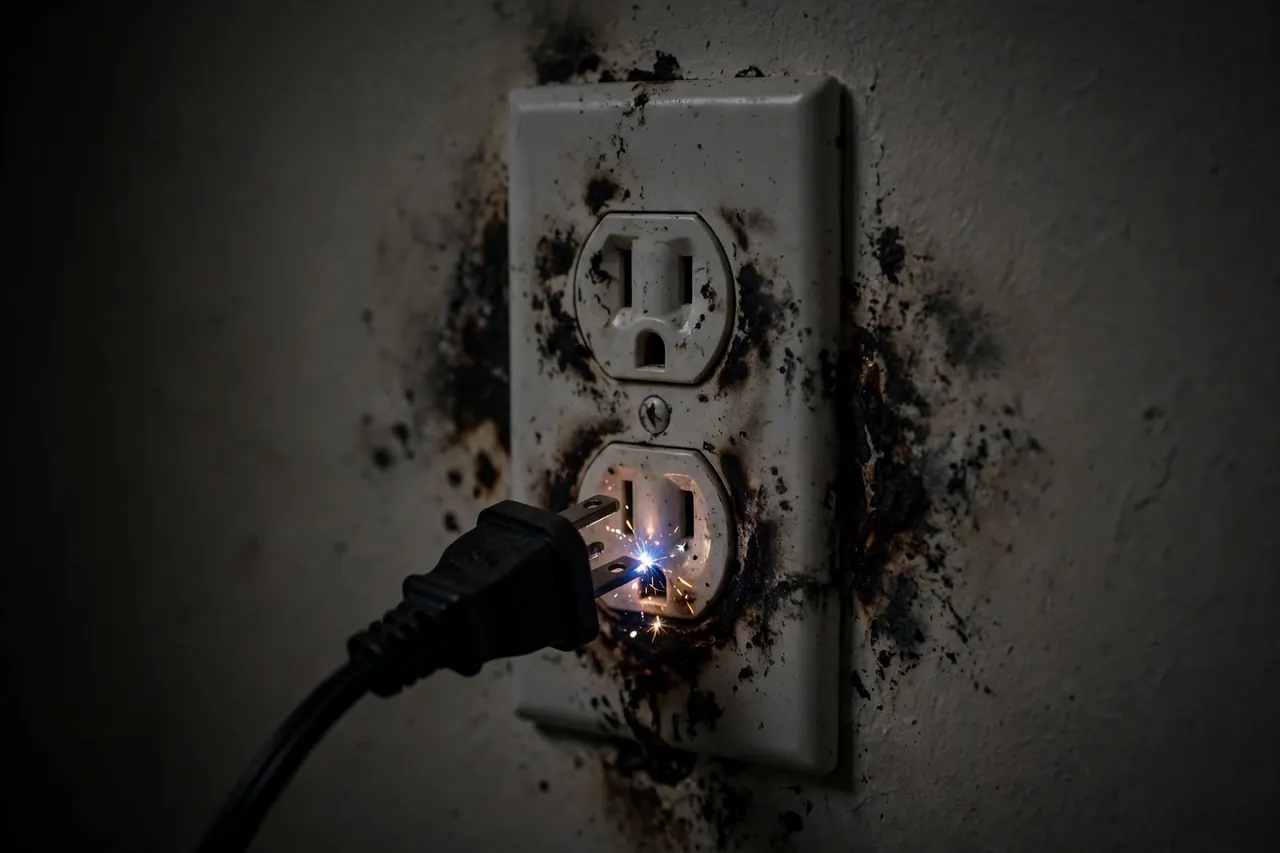 PROBLEM
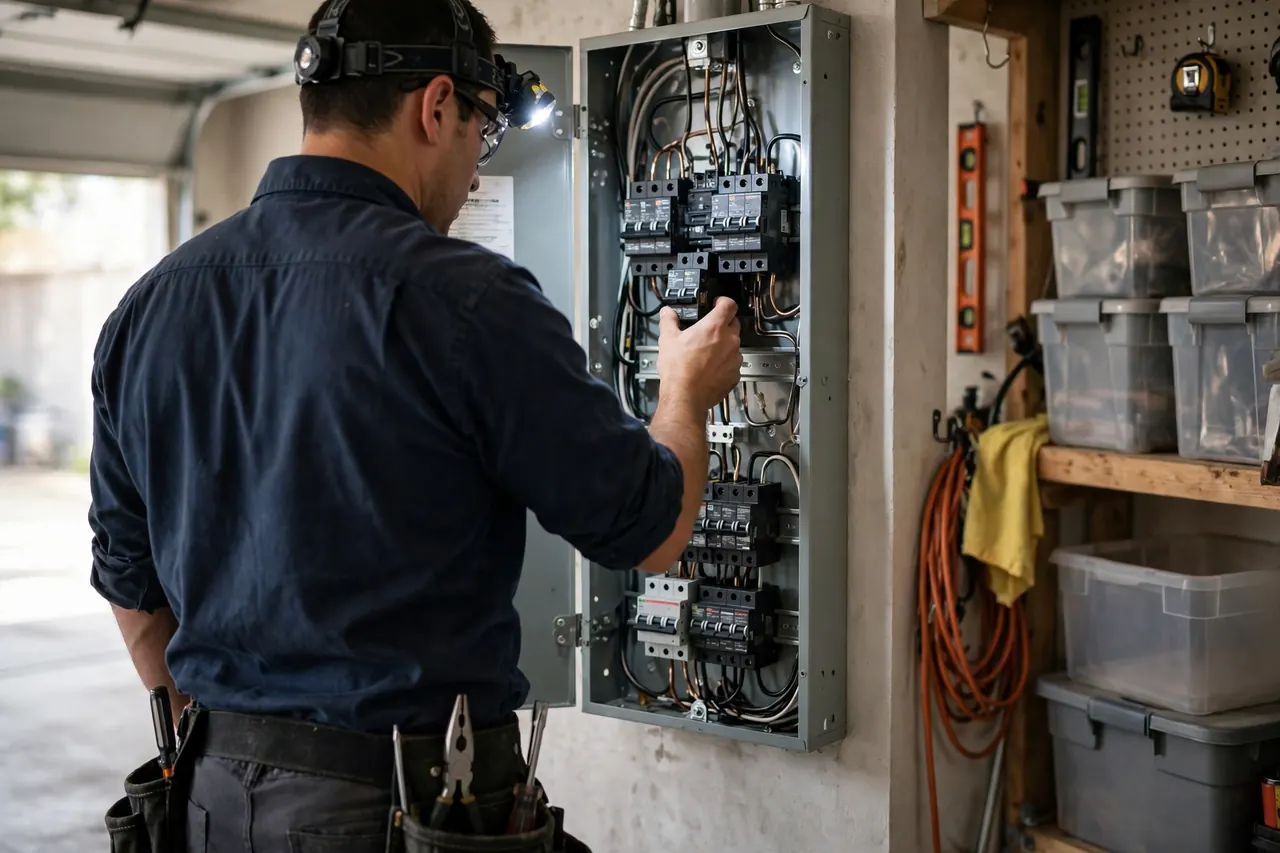 SOLUTION
How an electrical panel upgrade works
- The process usually starts with an in-person evaluation, where the electrician opens the panel, checks its age, condition, and capacity, and looks over what your home is asking it to carry now and in the near future.
- Next comes a load calculation, a structured estimate of your home's electrical demand based on its size, appliances, heating and cooling equipment, and planned additions, which determines the panel size the home actually needs.
- You and the electrician agree on the scope of work in writing, including the new panel size, how many circuits will be moved or added, and whether related items such as the meter base or service entrance cable are included.
- Most panel work requires coordination with the local utility and the local permitting office, and the electrician will explain the steps that apply in your area before scheduling the changeover day.
- On the day of the work, power to the home is shut off at the utility side, the old panel is removed, and the new panel is mounted, connected, and grounded, with each existing circuit landed on its own breaker and labeled.
- Power is then restored and each circuit is tested, so the electrician can confirm that breakers hold under normal load, outlets and fixtures work as expected, and the panel directory matches the circuits in the house.
- A local inspection typically follows, where an inspector looks over the installation against the electrical code adopted in your area, and the electrician addresses any items the inspector raises before the job is considered complete.
Repairing the existing panel vs Replacing the panel
Repairing the existing panel
- Addresses a single faulty breaker or connection
- Works when the panel is modern and correctly sized
- Shorter visit with power restored the same day in many cases
- Keeps existing circuits and layout as they are
- Sensible when damage is isolated, not widespread
Replacing the panel
- Replaces worn, damaged, or outdated equipment entirely
- Adds total capacity and open breaker slots
- Brings grounding and breaker protection up to date
- Supports renovations, additions, and new large loads
- Fits when problems are repeated or the design is unreliable
What shapes the job
- The size of the new service matters: moving to a larger panel may also involve a heavier service entrance cable and meter equipment sized to match, not just a new breaker box on the wall.
- The condition of the existing wiring plays a role, because older wiring methods, damaged insulation, or ungrounded circuits discovered during the swap can add work the electrician will want to discuss with you.
- The number of circuits in the home affects the time involved, since every circuit must be disconnected, moved, reconnected, tested, and clearly labeled in the new panel.
- Grounding and bonding upgrades are often part of the job, because modern code expects a grounding electrode system and bonding connections that older homes may only partially have.
- Panel location can shape the work: a panel in a finished wall, a tight closet, or a spot that no longer meets clearance rules may need to be relocated, which adds framing and wiring work.
- Modern protection requirements, such as arc-fault and ground-fault protection on certain circuits, can influence which breakers are installed and how circuits are organized in the new panel.
- Utility and inspection scheduling affects the timeline, since the power shutoff, reconnection, and final inspection all involve parties outside the electrician's own crew.
Understanding capacity, safety, and timing
It helps to think of panel capacity in two parts: total amperage and physical space. Total amperage is the amount of current the service can deliver to the whole house at once, and it is set by the utility connection, the service cable, and the main breaker working together. Physical space is the number of breaker slots available for individual circuits. A home can run short on either one. A panel with enough total capacity but no open slots cannot accept a new circuit cleanly, while a panel with open slots but a small main breaker may still trip when several large loads run together. A proper evaluation looks at both, along with a load calculation, rather than guessing from the age of the house alone.
Safety is the other half of the decision, and it is less visible than capacity. Breakers protect wiring by opening the circuit when current runs too high for too long, and that protection only works when breakers, bus bars, and connections are in sound condition. Heat is the warning sign of trouble: loose or corroded connections resist current, resistance creates heat, and heat damages insulation and metal over time, which makes the connection worse in a slow cycle. That is why burning odors, discolored breakers, melted insulation, or scorch marks around a panel deserve prompt attention and why panel interiors should only be opened by someone trained for the work. The energized parts inside a panel can remain dangerous even with the main breaker off, because the utility side of the equipment stays live.
Timing often comes down to planning ahead rather than waiting for a failure. If you are considering a kitchen remodel, a home addition, an electric vehicle charger, a heat pump, or a workshop, the panel conversation belongs at the start of the project, not after new equipment is already purchased. Discovering mid-project that the panel cannot support the plan can stall everything while the upgrade is scheduled. Homeowners also encounter the panel question during a home sale, after an inspection report raises it, or when adding insurance coverage prompts questions about older equipment. In each case, an in-person evaluation gives you a clear picture of what you have, what it can support, and what an upgrade would involve, so the decision rests on facts about your specific home rather than on guesswork.
Questions about electrical panel upgrade
How do I know whether I need a full panel replacement or just a repair?
What is the difference between 100-amp and 200-amp service?
How long will my power be off during a panel upgrade?
Will a panel upgrade require changes to the rest of my wiring?
Can I stay in my home while the panel is being upgraded?
Find electrical panel upgrade in your city
Alabama: Birmingham, Huntsville, Mobile, Montgomery, Tuscaloosa, Daphne–Fairhope, Auburn, Decatur, Florence–Muscle Shoals, Dothan
Alaska: Anchorage
Arizona: Phoenix, Tucson, Prescott, Lake Havasu City, Yuma, Flagstaff
Arkansas: Little Rock, Fayetteville–Springdale–Rogers, Fort Smith
California: Los Angeles, Riverside–San Bernardino, San Francisco, San Diego, Sacramento, San Jose, Fresno, Bakersfield, Oxnard–Ventura, Stockton, Modesto, Santa Rosa, Visalia, Vallejo, Santa Barbara, Salinas, Merced, San Luis Obispo, Santa Cruz, Chico, Yuba City, Redding, El Centro, Hanford
Colorado: Denver, Colorado Springs, Greeley, Fort Collins, Boulder, Pueblo, Grand Junction
Connecticut: Hartford, Bridgeport–Stamford, New Haven, Waterbury, Norwich–New London
Delaware: Dover
District of Columbia: Washington
Florida: Miami, Tampa, Orlando, Jacksonville, North Port–Sarasota, Cape Coral–Fort Myers, Lakeland, Daytona Beach, Palm Bay–Melbourne, Port St. Lucie, Pensacola, Ocala, Naples, Tallahassee, Gainesville, Crestview–Fort Walton Beach, Panama City, Punta Gorda, Sebastian–Vero Beach, Homosassa Springs, The Villages
Georgia: Atlanta, Augusta, Savannah, Columbus, Macon, Gainesville, Athens, Warner Robins, Valdosta, Dalton, Albany
Idaho: Boise, Coeur d'Alene, Idaho Falls
Illinois: Chicago, Peoria, Rockford, Champaign, Springfield, Bloomington
Indiana: Indianapolis, Fort Wayne, South Bend, Evansville, Lafayette, Elkhart, Terre Haute, Bloomington
Iowa: Des Moines, Davenport, Cedar Rapids, Iowa City, Waterloo, Sioux City
Kentucky: Louisville, Lexington, Bowling Green
Louisiana: New Orleans, Baton Rouge, Lafayette, Shreveport, Slidell, Lake Charles, Monroe, Houma, Alexandria
Maryland: Baltimore, Hagerstown, Lexington Park
Massachusetts: Boston, Worcester, Springfield, Barnstable Town, Amherst
Michigan: Detroit, Grand Rapids, Lansing, Flint, Ann Arbor, Kalamazoo, Saginaw, Muskegon, Jackson, Traverse City, Monroe, Niles
Minnesota: Minneapolis–St. Paul, Duluth, Rochester, St. Cloud
Mississippi: Jackson, Gulfport–Biloxi, Hattiesburg
Missouri: St. Louis, Kansas City, Springfield, Columbia, Joplin, Jefferson City
Montana: Billings
New Hampshire: Manchester
New Jersey: Trenton, Atlantic City, Vineland
New Mexico: Albuquerque, Las Cruces, Santa Fe
New York: New York, Buffalo, Rochester, Albany, Poughkeepsie, Syracuse, Utica, Binghamton, Kingston
North Carolina: Charlotte, Raleigh, Greensboro, Winston-Salem, Durham, Wilmington, Asheville, Fayetteville, Hickory, Jacksonville, Burlington, Greenville, Rocky Mount
North Dakota: Fargo
Ohio: Cincinnati, Columbus, Cleveland, Dayton, Akron, Toledo, Youngstown, Canton
Oklahoma: Oklahoma City, Tulsa
Oregon: Portland, Salem, Eugene, Bend, Medford
Pennsylvania: Philadelphia, Pittsburgh, Allentown, Harrisburg, Scranton, Lancaster, York, Reading, Erie, Chambersburg, State College, Lebanon
Rhode Island: Providence
South Carolina: Greenville, Charleston, Columbia, Myrtle Beach, Spartanburg, Hilton Head Island, Florence
South Dakota: Sioux Falls, Rapid City
Tennessee: Nashville, Memphis, Knoxville, Chattanooga, Clarksville, Kingsport, Johnson City, Jackson
Texas: Dallas–Fort Worth, Houston, San Antonio, Austin, McAllen, El Paso, Killeen–Temple, Corpus Christi, Brownsville, Beaumont, Lubbock, Waco, Longview, College Station, Laredo, Amarillo, Tyler, Midland, Abilene, Odessa, Sherman–Denison, Wichita Falls, Texarkana
Utah: Salt Lake City, Provo, Ogden, St. George, Logan
Vermont: Burlington
Virginia: Virginia Beach–Norfolk, Richmond, Roanoke, Lynchburg, Charlottesville, Blacksburg, Winchester
Washington: Seattle, Spokane, Kennewick, Olympia, Bremerton, Yakima, Bellingham
West Virginia: Huntington, Charleston, Morgantown
Wisconsin: Milwaukee, Madison, Green Bay, Appleton, Racine, Eau Claire, Oshkosh, La Crosse, Kenosha, Janesville
Need electrical panel upgrade help?
One call routes you to an independent local electrician who handles this work in your area.