Ceiling Fan Installation — the short answer
Ceiling fan installation mounts a correctly sized fan on a fan-rated ceiling box, with controls for the fan and its light, in bedrooms, living rooms, porches, and other spaces. VoltReach USA connects homeowners with independent local electricians who verify the support and install ceiling fans properly. Below: the signs that point to this job, how the work itself runs, and what shapes its scale.
A ceiling fan is one of the hardest-working fixtures in a home. In warm weather, the breeze it creates makes a room feel noticeably cooler, so the air conditioning can rest a little while people stay comfortable. In cold weather, many fans reverse and gently push the warm air that collects at the ceiling back down into the room. Fans do this work in primary bedrooms, living rooms, kitchens, covered porches, and home offices, and they do it quietly and continuously, which is why correct installation matters: a fan is a heavy, moving machine hanging overhead, and it deserves to be mounted and wired like one.
That mounting is the heart of the job. A ceiling fan must be supported by an electrical box rated for fan use, braced to the building structure, because a fan's weight and motion will work an ordinary light-fixture box loose over time. An electrician checks the existing box, replaces it with a fan-rated brace box when needed, and confirms the ceiling structure can carry the fan at its location. From there, sizing and placement take over: blade span matched to the room, a downrod that puts the fan at the right height on taller ceilings, and controls that let you run the fan and its light the way you actually want to.
The finishing details decide whether a fan becomes a favorite feature or a mild annoyance. A well-installed fan runs without wobble, hum, or clicking, because the mounting is solid and the blades are balanced. Separate control of the fan and light, whether by wall controls or a remote, means the breeze can run all night without the light. Outdoor locations call for fans rated for damp or wet exposure so humidity does not destroy the motor and finish. These are exactly the points a professional installation addresses and a quick fixture swap often skips, sometimes literally leaving the most important one, the box, unexamined above the ceiling.
VoltReach USA is a referral service, not an electrical company, and it does not install ceiling fans itself. We connect homeowners with independent local electricians who can verify the ceiling support, help confirm the fan suits the room, and install it with the controls you choose together. Whether you are replacing a tired, wobbling fan, adding one to a bare ceiling, or putting air movement on a covered porch, this page explains the signs a fan would help, how installation typically proceeds, and what shapes the work in your particular room.
Signs a ceiling fan could help the room
- A bedroom or living room feels stuffy even when the air conditioning runs, and better air movement would make the space comfortable without turning the thermostat down further.
- There is a plain light fixture in the center of the room where a fan would serve far better, especially in a primary bedroom used every night of the year.
- An existing fan wobbles, clicks, hums, or shakes at higher speeds, which points to balance trouble or a mounting that was never right for a moving fixture.
- The fan in place is undersized for the room, oversized and overpowering, or hung at the wrong height for a tall or vaulted ceiling, so it never feels effective.
- A covered porch, patio, or sunroom is too still and warm to enjoy, and an outdoor-rated fan would turn it back into usable living space.
- You are renovating or moving into a home where several rooms have no fans at all, and you want them installed on properly braced boxes from the start.
- Pull chains are broken, the wall switch controls fan and light together in a way that frustrates everyone, or a high ceiling makes chain control impractical without a remote.
- A fan's light kit has failed, its finish or blades are damaged, or its style belongs to another decade, and replacement is the right moment to check the mounting as well.
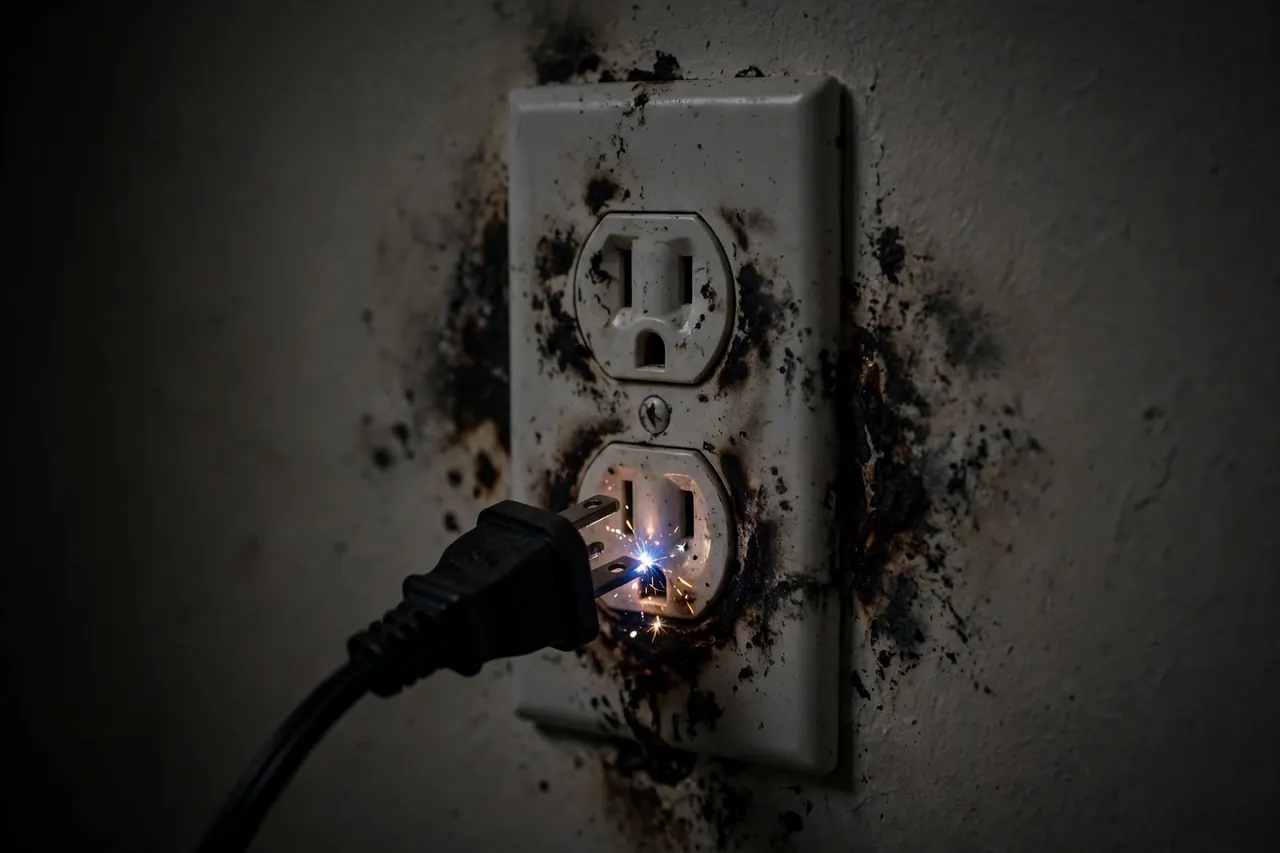 PROBLEM
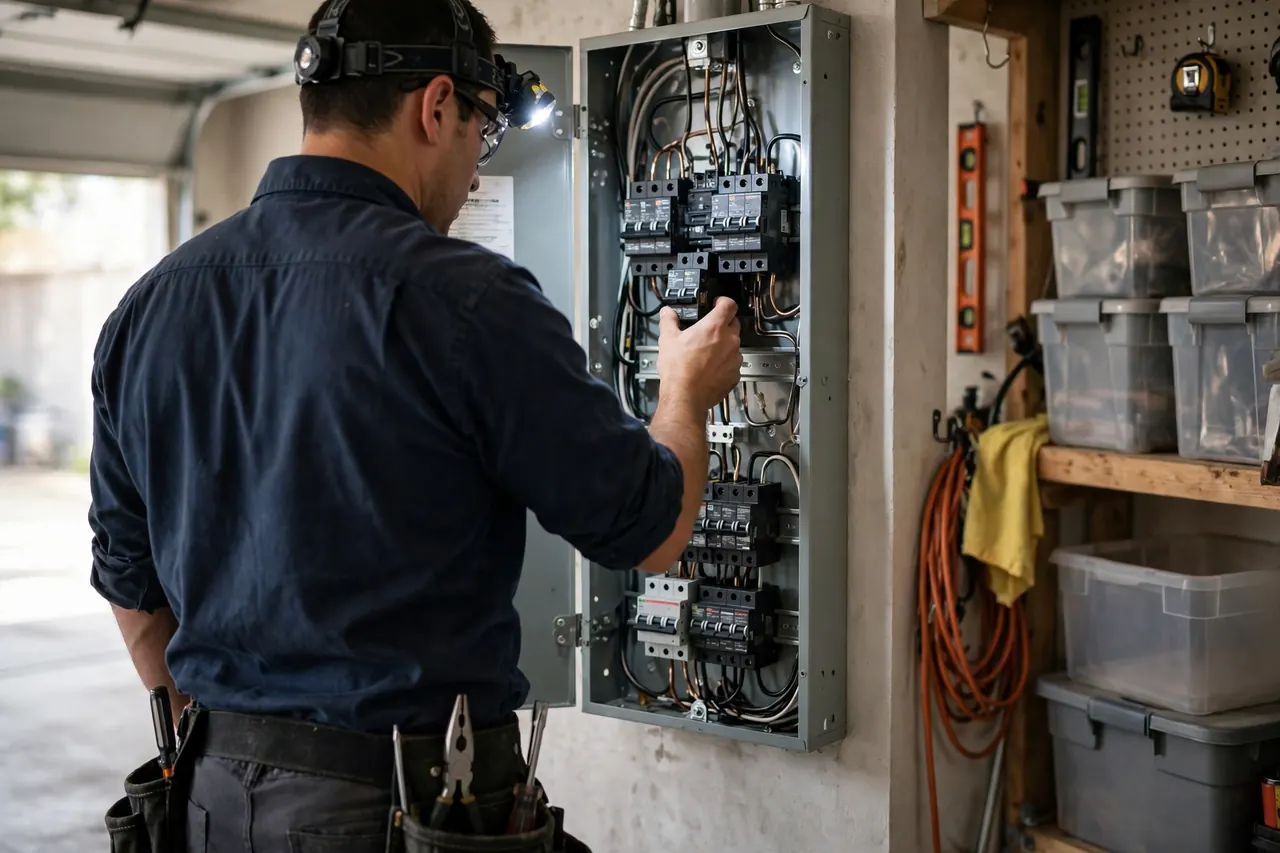 SOLUTION
How ceiling fan installation works
- The installation starts with a check of the location: the electrician examines the existing ceiling box and its support, confirms whether it is rated for a fan, and looks over ceiling height and structure.
- You confirm the fan itself, with blade span matched to the room size, the right mount or downrod for the ceiling, and a damp or wet rating if the fan is headed for a porch or patio.
- Controls are settled before work begins, whether that is separate wall switches for fan and light, a dual control, a remote, or a smart option, along with any new switch wiring that requires.
- You and the electrician agree on the scope in writing, including box replacement if needed, any new wiring to a bare ceiling, and how any patching will be handled.
- On installation day, power to the circuit is turned off and verified, the old fixture or fan is removed, and a fan-rated brace box is fitted if the existing support is not up to the job.
- The fan is assembled, mounted, and wired, blades are fitted and checked for even height, and the controls and any receiver are installed and paired.
- The finished fan is run through every speed, the light is tested, and balance is checked, so the fan you are left with runs smoothly and quietly, with the reverse function explained for winter use.
What shapes the job
- The existing ceiling box is the first factor: if it is not fan-rated, replacing it with a braced, fan-rated box adds work that is essential to a safe, quiet installation.
- Ceiling height and slope shape the mounting hardware, since high, vaulted, or sloped ceilings need downrods and angled adapters, and very high ceilings may need an extended mounting approach from a ladder or scaffold.
- Whether wiring and switching already exist at the location matters: adding a fan where a light already hangs is simpler than bringing new power and switches to a bare ceiling.
- Fan size and weight influence both the support required and the handling during installation, with large-span and solid-wood-blade models asking more of the mounting and the installer.
- Control choices add scope: dual wall controls, remotes, or smart controls each involve specific wiring and receivers, and separate control of fan and light is ideally planned before installation day.
- The location's exposure matters for porches and patios, because damp-rated or wet-rated fans and weather-appropriate hardware are required where indoor fixtures would fail early.
- Access above the ceiling, such as an attic, can simplify adding or reinforcing a box, while a finished floor above may call for a brace installed through the ceiling opening from below.
Sizing, controls, and special locations
Choosing the right fan starts with the room, not the showroom. Blade span is matched to room size: compact fans suit small bedrooms and offices, mid-size spans serve most bedrooms and living rooms, and large rooms, great rooms, and spaces with ceilings that collect heat need larger spans or sometimes two fans to move air evenly. Ceiling height sets the mounting: on a standard ceiling a low-profile mount keeps blades at a safe, effective height, while high and vaulted ceilings need downrods that bring the fan into the zone where it can move air for the people below rather than stirring air at the peak. Airflow figures give a fair way to compare models, and blade pitch and motor design influence both airflow and noise. Your electrician can sanity-check a fan you are considering against the room before it is purchased and opened.
Controls determine whether a fan gets used the way it was intended. The classic arrangement gives the fan and its light separate control, either through two switches, a dual wall control, or a remote, so the light can be off while the fan runs through the night. A single switch with pull chains works but invites confusion and chains that get pulled by guests into mysterious settings. Smart and remote controls add convenience, especially for high ceilings where chains are impractical, but they involve receivers and wiring choices that are easiest to settle at installation. If the room has no ceiling fixture at all, new wiring and switching are part of the project, and a fan-rated box and proper support are installed from the start. Deciding controls during planning avoids the common outcome of a beautiful fan nobody adjusts because it is awkward.
Outdoor and special locations deserve their own mention. A fan for a covered porch or patio must carry a damp or wet specification appropriate to its exposure; an indoor-only fan installed outdoors will corrode, warp, and fail early, and its finish and blades are not built for humid air. Bathrooms and laundry areas have their own moisture considerations. In bedrooms, quiet operation matters more than peak airflow, so motor quality and solid mounting are worth attention, because a fan that hums or ticks at sleep hours will simply be switched off. Finally, an existing fan that wobbles should not be ignored as a cosmetic flaw: wobble points to balance or mounting problems that stress the support over time. An electrician can determine whether balancing fixes it or the mounting itself needs correction, which is the safer and longer-lasting answer.
Questions about ceiling fan installation
Which direction should a ceiling fan turn in summer and winter?
Can a ceiling fan hang from the same box as my current light fixture?
What size ceiling fan does my room need?
Why does my ceiling fan wobble, and should it be fixed?
Can a fan be installed where there is no ceiling fixture now?
Find ceiling fan installation in your city
Alabama: Birmingham, Huntsville, Mobile, Montgomery, Tuscaloosa, Daphne–Fairhope, Auburn, Decatur, Florence–Muscle Shoals, Dothan
Alaska: Anchorage
Arizona: Phoenix, Tucson, Prescott, Lake Havasu City, Yuma, Flagstaff
Arkansas: Little Rock, Fayetteville–Springdale–Rogers, Fort Smith
California: Los Angeles, Riverside–San Bernardino, San Francisco, San Diego, Sacramento, San Jose, Fresno, Bakersfield, Oxnard–Ventura, Stockton, Modesto, Santa Rosa, Visalia, Vallejo, Santa Barbara, Salinas, Merced, San Luis Obispo, Santa Cruz, Chico, Yuba City, Redding, El Centro, Hanford
Colorado: Denver, Colorado Springs, Greeley, Fort Collins, Boulder, Pueblo, Grand Junction
Connecticut: Hartford, Bridgeport–Stamford, New Haven, Waterbury, Norwich–New London
Delaware: Dover
District of Columbia: Washington
Florida: Miami, Tampa, Orlando, Jacksonville, North Port–Sarasota, Cape Coral–Fort Myers, Lakeland, Daytona Beach, Palm Bay–Melbourne, Port St. Lucie, Pensacola, Ocala, Naples, Tallahassee, Gainesville, Crestview–Fort Walton Beach, Panama City, Punta Gorda, Sebastian–Vero Beach, Homosassa Springs, The Villages
Georgia: Atlanta, Augusta, Savannah, Columbus, Macon, Gainesville, Athens, Warner Robins, Valdosta, Dalton, Albany
Idaho: Boise, Coeur d'Alene, Idaho Falls
Illinois: Chicago, Peoria, Rockford, Champaign, Springfield, Bloomington
Indiana: Indianapolis, Fort Wayne, South Bend, Evansville, Lafayette, Elkhart, Terre Haute, Bloomington
Iowa: Des Moines, Davenport, Cedar Rapids, Iowa City, Waterloo, Sioux City
Kentucky: Louisville, Lexington, Bowling Green
Louisiana: New Orleans, Baton Rouge, Lafayette, Shreveport, Slidell, Lake Charles, Monroe, Houma, Alexandria
Maryland: Baltimore, Hagerstown, Lexington Park
Massachusetts: Boston, Worcester, Springfield, Barnstable Town, Amherst
Michigan: Detroit, Grand Rapids, Lansing, Flint, Ann Arbor, Kalamazoo, Saginaw, Muskegon, Jackson, Traverse City, Monroe, Niles
Minnesota: Minneapolis–St. Paul, Duluth, Rochester, St. Cloud
Mississippi: Jackson, Gulfport–Biloxi, Hattiesburg
Missouri: St. Louis, Kansas City, Springfield, Columbia, Joplin, Jefferson City
Montana: Billings
New Hampshire: Manchester
New Jersey: Trenton, Atlantic City, Vineland
New Mexico: Albuquerque, Las Cruces, Santa Fe
New York: New York, Buffalo, Rochester, Albany, Poughkeepsie, Syracuse, Utica, Binghamton, Kingston
North Carolina: Charlotte, Raleigh, Greensboro, Winston-Salem, Durham, Wilmington, Asheville, Fayetteville, Hickory, Jacksonville, Burlington, Greenville, Rocky Mount
North Dakota: Fargo
Ohio: Cincinnati, Columbus, Cleveland, Dayton, Akron, Toledo, Youngstown, Canton
Oklahoma: Oklahoma City, Tulsa
Oregon: Portland, Salem, Eugene, Bend, Medford
Pennsylvania: Philadelphia, Pittsburgh, Allentown, Harrisburg, Scranton, Lancaster, York, Reading, Erie, Chambersburg, State College, Lebanon
Rhode Island: Providence
South Carolina: Greenville, Charleston, Columbia, Myrtle Beach, Spartanburg, Hilton Head Island, Florence
South Dakota: Sioux Falls, Rapid City
Tennessee: Nashville, Memphis, Knoxville, Chattanooga, Clarksville, Kingsport, Johnson City, Jackson
Texas: Dallas–Fort Worth, Houston, San Antonio, Austin, McAllen, El Paso, Killeen–Temple, Corpus Christi, Brownsville, Beaumont, Lubbock, Waco, Longview, College Station, Laredo, Amarillo, Tyler, Midland, Abilene, Odessa, Sherman–Denison, Wichita Falls, Texarkana
Utah: Salt Lake City, Provo, Ogden, St. George, Logan
Vermont: Burlington
Virginia: Virginia Beach–Norfolk, Richmond, Roanoke, Lynchburg, Charlottesville, Blacksburg, Winchester
Washington: Seattle, Spokane, Kennewick, Olympia, Bremerton, Yakima, Bellingham
West Virginia: Huntington, Charleston, Morgantown
Wisconsin: Milwaukee, Madison, Green Bay, Appleton, Racine, Eau Claire, Oshkosh, La Crosse, Kenosha, Janesville
Need ceiling fan installation help?
One call routes you to an independent local electrician who handles this work in your area.