Everything on this page was computed for Saginaw and nowhere else: the problem ranking from its Census housing profile, the seasonal risks from its NOAA station record, the coverage from its own ZIP codes. VoltReach USA connects you to an independent local electrician; the page itself is the homework, done in public, so the call you make is an informed one.
19
ZIP codes covered
1
County in the metro
77,586
Households (Census ACS)
1968
Median year home built
Saginaw, MI — electrical help across the metroLocal electricians serving Saginaw neighbourhoodsPanel work across the metro
Saginaw electrical work, in brief
The median Saginaw home was built in 1968; 72.1% of the stock predates 1980, and the pattern this metro's own data ranks first is heating load strain in saginaw. VoltReach USA is a referral service, not an electrical company: one call connects you with an independent local electrician serving your ZIP code.
The Saginaw housing stock, and what it means for wiring
The stock, in one pass: 189,210 residents, 86,134 housing units, 77,586 households — and a build history that splits the metro into electricians' generations. 38.7% of homes stand from before 1960; 72.1% from before 1980; the rest divide between the late-century suburbs and the 11.3% built since 2000. Every era is a panel-and-wiring decision still in force: the circuits in a Saginaw wall are the ones its decade specified, ageing on that decade's schedule, whatever the current owner's plans for them.
By now, most of Saginaw's pre-1980 homes are on their second electrical lives in part: a panel replaced, a heavy-up done for a remodel, a run of new circuits for a kitchen — while the remainder of the original system carries on into its sixth and seventh decades. The 62,103 homes in that stock are therefore not uniformly old; they are individually old, each with its own archaeology of repairs. That is why the pre-1980 districts reward inspection over inference: the street's average says little about the house in front of you, whose real history is written in its panel directory and its junction boxes.
The newer side of Saginaw — the 11.3% of homes built since 2000, concentrated around growing communities like Saginaw — runs on grounded copper wiring and 200-amp panels that handle modern loads gracefully but age in their own ways: breakers and GFCI devices reaching their wear years, whole streets of homes asking for EV charging circuits their builders never imagined, and smart devices multiplying the load on panels sized for a simpler house. One metro, two electrical generations, and the sections below take them in the order this metro's data ranks them.
The weather's part in this is written at SAGINAW MBS INTL AP, MI US, where an average year carries 32.12 inches of precipitation, 8.7 days at ninety degrees or more and 138.6 nights at freezing or below. Electrical systems experience that year as workload and as hazard in roughly equal measure — the workload in the HVAC load on the panel, the hazard in the storm seasons and the deep-freeze nights. The problem ranking further down is simply the housing profile above, read under this sky.
The Saginaw electrical profile in numbers
The metro's building eras on one side, its weather record on the other — and its wiring where the two meet.
Break the stock down by building era and the profile sharpens. Before 1960: 38.7% of homes, roughly 33,334 of them. From 1960 to 1979: 33.4%, about 28,769. From 1980 to 1999: 16.7%, about 14,384. Since 2000: 11.3%, about 9,733. Four eras, four generations of panels and wiring — and the balance among them is this metro's electrical character in a single paragraph.
The defining fact about housing in Saginaw is how much of it predates 1960: 38.7 of the stock, 33,334 homes, with a median build year of 1968. Electrically, that era means fuse boxes or early small panels in some properties, service sizes of 60 to 100 amps, and in the earliest homes wiring methods such as knob-and-tube and cloth-insulated conductors that have now served for many decades. Ungrounded outlets are common findings. Across Saginaw, Freeland and Shields in Saginaw, the electrical profile of Saginaw, Michigan is therefore one of original systems, layered modifications and a real need for careful, era-aware assessment by independent local electricians. That inheritance also shapes decisions every week, from where a charger can go to whether a room can safely carry another heater through winter.
Mid-century housing as the runner-up era gives Saginaw a broad base of homes now well past fifty years old. In Freeland and Bridgeport, these properties typically combine copper or aluminium branch wiring from the period with panels sized for lighter demand and outlets that predate current grounding expectations. Independent local electricians working in Saginaw often find that a Saginaw home from this band is fundamentally sound in structure but ready for electrical renewal in stages, beginning with the panel and the highest-load circuits, a pattern repeated across this era throughout Michigan. Later additions near Bridgeport often reveal this band where an original early home was extended in a subsequent building wave.
Freeze nights deserve their own place in the Saginaw climate profile, because they load the system in a distinctive way. On the 138.6 days at or below freezing at SAGINAW MBS INTL AP, MI US, heating runs continuously, auxiliary heat adds heavy draw, and households in Freeland and Shields supplement with space heaters on ordinary circuits. The 6,781 heating degree days behind those nights explain why panels in Saginaw that seem adequate in autumn can trip in January. Independent local electricians in Saginaw weigh that winter peak alongside the summer cooling peak of 631 degree days when they assess a Saginaw, Michigan home as a whole. For planning, the useful question is not whether a system copes today, but whether it copes on the hardest local day of its year.
For a homeowner in Saginaw, the practical value of this ranking is sequence. It suggests which checks come first for a home of a given era in this climate, whether that is panel condition before summer in Freeland, heating circuits before winter in Saginaw, or grounding and protection ahead of storm season in Shields. Across 77,586 households in Saginaw, the order differs by era and exposure, and independent local electricians can turn this metro-level picture into a home-specific order of attention for any property in Saginaw, Michigan.
Electrical problems Saginaw homes actually get
Chosen by this metro's own housing and weather data — the same two records this whole page is built from.
Heating Load Strain in Saginaw
Heat pumps deserve a clear explanation for Saginaw homeowners, because their cold weather behaviour surprises many. In mild cold, a heat pump moves heat efficiently and draws moderately. As outdoor temperatures fall, its output drops just as the house needs more, and the system calls on auxiliary electric heat strips to close the gap. Those strips draw heavily, more like an electric furnace. A panel and circuit arrangement in Saginaw that handled the heat pump all autumn is suddenly feeding a much larger load in a cold snap. If breakers trip or rooms cool during the deepest cold in Freeland or Buena Vista, that transition — not a mysterious new fault — is often where the diagnosis begins.
Generator readiness intersects with heating strain in Saginaw in a specific way. An outage during deep cold threatens heat itself, and a generator plan that ignores the heating system may keep lights on while the house still cools toward a freeze. Portable generators rarely carry an electric furnace or auxiliary heat strips, which are very large loads, so households in Bridgeport should understand in advance what their generator will and will not run, and plan safe supplementary heat accordingly. An electrician discussing generator installation in Saginaw will work through the winter load list honestly, so no one discovers the limits of their arrangement on the coldest night of the year.
There is also a building condition thread in Saginaw worth naming. On the coldest nights, heating systems run without pause, and every connection in the heating circuit carries sustained current for many hours. Sustained current is what finds weak points: a loose termination in a disconnect in Shields, a tired breaker in a panel in Bridgeport, insulation on conductors aged by decades of heat cycles. A fault that smoulders electrically at low load declares itself at full load. That is why winter calls in Saginaw so often involve heating circuits and panels rather than lighting or outlets, and why a pre season check of heating circuits in Saginaw is worth more than the same check in spring.
Aluminum and copper behave differently at a connection, and that difference explains this whole pattern in Saginaw homes. Aluminum expands more as it warms under load, creeps under screw pressure over time, and develops an oxide layer that resists current. Together those traits can loosen a termination and raise resistance at that point, and higher resistance means more heat generated exactly where wires meet devices. Heat then accelerates the same loosening, so a connection that was merely imperfect can worsen over years. Modern practice handles aluminum safely in many larger applications with suitable materials and methods. The older branch circuit issue is about period devices and connectors that were not designed with those behaviours in mind.
Mixed wiring deserves a mention in Saginaw, because few houses of this age are untouched. A 1970s addition in Freeland may be copper, a replaced circuit in the kitchen may be copper, and the original bedrooms may remain aluminum, all meeting in the same panel. Problems arise when the two metals are joined casually in a box with a connector meant only for copper. An electrician mapping a house will note where transitions happen and whether each one uses a connector listed for that pairing. That map, once made, guides any remediation in a sensible order, starting with connections showing heat or looseness.
The story of aluminum wiring in Saginaw is a story about connections more than cable. The wire runs hidden in walls in Bridgeport and Buena Vista are not the usual focus. The points where aluminum meets a device — an outlet terminal, a switch screw, a wire connector in a box — are where time changes things. Aluminum expands and contracts with heat, forms an oxide surface, and can loosen at terminations that were not made for it. After decades of daily heating and cooling cycles, having those connection points assessed in a 1960s or 1970s Saginaw home is a measured, practical step.
Think about the decision a Saginaw homeowner actually faces with this wiring, because it is rarely all or nothing. Options commonly discussed include rewiring the circuits that carry significant modern loads first, rewiring during rooms' renovations when walls are already open, and in the meantime reducing what the oldest circuits are asked to carry — no space heaters or heavy appliances on circuits identified as knob-and-tube. An electrician can also advise on protective devices that add a measure of protection on older circuits where local rules allow. The through line in Saginaw is prioritisation based on a circuit map, not a blanket instruction to rewire everything immediately or to ignore it indefinitely.
A practical caution belongs here for Saginaw homeowners: do not probe, move or test knob-and-tube wiring yourself, and be careful with stored items resting against old conductors in attics and basements. Brittle insulation can crack when disturbed, and conductors that look inert may be live. If insulation work, storage changes or a renovation will disturb areas where this wiring runs in a Saginaw home, have an electrician identify active runs first. That single sequencing step protects both the workers doing the later job and the wiring itself, and it takes little effort compared with repairing damage done in ignorance of what was hidden.
The oldest layer of Saginaw housing is substantial: Census data counts 33,334 homes built before 1960 — 38.7 of the stock — and the earliest of them in Saginaw, Freeland and Shields predate modern wiring methods entirely. Homes from before about 1950 in Saginaw were commonly wired with knob-and-tube, a system using separate single conductors run on ceramic knobs and through ceramic tubes. Where it survives in Saginaw, it survives in houses that have often been renovated room by room, leaving original wiring in the least disturbed places: attics, basements and wall cavities.
Freeze season in Saginaw is most clearly understood as a load season. Every house in Saginaw makes the same demands at once: heating at full stage, water heating recovering, cooking, laundry and lights, all while temperatures sit at their coldest. In homes among the 62,103 built before 1980 here, that combined peak can approach the service size for hours at a time. The practical responses are unglamorous and effective in Saginaw: stagger heavy loads where you can, give any space heater a circuit of its own, and treat repeated tripping in cold weather as a prompt for an electrician's assessment rather than a habit to live with until spring.
When sustained cold settles over Saginaw, the electrical system works differently. Heating equipment that cycles briefly in mild weather runs almost continuously, auxiliary strips add heavy draw during the coldest hours counted among 138.6 freezing days at SAGINAW MBS INTL AP, MI US, and households in Freeland and Shields add space heaters room by room. In homes built in the 1960s across Saginaw, that load lands on circuits planned for far less. Flicker when the heating starts and trips that happen only before dawn are useful clues. Independent local electricians can assess heating load and circuit condition in Saginaw homes during freeze season.
A closer look: heating load strain in saginaw in Saginaw
Sustained current changes the failure physics in Saginaw in a way worth understanding. Connections throughout a heating circuit — breaker stabs, lugs, disconnect contacts, equipment terminals — each carry a small resistance. At brief loads, the heat that resistance generates dissipates harmlessly. At the multi hour full draw of a cold night in Saginaw, heat accumulates faster than it sheds, temperatures at marginal connections climb, and materials age or fail at the warmest point first. This is why a connection can serve for years and fail in a single cold snap: the snap is the first time duration and current combined crossed its threshold. Electricians inspecting after such a failure in Saginaw look along the whole heating path, not just at the failed point, because other connections of the same age and type have lived the same life and deserve the same scrutiny before the next cold night tests them.
Why here and not everywhere: Saginaw pairs 62,103 pre-1980 homes with 8.7 days a year at 90 degrees or more and 138.6 nights below freezing. Every metro pairs its housing with its weather somehow; this particular pairing is what puts the pattern where it sits on this page's list, ahead of problems that dominate metros built in other decades, under other skies.
The first visit follows a short, diagnostic list — each item ruling a branch of the problem in or out:
Inspect heating circuit breakers and terminations
Check disconnects for heat damage or looseness
Assess auxiliary heat staging and its circuits
Assess panel capacity against winter peak load
Identify space heater circuits and their loads
Test heating supply at the equipment
Electrical services in Saginaw
Sequenced by this metro's own problem ranking, not by a national catalogue order.
Emergency Electrician in Saginaw
Shocks, exposed wiring, or arcing in Saginaw homes across 19 ZIP codes are reasons to keep people away and seek help. VoltReach USA connects you with an independent local electrician who talks through precautions and next steps directly.
Knowing what to do before help arrives matters in Saginaw. If there is sparking, smoke or a strong burning smell, keeping clear of the panel area, avoiding any contact where moisture is present, and not repeatedly resetting a breaker that will not hold are prudent steps for any household in Saginaw or Freeland. Photographing nothing, touching nothing and simply noting when the problem began and what was running can genuinely help diagnosis. Independent local electricians can then take over safely in the Saginaw, Michigan home, isolate the fault, and advise which circuits may be used and which should remain off until repair is complete. After an urgent visit in Saginaw, a written summary of what was isolated and why helps the household plan the follow-up calmly. Residents of Freeland (7,562), Shields (7,276) and Bridgeport share the same SAGINAW MBS INTL AP, MI US weather and the same broad housing eras, so a conversation with independent local electricians about a Saginaw home can usefully begin with when it was built and how it is loaded in peak season.
Weather drives urgent calls in Saginaw: SAGINAW MBS INTL AP, MI US records 32.12 of precipitation, 8.7 hot days and 138.6 freezing days in a typical year. Storms, heat and cold each stress connections and equipment across 77,586 households in Saginaw. Independent local electricians can help a household establish whether a sudden problem lies within the home in Saginaw or on the utility side of the service.
Homeowners in Saginaw, Michigan dealing with Heating Load Strain in Saginaw or aluminum wiring in Saginaw homes sometimes learn the cause sits inside the walls. Rewiring replaces worn or outdated cable and gives the home grounded, protected circuits laid out for modern use. Replacing a worn circuit removes a nagging worry owners often carry for years, especially in bedrooms and in rooms where children sleep at night.
The map of Saginaw is also a map of wiring age. Older districts near Saginaw hold the deepest stock of early housing, while growth near Freeland, Shields and Bridgeport added 9,733 homes since 2000 with contemporary wiring throughout. Between them, streets built in the 1960s, 1970s and 1980s fill 1 counties with their own mix. A homeowner comparing rewiring in Saginaw is really comparing eras, because access, wall construction and existing circuits differ sharply by neighbourhood and decade. Independent local electricians who work across Saginaw can explain those differences in practical terms and help owners in Michigan plan around occupancy and renovation timing. The mix of plaster, drywall and later additions found near Saginaw means opening walls is planned carefully, room by room, in advance. With 72.1 of Saginaw homes built before 1980, experience of older systems matters locally, and independent local electricians who regularly work in Saginaw can explain the quirks of the 1960s construction without treating every older home as the same problem.
The Saginaw climate recorded at SAGINAW MBS INTL AP, MI US includes 138.6 days at or below freezing, 8.7 hot days and 32.12 of precipitation annually. Wiring in Saginaw attics and walls experiences those extremes every year, and insulation on older conductors ages accordingly. Independent local electricians can weigh exposure and age together when assessing rewiring priorities for a home in Saginaw.
In Saginaw, Michigan, panels installed for the the 1960s era often meet today's loads in Saginaw. VoltReach USA connects homeowners with independent local electricians who can evaluate capacity and condition in person.
One circuit keeps cutting out in Saginaw? VoltReach USA connects you with an independent local electrician who can separate a worn breaker from an overload and explain the next step.
Standby generators in Saginaw, Michigan start automatically during outages, protecting heat, food, and pumps in Saginaw homes. VoltReach USA connects homeowners with independent local electricians who plan and install these systems.
EV drivers in Saginaw, Michigan charge fastest at home with a dedicated Level 2 circuit. VoltReach USA connects homeowners in Saginaw with independent local electricians who assess panels and parking layouts in person.
Storms and switching send spikes through Saginaw, Michigan wiring. VoltReach USA refers homeowners to independent local electricians who explain panel protection and how it layers with plug-in devices.
Outdoor and indoor lighting projects in Saginaw start with how each space is used. Homeowners across 1 counties use VoltReach USA to reach independent local electricians for lighting installation and planning.
Ceiling fans in Saginaw, Michigan make rooms feel cooler through 8.7 hot days and return warm air in winter. VoltReach USA connects homeowners with independent local electricians who install fans on properly braced ceiling boxes.
Need more outlets or GFCI protection in Saginaw, Michigan? VoltReach USA refers homeowners to independent local electricians who plan device work around your rooms and circuits.
In Saginaw, every level and sleeping area needs working detectors. VoltReach USA connects homeowners with independent local electricians who install, interconnect, and test units across the home.
New equipment or a refit coming up in Saginaw, Michigan? VoltReach USA refers businesses to independent local electricians who can plan dedicated circuits and lighting around the layout.
Two patterns generate most of the bookings behind the services above: Heating Load Strain in Saginaw and aluminum wiring in Saginaw homes. That is why the order of this page's service list is what it is — the services answering those patterns come early, and the rest follow in the order the metro's data supports. A homeowner whose home matches the local profile — built in the metro's big decades, in one of its older districts — is, statistically, reading their own shortlist.
From problem to fixed, in Saginaw
PROBLEMAn electrical problem inside a Saginaw home
➔
SOLUTIONThe same system in Saginaw after professional repair
Areas covered in the Saginaw metro
Saginaw
Population 43,879
Freeland
Population 7,562
Shields
Population 7,276
Bridgeport
Population 6,841
Buena Vista
Population 5,904
Frankenmuth
Population 5,108
Chesaning
Population 2,411
St. Charles
Population 1,857
Zilwaukee
Population 1,696
Burt
Population 1,430
Hemlock
Population 1,323
Birch Run
Population 1,236
Also in the Saginaw metro: Merrill (population 825), Robin Glen-Indiantown (population 545).
Beyond Saginaw itself, the metro takes in Freeland (7,562 residents), Shields (7,276) and the rest of the communities in the grid above — each wired in its own building era, which is why two streets in the same metro can need entirely different electrical conversations. The ZIP list below is the full coverage footprint: if your code is on it, this page was written about your housing stock.
Beyond the largest communities sit Bridgeport (6,841), Buena Vista (5,904), Frankenmuth (5,108), Chesaning (2,411), St. Charles (1,857) — smaller places across Saginaw, covered on the same terms. Their housing tends to be older on average than the big suburbs', and their calls follow the older patterns on this page. One routing covers them all: find your ZIP code below and the rest is a phone call.
The metro's weight is not evenly spread. Saginaw holds 43,879 of the 189,210 residents; Freeland and Shields add 7,562 and 7,276; and the remainder scatters across the smaller places above, some no bigger than a few thousand people. Electrical work follows the weight — most calls come from where most homes are — but era matters more than size: a small community of 1960s housing generates older-system work than a large new subdivision does.
Draw the metro by its paperwork and it resolves into Saginaw — 1 jurisdictions sharing one housing stock and one weather system. Saginaw County holds the historic centre and the densest share of the older homes; the surrounding counties hold the rings of growth around it. Permits and inspections follow those boundaries even though current never does, which is part of why the electrician this page connects you to works these streets specifically.
Three neighbouring coverage areas begin where this one ends: Flint, MI, some 28 miles off; Lansing, MI, 51 miles; and Detroit, MI, 60 miles. Each keeps its own page because each keeps its own numbers — a different median build year, a different climate station, a different problem ranking. Boundary households should trust the ZIP list over the map: the code, not the compass, assigns the dataset.
Set Saginaw among its neighbours and the contrasts sharpen the profile: Flint, MI — metro population 401,093, median build year 1969 — sits 28 miles away; Lansing, MI (479,722, median 1973) 51 miles; Detroit, MI (4,390,913, median 1968) 60 miles. Three different housing stocks under three nearby skies, which is why each keeps its own page and its own problem ranking rather than borrowing this one.
Count the metro per unit of itself: 4,533 housing units per covered ZIP code; 77,586 households per county; 14 communities sharing 1 county governments. Then weigh the generations against each other — 6.4 older homes for each newer one — and the service pattern on this page stops being a list and becomes a proportion: that much of the diary written by ageing systems, the rest by young ones wearing in.
One line of Saginaw arithmetic — a median home 58 years old · 57,026 owner-occupied homes against 20,560 renter-occupied · 1,754 pre-1960 homes for every covered ZIP code · a heating-to-cooling degree-day ratio of 10.75 · 816 mm of rain in an average year.
Saginaw electrical questions
Does VoltReach USA cover my part of Saginaw?
Yes, if your address falls inside the footprint spelled out on this page. That footprint is the set of 19 ZIP codes listed for Saginaw together with Saginaw, across 1 counties in total. It is deliberately drawn from postal and county lines rather than from a vague radius, so you can verify it yourself in seconds. VoltReach USA publishes the local research and routes your enquiry onward; the visit, the assessment and any agreed work are handled by an independent electrician local to Saginaw. Find your code in the list, confirm your county, and you have answered the coverage question without needing to guess. The population behind the boundary underlines its scale: 77,586 households in 86,134 homes across Saginaw, with 73.5% owner-occupied, means the coverage list is not a token gesture toward Saginaw but a working map of where local homeowners actually live, street by street and code by code, throughout the metro this page describes in its housing and weather research above. Compressed further, coverage here rests on three countable things: the code run beginning 48415, 48417, 48601, 48602, the 19 codes in total across Saginaw, and a housing base of 86,134 homes whose era profile, centred on the 1960s, is the reason this page exists for Saginaw at all. Stated as the communities those codes contain: the community ledger reads Saginaw (43,879 residents), Freeland (7,562), Shields (7,276), Bridgeport (6,841) and Buena Vista (5,904), out of 189,210 residents metro-wide. The weather record behind it is SAGINAW MBS INTL AP, MI US's: 6,781 heating degree-days against 631 cooling degree-days in an average year. Run the same ranking for nearby Flint and its leading pattern is heating load strain - a different order from Saginaw's, which is why this site keeps a separate page for every metro. It is written for a metro whose largest places are Saginaw (43,879 residents), Freeland (7,562) and Shields (7,276). The coverage behind this answer spans ZIP codes 48415 through 48607 - the ZIP list published on this page. Read it against a median build year of 1968 and a 72.1% share of homes from before 1980.
Which homes in Saginaw need the closest eye on panels and wiring?
Age sorts Saginaw homes into a clear order of attention. Pre-1960 homes come first: their panels, circuit layouts and wiring insulation were specified for a different household, and decades of heat cycles inside walls and ceilings take a gradual toll. Homes from 1960 to 1979 follow closely, particularly where original wiring still serves rooms whose use has changed completely. Homes from 1980 to 1999, at 16.7% of the stock, generally started with more circuits and more panel capacity, yet they are now old enough for breakers, outlets and outdoor fittings to show wear. Homes built since 2000 began closest to present demand. Wherever your home sits, repeated small symptoms in an older system deserve more weight than the same symptom once in a newer one. Geography sharpens that watch list across the Saginaw metro, because the oldest stock is not spread evenly: it concentrates in and around Saginaw and the earlier-settled parts of Saginaw, while the places that grew later, among them Bridgeport and Buena Vista, carry younger panels and wiring on average, so two streets with the same postal city can sit a generation apart electrically across the 19 codes and 1 counties this page covers. Scale matters here as well: a metro of 189,210 residents in 86,134 homes where the median build year is 1968 cannot treat older-system watchfulness as a niche concern, since the pre-1980 share touches whole districts at once, and the households in those districts share not only an era of construction but the same generation of panels, circuits and wiring decisions made when their streets were first built. In ledger form the priority is stark: 38.7% before 1960 and 33.4% from 1960 to 1979, set against a SAGINAW MBS INTL AP, MI US record of 138.6 freezing days and 8.7 hot days cycling those old circuits yearly, which is the whole argument for watching the oldest third of Saginaw housing closest. For the watch list stated as codes: the codes run 48415, 48417, 48601, 48602 and 48603 among the 19 on the list, spread over Saginaw. Read it against a median build year of 1968 and a 72.1% share of homes from before 1980. It is written for a metro whose largest places are Saginaw (43,879 residents), Freeland (7,562) and Shields (7,276). Run the same ranking for nearby Lansing and its leading pattern is heating load strain - a different order from Saginaw's, which is why this site keeps a separate page for every metro. The weather record behind it is SAGINAW MBS INTL AP, MI US's: 6,781 heating degree-days against 631 cooling degree-days in an average year. The coverage behind this answer spans ZIP codes 48415 through 48607 - the ZIP list published on this page.
Which electrical fault turns up most often in Saginaw homes?
The most common problem identified for Saginaw is Heating Load Strain in Saginaw, and the runner-up is aluminum wiring in Saginaw homes. Both make sense against the local backdrop. Homes around the median year of 1968 have panels and wiring that have served through many changes of ownership, appliances and room use, while the climate adds its own steady pressure through heating and cooling seasons. Electrical systems rarely announce decline all at once. They hint: a trip here, a flicker there, an outlet that works only sometimes. The leading problem is usually the hint that the largest number of local homes share. If your hints match it, say so plainly when you make contact, including when they happen and which circuit is involved. That detail shortens the path to a proper check. The third name on the podium, knob-and-tube wiring in Saginaw, keeps the top two honest, because it shows the ranking is a genuine ordering rather than a single headline: each step down the podium corresponds to causes that are present in Saginaw but less widespread, whether measured by era share, by seasonal load at SAGINAW MBS INTL AP, MI US, or by the share of homes whose panel and circuit layout exposes them to that particular failure pattern. The densest summary of why Heating Load Strain in Saginaw leads in Saginaw fits in one breath: 62,103 homes built before 1980, a median year of 1968, 32.12 of precipitation and a population of 189,210 whose daily demand lands on panels and wiring installed, in large part, for a lighter electrical age. With the leading problem stated against the codes: the codes run 48415, 48417, 48601, 48602 and 48603 among the 19 on the list, spread over Saginaw. It is written for a metro whose largest places are Saginaw (43,879 residents), Freeland (7,562) and Shields (7,276). The coverage behind this answer spans ZIP codes 48415 through 48607 - the ZIP list published on this page. Run the same ranking for nearby Detroit and its leading pattern is heating load strain - a different order from Saginaw's, which is why this site keeps a separate page for every metro. All of it describes the Saginaw metro as the Census defines it - 189,210 residents in 86,134 housing units. The footprint takes in Saginaw County - 1 covered county in all, each with its own page on this site.
How does Saginaw's weather affect home electrical systems?
Weather reaches a home electrical system mainly through load and through exposure. In Saginaw the record at SAGINAW MBS INTL AP, MI US shows an average temperature of 48.0, with 6,781 heating degree days and 631 cooling degree days across a typical year. Those two totals describe how hard heating and cooling equipment works, and that equipment is among the heaviest demand on a panel. Long heating and cooling runs keep circuits busy for extended stretches, which exposes weak breakers and tired connections that light use might never reveal. Rain, at 32.12 across the year, tests outdoor outlets, exterior lighting circuits and any fitting whose seal has aged. Weather rarely breaks a sound system outright. It stresses a marginal one until the weakness shows. Read the SAGINAW MBS INTL AP, MI US record as a metro average rather than a street forecast, because conditions in Saginaw vary between the built-up centre around Saginaw, the communities of Freeland and Shields, and the fringe areas near the county lines of Saginaw: elevation, tree cover and exposure differ, yet every part shares the same seasonal load swing, and it is that shared swing, acting on different ages of wiring, that produces such different electrical outcomes within one metro. Precipitation completes the local picture alongside temperature: 32.12 in a typical year at SAGINAW MBS INTL AP, MI US means outdoor outlets, garage circuits and exterior fittings in Saginaw are wetted regularly across the seasons, and in a stock of 86,134 homes that steady wetting, working on covers and seals of very different ages, quietly decides which outdoor circuits stay sound and which begin to fail after storms. Set the climate beside the codes and the picture tightens: from 48415 through 48602 and beyond, homes in Saginaw, population 43,879, and homes in the smallest listed communities alike sit under the same 6,781 heating and 631 cooling degree-day totals, differing only in the age of the systems carrying that shared load. With the weather load stated by community: the community ledger reads Saginaw (43,879 residents), Freeland (7,562), Shields (7,276), Bridgeport (6,841) and Buena Vista (5,904), out of 189,210 residents metro-wide. Run the same ranking for nearby Ann Arbor and its leading pattern is heating load strain - a different order from Saginaw's, which is why this site keeps a separate page for every metro. The weather record behind it is SAGINAW MBS INTL AP, MI US's: 6,781 heating degree-days against 631 cooling degree-days in an average year. All of it describes the Saginaw metro as the Census defines it - 189,210 residents in 86,134 housing units. Read it against a median build year of 1968 and a 72.1% share of homes from before 1980. The housing ledger behind it counts 33,334 homes from before 1960 and 9,733 built since 2000 across the metro.
What are the first safe steps when an outlet sparks or smells of burning in the Saginaw metro?
Stop using that outlet and that circuit straight away, and unplug anything connected to it only if you can do so without touching anything hot, damaged or wet. Keep people and pets away from the area. If you can reach your panel safely, on a dry floor and with no sign of fire, smoke or water near the panel itself, switch off the breaker for that circuit and leave it off. Never touch a panel or an outlet when water is present, and never open an outlet or attempt a repair yourself. If you see flames, heavy smoke, a downed line outside, or burning you cannot account for, leave, get everyone out, and call emergency services first. Contact the utility about any damaged line outside the home. Only after the immediate danger is handled should you arrange an electrician connection through this page. Households across the Saginaw metro, in Saginaw, Freeland, Shields and the smaller communities between them, should treat that sequence identically wherever they sit within Saginaw: safety steps do not change by neighbourhood, and neither does the order of them, so keep the circuit off, keep the area clear, and only once emergency and utility matters are settled use this page, which covers 19 codes locally, to be connected with an independent electrician nearby. Once the immediate danger has passed, the details you pass on help more than you might expect: your ZIP code within the 19 listed for Saginaw, the room involved, whether water was anywhere nearby, and whether the breaker stayed off, together let the independent electrician arrive understanding the circuit's story, and in a metro of 77,586 households that clarity is what separates a focused first visit from a second one. The numbers worth having ready after such an incident in Saginaw are few and specific: your code among 48415 to 48607, your community, Saginaw at 43,879 residents being the largest, and the circuit's behaviour before the smell or sparks, because those details carry more diagnostic weight than any general description of the metro. After an incident, stated for the record by era count: the era ledger reads 33,334 homes before 1960, 28,769 from 1960-1979, 14,384 from 1980-1999 and 9,733 since 2000 — 86,134 units, 77,586 households, 73.5% of them owner-occupied. The Census identity of this metro, Saginaw with 189,210 residents, 73.5% owner-occupied and a median build year of 1968, explains why such incidents cluster in older circuits here compared with Flint, MI at 28, Lansing, MI at 51 and Detroit, MI at 60: the podium faults Heating Load Strain in Saginaw, aluminum wiring in Saginaw homes and knob-and-tube wiring in Saginaw all grow from the same ageing stock that makes conservative first steps so important locally. Walk the incident geography by code and the coverage becomes tangible in Saginaw: a report from 48415 and a report from 48607 sit at opposite ends of the local list that runs 48415, 48417, 48601, 48602, 48603, 48604, 48607, yet both follow the same safety sequence first and the same referral route afterwards, because neither distance across the metro nor position in the code list changes what safety requires. All of it describes the Saginaw metro as the Census defines it - 189,210 residents in 86,134 housing units. Read it against a median build year of 1968 and a 72.1% share of homes from before 1980. It is written for a metro whose largest places are Saginaw (43,879 residents), Freeland (7,562) and Shields (7,276). The housing ledger behind it counts 33,334 homes from before 1960 and 9,733 built since 2000 across the metro. The coverage behind this answer spans ZIP codes 48415 through 48607 - the ZIP list published on this page.
Rewiring or another repair: how is that decided for a Saginaw home?
Another repair makes sense while faults stay isolated and explicable. Rewiring becomes the honest option when the same story keeps repeating: the wiring generation in the walls is reaching the end of its serviceable life, and each repair simply moves the weakest point to the next section. Clues include repeated warm outlets on one wiring run, protection tripping without a new load to explain it, two-prong outlets throughout an older home, and evidence of many past alterations layered onto original circuits. In a metro where the median home dates to 1968, plenty of Saginaw houses sit exactly at this crossroads. An electrician making the call will look at the panel, test representative outlets and inspect accessible wiring runs before recommending a scope. Expect that reasoning, and ask for it, rather than accepting a recommendation without the inspection behind it. The rewiring question lands differently across Saginaw depending on which ring of the metro a home occupies: the pre-1960 core around Saginaw and the older streets of Saginaw produce the pattern cases most often, the 1960 to 1979 suburbs through Freeland and Shields produce the material cases, and the newer ground toward Bridgeport and Buena Vista produces mostly isolated repairs, a geography written by the 62,103 homes built before 1980 across 19 codes. Ownership sharpens the decision in practice, since 73.5% of Saginaw homes are owner-occupied and the household weighing repair against renewal usually owns the consequences either way: a repair that merely relocates a pattern fault will be paid for again in another room, while a renewal scoped to the faulty wiring generation settles the pattern, and that arithmetic, applied honestly by an inspecting electrician, is how most rewiring decisions in this metro are actually reached. The tightest statement of the pattern test uses local figures only: where faults repeat across circuits in the 38.7% pre-1960 stock or the 33.4% stock from 1960 to 1979, under a SAGINAW MBS INTL AP, MI US load record of 6,781 heating degree days, the material is implicated; where they do not repeat, it usually is not. On renewal, stated against the era count in question: the era ledger reads 33,334 homes before 1960, 28,769 from 1960-1979, 14,384 from 1980-1999 and 9,733 since 2000 — 86,134 units, 77,586 households, 73.5% of them owner-occupied. It is written for a metro whose largest places are Saginaw (43,879 residents), Freeland (7,562) and Shields (7,276). The weather record behind it is SAGINAW MBS INTL AP, MI US's: 6,781 heating degree-days against 631 cooling degree-days in an average year. Run the same ranking for nearby Grand Rapids and its leading pattern is heating load strain - a different order from Saginaw's, which is why this site keeps a separate page for every metro. Read it against a median build year of 1968 and a 72.1% share of homes from before 1980. The footprint takes in Saginaw County - 1 covered county in all, each with its own page on this site. In Saginaw the pre-1960 generation dominates (38.7% of homes), which is why this page's version of the check leans toward that era's failure modes before the newer ones.
Does VoltReach USA carry out the electrical work itself in the Saginaw metro?
Plainly: VoltReach USA does not do the work, does not quote the work as the attending firm, and does not send its own staff to homes in Saginaw. It is a referral service. Its contribution happens before and during your search: it assembles the local evidence on this page, from the 72.1% pre-1980 housing share to the seasonal load pattern, so you can describe your problem with useful context, and it routes your call to an independent local electrician. That electrician, a separate business, is wholly responsible for the visit and for anything done at your panel or on your circuits. You can ask them about their business, their findings and their proposed scope before agreeing to anything. That direct relationship between homeowner and electrician is exactly how the model is designed to work. That division of roles holds in every community this page covers, from Saginaw through Freeland, Shields, Bridgeport and Buena Vista, across all 19 ZIP codes and 1 counties listed for Saginaw: VoltReach USA publishes and routes in each of them, and in each of them the attending work belongs to an independent local electrician, so the model a homeowner in the oldest core street meets is exactly the model a homeowner on the newest edge street meets. The scale of the publishing side is worth picturing: this one page summarises a metro of 189,210 residents, 86,134 homes and 19 ZIP codes for a reader deciding whom to contact, and that summary work, repeated across 300 city pages nationally, is the whole of what VoltReach USA does, while the whole of what happens inside a home in Saginaw belongs to the independent electrician the referral connects you with. The model in compressed form for Saginaw: one publisher maintaining research across codes 48415 to 48602 and the full list of 19, one metro of 189,210 residents including Saginaw with 43,879, and independent electricians, separate from the publisher, doing every piece of work in every home the referral reaches. On who does the work, stated by the communities served: the community ledger reads Saginaw (43,879 residents), Freeland (7,562), Shields (7,276), Bridgeport (6,841) and Buena Vista (5,904), out of 189,210 residents metro-wide. Read it against a median build year of 1968 and a 72.1% share of homes from before 1980. It is written for a metro whose largest places are Saginaw (43,879 residents), Freeland (7,562) and Shields (7,276). The weather record behind it is SAGINAW MBS INTL AP, MI US's: 6,781 heating degree-days against 631 cooling degree-days in an average year. The coverage behind this answer spans ZIP codes 48415 through 48607 - the ZIP list published on this page. The footprint takes in Saginaw County - 1 covered county in all, each with its own page on this site.
Which electrical checks should I do each year in my Saginaw home?
The yearly checks that suit a homeowner in Saginaw are deliberately modest, because the safe list is the useful list. Test GFCI protection in wet areas and outdoors. Test AFCI devices where fitted, using their test buttons as the maker directs. Test detectors. Look over the panel door and breakers visually, exercise the breakers, and look at cords, plugs and outlet faces around the home for damage or warmth during ordinary use. In a metro where 72.1% of homes predate 1980, add one more habit: note anything that changed this year, a new trip pattern, a newly dead outlet, a light that began to flicker. Those notes are the handover to a professional. What belongs to that professional is everything behind covers: panel internals, circuit testing, wiring condition and any correction. Your yearly round finds and reports; it never opens and repairs. The checklist scales with the metro behind it: 86,134 homes across Saginaw share the same short list of homeowner-safe checks, yet the findings those checks produce follow the age map, surfacing panel and wiring concerns more often in the older communities near Saginaw, Freeland and Shields, and surfacing mostly detector dates and outdoor-cover wear in the younger stock, so your street's era, within the Saginaw pattern of 72.1% built before 1980, predicts your likely findings. The yearly round earns its keep in proportion to the stock it serves: across 86,134 homes in Saginaw, with 62,103 built before 1960 alone, even a short list of button tests and visual checks, repeated annually by 77,586 households, surfaces failed protection and early heat signs at a scale no inspection programme could match, which is why the modest homeowner list on this page is treated as a serious layer of the metro's electrical safety. The yearly round in compressed form for Saginaw: test protection in the homes behind codes 48415, 48417, 48601, 48602, where the ledger counts 33,334 pre-1960 homes, and repeat it in the newest districts too, because detectors expire and outdoor covers age in Saginaw, population 43,879, exactly as they do everywhere else. For the yearly round, stated by the codes it covers: the codes run 48415, 48417, 48601, 48602 and 48603 among the 19 on the list, spread over Saginaw. It is written for a metro whose largest places are Saginaw (43,879 residents), Freeland (7,562) and Shields (7,276). The housing ledger behind it counts 33,334 homes from before 1960 and 9,733 built since 2000 across the metro. Read it against a median build year of 1968 and a 72.1% share of homes from before 1980. The footprint takes in Saginaw County - 1 covered county in all, each with its own page on this site. All of it describes the Saginaw metro as the Census defines it - 189,210 residents in 86,134 housing units. Start from the stock itself: 38.7% of Saginaw homes are pre-1960 builds, the metro's dominant era, and the check is written for what that generation of wiring does as it ages.
What data sits behind the Saginaw problem ranking on this page?
Two datasets do most of the work. First, Census ACS housing data for the Saginaw metro: total units, the share in each era band, the median build year and the owner-occupied share. Those figures describe what is physically in the walls across 86,134 homes. Second, NOAA climate normals from SAGINAW MBS INTL AP, MI US: the heating and cooling load, the count of very hot and freezing days, and the precipitation pattern. Those figures describe what the weather asks of those homes. Problems are scored per metro by matching each fault to the conditions that produce it, then ordering the scores. Panel capacity problems rise where older stock meets heavy seasonal load. Moisture-related faults rise where precipitation and outdoor exposure combine. No local call records are claimed and no invented figures are used. The ranking is an evidence-based ordering from housing and climate, and it is labelled that way. Because the inputs are metro-wide, the ranking describes Saginaw as a place rather than any single district within it: era shares spanning 33,334 pre-1960 homes to 9,733 built since 2000, read alongside the SAGINAW MBS INTL AP, MI US climate record, produce one ordering for the whole territory of Saginaw, and local variation then does the rest, since a district dominated by one era will feel its era's problems more strongly than the metro ordering alone suggests to a reader in Saginaw or Buena Vista. Readers can test the ranking against their own knowledge of Saginaw in one specific way: if the podium, Heating Load Strain in Saginaw, aluminum wiring in Saginaw homes and knob-and-tube wiring in Saginaw, matches the faults neighbours in similar-era homes describe, the method is showing its local grounding, and where a street's experience diverges, the divergence usually traces to that street's era or exposure differing from the metro profile of 1968 median build year that the scoring started from. Strip the method to its tokens and it remains local: 48415, 48417, 48601, 48602 for place, 1968 for the median home, 38.7%, 33.4% and 16.7% for the era shape, and 48.0 with 32.12 for the climate, a set of figures no other metro on this site shares in exactly this combination. For the method, stated through its community evidence: the community ledger reads Saginaw (43,879 residents), Freeland (7,562), Shields (7,276), Bridgeport (6,841) and Buena Vista (5,904), out of 189,210 residents metro-wide. The identity line behind this metro's ranking, Saginaw, 189,210 residents, 73.5% owner-occupied, median build year 1968, is what separates its ordering from those of Flint, MI at 28, Lansing, MI at 51 and Detroit, MI at 60: change the era shape or the ownership shape and the scores move, so the podium of Heating Load Strain in Saginaw, aluminum wiring in Saginaw homes and knob-and-tube wiring in Saginaw is a product of this metro's counted character. Walk the method by code and its local grounding shows street by street in Saginaw: the scoring that produced this ranking was applied to homes behind 48415, 48417, 48601, 48602, 48603, 48604 and 48607 alike, using the same era and climate inputs throughout, so no district in the list was favoured in the arithmetic and no district was left out of the evidence the ordering rests on. It is written for a metro whose largest places are Saginaw (43,879 residents), Freeland (7,562) and Shields (7,276). The coverage behind this answer spans ZIP codes 48415 through 48607 - the ZIP list published on this page. All of it describes the Saginaw metro as the Census defines it - 189,210 residents in 86,134 housing units. The housing ledger behind it counts 33,334 homes from before 1960 and 9,733 built since 2000 across the metro. Read it against a median build year of 1968 and a 72.1% share of homes from before 1980.
How do electrical systems differ across the oldest parts of Saginaw?
Picture Saginaw as rings of electrical history. At the centre, the pre-1960 core: the smallest original panels, the fewest original circuits, and wiring that has carried current through more heating and cooling seasons than any other stock in the metro. Around it, the 1960 to 1979 ring: larger homes, larger families of circuits, and the wiring types of a period when demand rose quickly. Beyond that, the 1980 to 1999 ring brought panels and protection nearer to current practice, and the post-2000 edge, 9,733 homes, started with present-day loads in mind. Systems in the oldest ring are not automatically failing; many have been renewed thoughtfully over the years. But the oldest ring is where original material survives longest, where alterations stack deepest, and where a careful system-wide look pays off most. Communities keep their electrical character for decades, which is why the oldest-home story in Saginaw is really several stories: the deep-core story in Saginaw, the mid-century story across Freeland and Shields, and the transition story in Bridgeport and Buena Vista, where older farm-era or early-subdivision homes can sit among far newer builds, and where the 33,334 pre-1960 homes and 28,769 homes from 1960 to 1979 are scattered rather than concentrated, making house-by-house assessment the only reliable guide. Population helps date the rings as surely as architecture does in Saginaw: the long-settled weight of Saginaw at 43,879 residents reflects the pre-1960 and mid-century building that still defines its streets, while the growth recorded in Bridgeport and Buena Vista reflects later rings, so the community sizes quoted on this page and the era counts beside them are two readings of the same history of how the metro filled its 86,134 homes. The oldest-homes story compressed to its tokens for Saginaw: codes beginning 48415, 48417, 48601, 48602, an era ledger opening at 33,334 pre-1960 homes, a core community Saginaw of 43,879 residents, and a median build year of 1968 that places half the metro's homes on the older side of the line. For the oldest homes, stated through their era count: the era ledger reads 33,334 homes before 1960, 28,769 from 1960-1979, 14,384 from 1980-1999 and 9,733 since 2000 — 86,134 units, 77,586 households, 73.5% of them owner-occupied. This metro's Census identity, Saginaw with 189,210 residents, 73.5% owner-occupied and a median build year of 1968, frames its oldest districts against Flint, MI at 28, Lansing, MI at 51 and Detroit, MI at 60: a lower median year means a deeper bench of old-core homes, more surviving early wiring, and more of the Heating Load Strain in Saginaw, aluminum wiring in Saginaw homes and knob-and-tube wiring in Saginaw pattern that checks in those districts keep confirming. The weather record behind it is SAGINAW MBS INTL AP, MI US's: 6,781 heating degree-days against 631 cooling degree-days in an average year. Read it against a median build year of 1968 and a 72.1% share of homes from before 1980. All of it describes the Saginaw metro as the Census defines it - 189,210 residents in 86,134 housing units. The coverage behind this answer spans ZIP codes 48415 through 48607 - the ZIP list published on this page. It is written for a metro whose largest places are Saginaw (43,879 residents), Freeland (7,562) and Shields (7,276).
What does an electrical check flag most often in Saginaw homes?
A thorough check in a Saginaw home tends to flag findings in a fairly steady order, and this page walks them by consequence rather than by frequency alone. Tripping breakers come early in the conversation because they signal circuits working beyond comfortable limits. Dead GFCI protection follows, where a device that should trip no longer does, leaving a wet area without the protection it relies on. Warm outlets and switches matter because warmth marks unwanted resistance and heat. Double-tapped breakers, two conductors landed on a breaker built for one, appear regularly in older panels and crowd connections that should be single. Detector gaps, missing or expired smoke and carbon monoxide cover, are quick to find and serious in effect. Panel capacity closes the walk: whether the panel, as a whole, still matches the home it feeds. The metro context behind any single check is worth holding in mind: your home is one of 86,134 across Saginaw, in a stock where 72.1% predates 1980, so an electrician working from Saginaw to Buena Vista builds a sense of the usual findings for each era and area, then tests your home against that background, which is why a finding that surprises a homeowner rarely surprises a local electrician, and why its consequence and remedy can usually be explained from local experience. The podium problems and the check findings are two views of one reality in Saginaw: Heating Load Strain in Saginaw leads the ranking because the conditions behind it are what checks keep finding, and aluminum wiring in Saginaw homes follows in both lists for the same reason, so a homeowner who reads the ranking first and then hears similar findings at their own panel is watching the metro-level evidence and the house-level evidence agree, each lending the other credibility. Compressed, the check findings for Saginaw map onto the ledger without forcing: 62,103 pre-1980 homes behind codes 48415 to 48602, load figures of 6,781 heating and 631 cooling degree days at SAGINAW MBS INTL AP, MI US, and a core of 43,879 residents in Saginaw living in the stock where heat, protection and panel findings concentrate. For check findings, stated by the communities checked: the community ledger reads Saginaw (43,879 residents), Freeland (7,562), Shields (7,276), Bridgeport (6,841) and Buena Vista (5,904), out of 189,210 residents metro-wide. The weather record behind it is SAGINAW MBS INTL AP, MI US's: 6,781 heating degree-days against 631 cooling degree-days in an average year. Read it against a median build year of 1968 and a 72.1% share of homes from before 1980. It is written for a metro whose largest places are Saginaw (43,879 residents), Freeland (7,562) and Shields (7,276). Run the same ranking for nearby Lansing and its leading pattern is heating load strain - a different order from Saginaw's, which is why this site keeps a separate page for every metro. All of it describes the Saginaw metro as the Census defines it - 189,210 residents in 86,134 housing units. The local starting point is the dominant era - pre-1960 homes are 38.7% of the stock here - so the findings above are read against that generation's panels and circuits first.
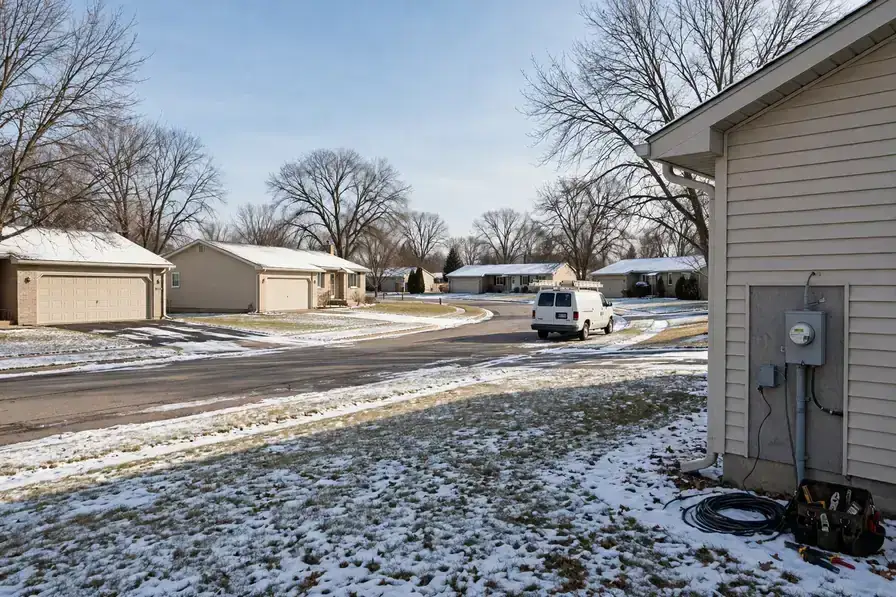
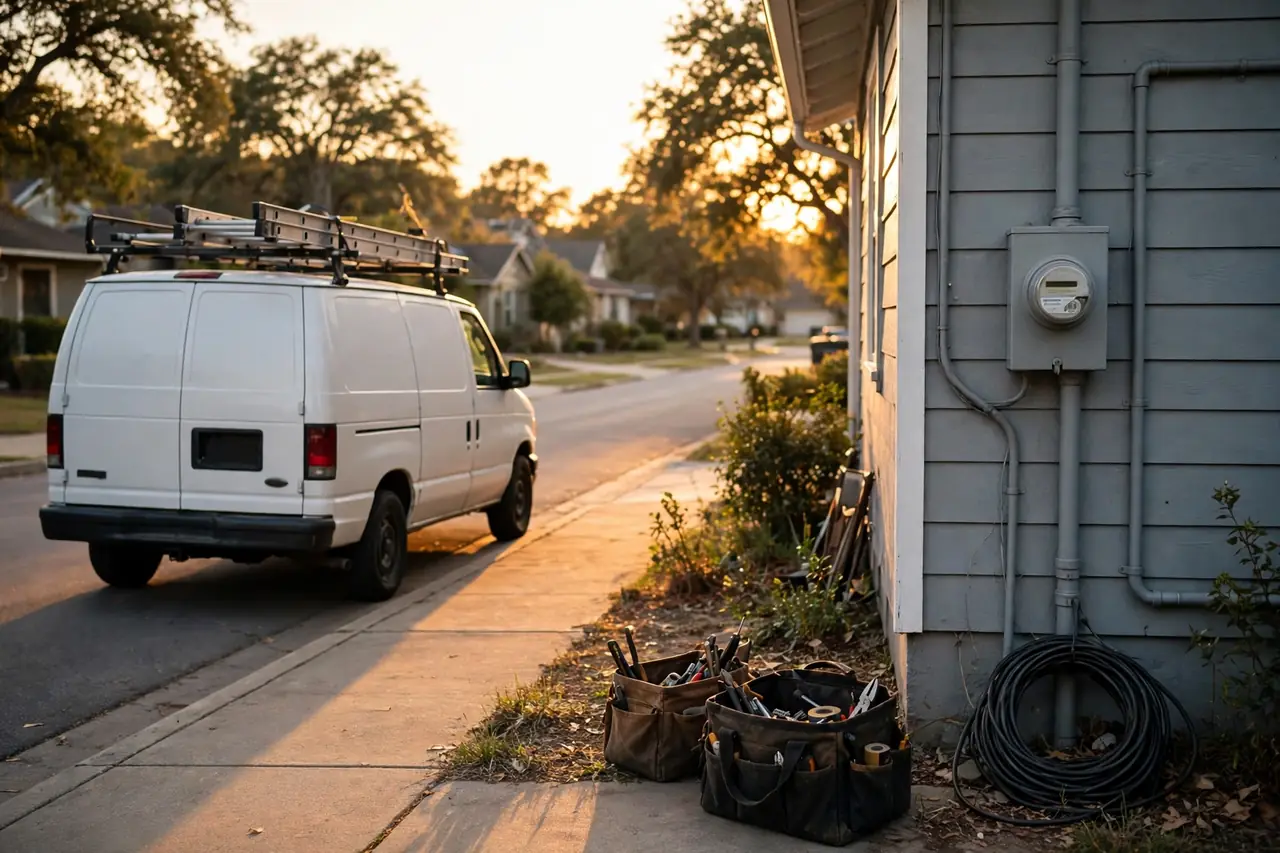
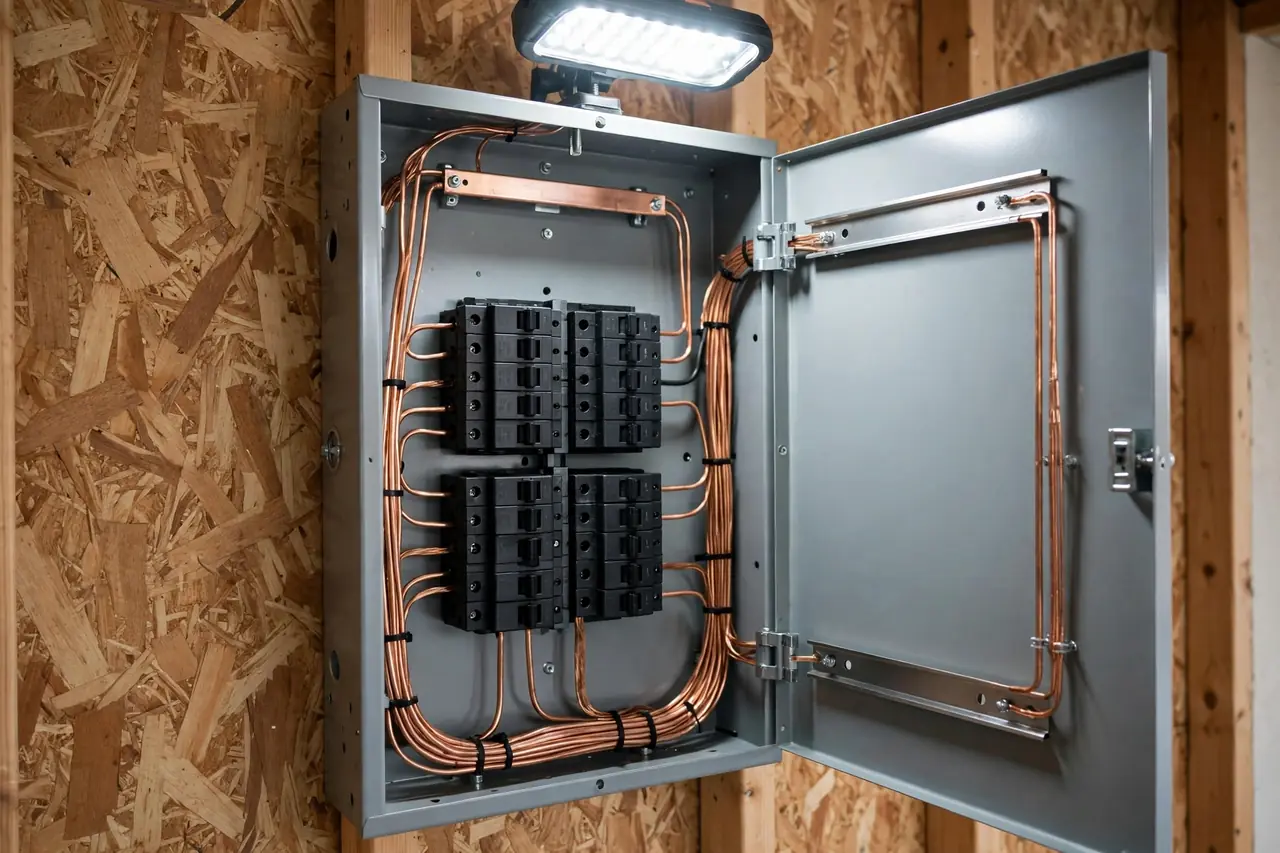
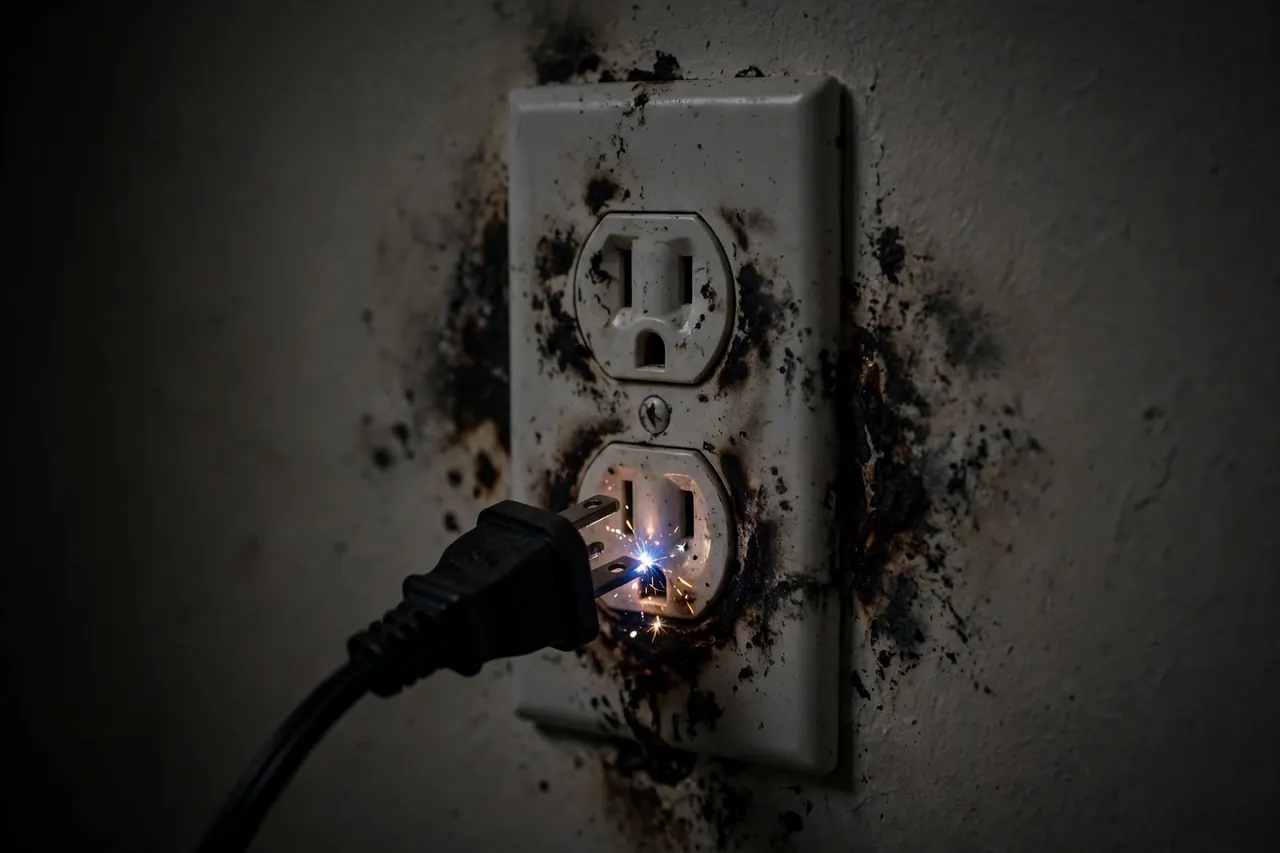 PROBLEM
 SOLUTION