EV Charger Installation — the short answer
EV charger installation adds a dedicated 240-volt circuit and a Level 2 charging setup where your vehicle parks, so it can refill overnight at home. VoltReach USA connects homeowners with independent local electricians who assess the panel, plan the circuit, and install the charger. Below: the signs that point to this job, how the work itself runs, and what shapes its scale.
Charging an electric vehicle at home changes the ownership experience more than almost anything else. Instead of planning your week around public charging stops, you plug in when you get home and leave in the morning with a full battery. For most drivers, home charging covers the great majority of their miles. The question is how to set it up well. A basic cord plugged into an ordinary outlet works slowly, while a properly installed Level 2 charger on a dedicated 240-volt circuit refills a vehicle many times faster and is designed for the daily, hours-long draw that charging involves.
A home charging installation starts with your electrical panel, not with the charger itself. Level 2 charging is a continuous load: it can draw substantial current for six, eight, or ten hours at a stretch, and the wiring, breaker, and panel must all be sized for that duty. An electrician will check whether your service has the capacity and the open breaker space, measure the distance from the panel to where the vehicle actually parks, and talk through whether a hardwired charger or a receptacle-mounted unit fits your garage or driveway better. Getting those basics right is what makes charging effortless for years.
Installation details matter for safety as much as for speed. Charging circuits require appropriate ground-fault protection, correctly torqued connections, and cable sized for the run, and outdoor or detached-garage setups add weather protection and sometimes trenching to the picture. This is not work for extension cords, adapters stacked together, or a dryer outlet borrowed as a permanent solution. A dedicated circuit, installed for this purpose, protects both the vehicle and the home, and it keeps the charging setup tidy: cable managed, connector holstered, and nothing improvised under daily strain.
VoltReach USA is a referral service, not an electrical company, and it does not install chargers itself. We connect homeowners with independent local electricians who can assess the panel and parking layout in person, explain charger and circuit options in plain language, and install the setup you choose together. Whether you have just brought your first EV home or are planning ahead for a second one, this page explains the signs that a dedicated charger makes sense, how installation typically proceeds, and what shapes the work at your particular home.
Signs you could use a dedicated home charger
- You have bought an electric vehicle and are relying on a standard wall outlet, waking up to a battery that has not fully recovered from the previous day's driving.
- Your daily commute or regular trips use more range than overnight charging on a household outlet can replace, so you still depend on public chargers during the week.
- You want the car to charge while you sleep at home rather than spending time at public stations, especially in bad weather or late in the evening.
- Your garage or driveway has no suitable 240-volt outlet near where the vehicle parks, and running the charging setup on adapters or extension cords is not a safe long-term answer.
- A second electric vehicle is joining the household, and the single slow charging arrangement that worked for one car will not serve two.
- You are buying an EV soon and want the charging circuit planned and installed before the car arrives, so home charging works from the first day.
- Your panel is older or nearly full, and you need a professional load assessment to learn whether charging fits now, fits with load management, or calls for panel work first.
- You plan to keep the home for years and want charging treated as a permanent improvement, with a dedicated circuit, tidy cable management, and equipment placed for daily convenience.
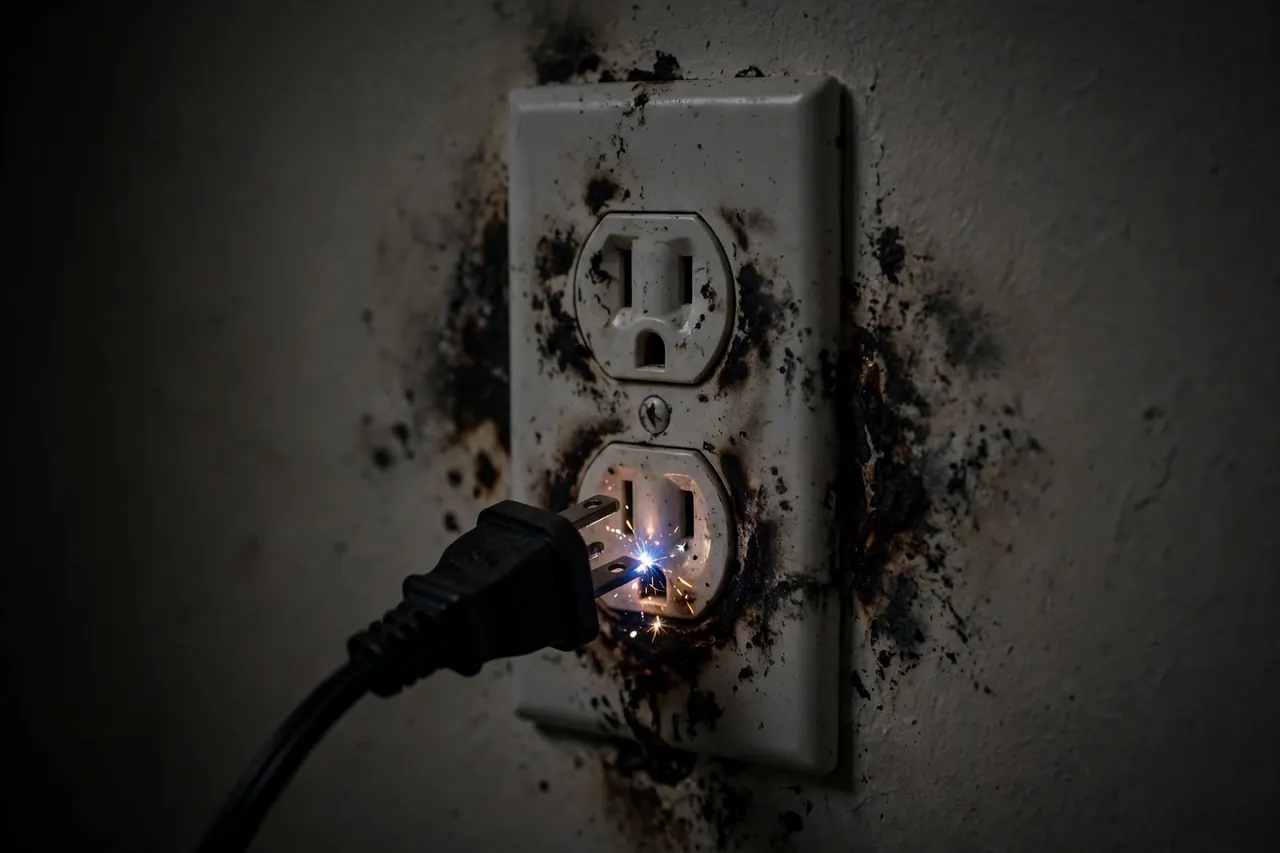 PROBLEM
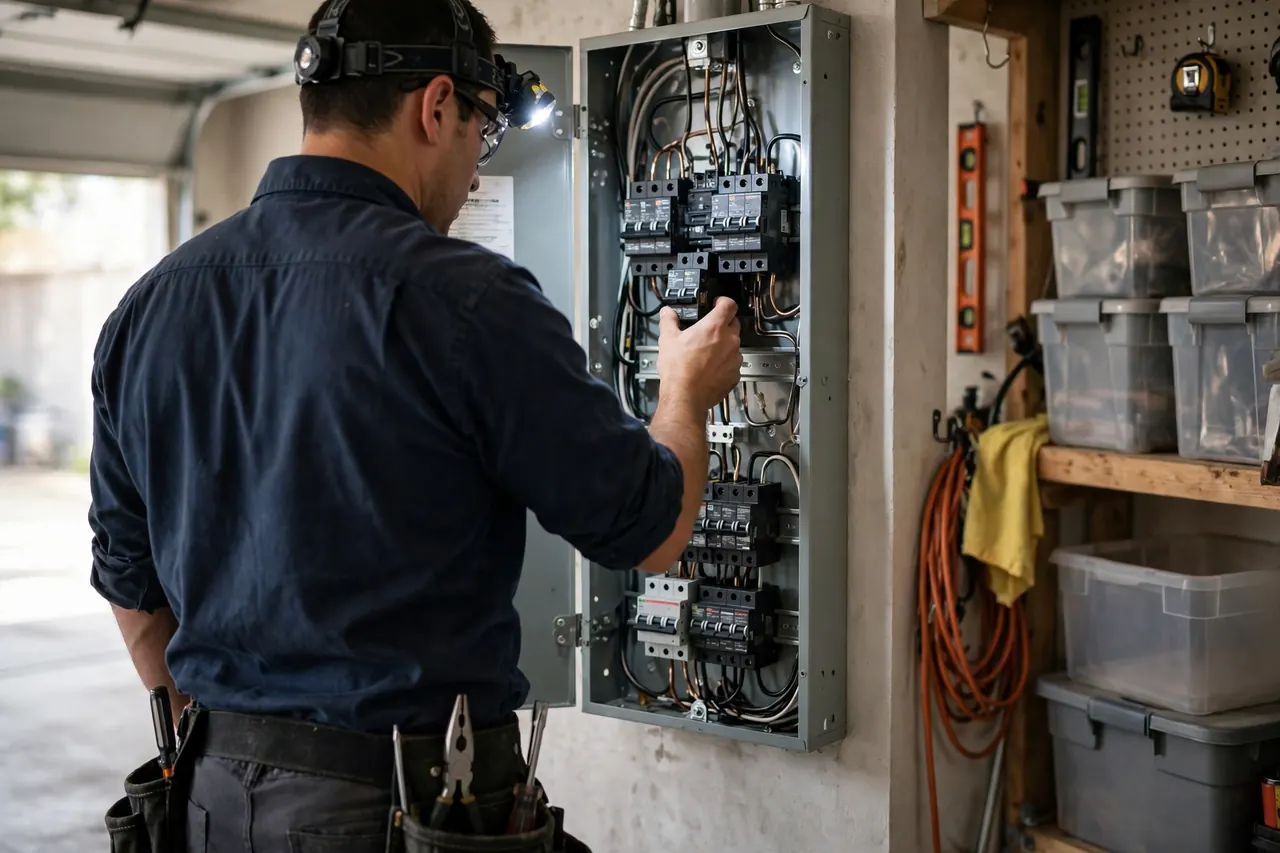 SOLUTION
How EV charger installation works
- The process starts with an assessment of your panel, where the electrician checks total capacity, open breaker space, and the home's existing load to confirm what size of charging circuit the service can support.
- Next you discuss the vehicle, your daily driving, and where the car parks, so the charger's amperage and placement match your routine rather than a generic assumption.
- You and the electrician agree on the setup in writing: hardwired charger or receptacle, circuit size, cable route, and any related work such as load management equipment or panel changes.
- The electrician explains the local permitting and inspection steps that apply to charging circuits in your area, and scheduling is set once those arrangements are clear.
- On installation day, the dedicated circuit is run from the panel to the charging location, the breaker and protection are fitted, and the charger or receptacle is mounted securely where the cable reaches the vehicle comfortably.
- The charger is powered up and tested with your vehicle, so charging starts correctly, the connector seats properly, and any scheduling or app features on a smart charger are shown to you.
- After inspection where required, you are left with a labeled breaker, a mounted cable and holster, and a clear picture of how to charge day to day and what to check if the charger ever signals a fault.
Level 1 charging (120V) vs Level 2 charging (240V)
Level 1 charging (120V)
- Uses a standard 120-volt household outlet
- Adds only a few miles of range per hour
- Works for short daily driving and plug-in hybrids
- Uses the charge cord supplied with many vehicles
- No new circuit required in most cases
Level 2 charging (240V)
- Uses a dedicated 240-volt circuit
- Adds range many times faster than Level 1
- Refills a typical day of driving in a few hours
- Suits daily drivers and longer commutes
- Installed as a permanent home setup
What shapes the job
- Panel capacity and open breaker space are the starting point, since a Level 2 charger needs a dedicated 240-volt circuit and the home's total load must stay within its service limit.
- The distance from the panel to the parking spot shapes the work considerably, because longer cable runs, especially to a detached garage, can involve more labor and sometimes trenching or conduit across the yard.
- The charger's amperage output affects the circuit size, cable gauge, and breaker required, and higher-output chargers ask more of both the wiring and the panel.
- Whether the unit is hardwired or plugs into a receptacle changes the installation details, and outdoor locations call for weatherproof equipment and protection appropriate to exposure.
- Your vehicle's own charging limit matters, because a car that accepts a modest rate gains little from the largest charger, while a vehicle with a high acceptance rate can use more of a larger circuit.
- Ground-fault protection requirements for charging circuits and receptacles influence the breaker type selected and how the circuit is configured at the panel.
- Plans for a second vehicle or for load management can add equipment now that prevents a second round of panel work later, and are worth raising during the assessment.
Choosing the right charger and placement
Choosing between charger models is easier once a few technical ideas are clear. Chargers are specified in amps, and the circuit must be sized above the charger's continuous draw, which is why a charger that draws 40 amps sits on a larger breaker and heavier cable. Higher amperage charges faster, up to the limit of what the vehicle itself can accept, and many vehicles accept less than the largest home chargers can offer. Smart features such as scheduled charging, energy tracking, and load sharing between two chargers can be useful, especially where a household plans for a second vehicle or where the panel has limited headroom. A load management device can also let a charger adjust its draw based on what the rest of the house is using, which in some homes avoids a larger service upgrade.
Placement deserves more thought than it usually gets. The charging cable needs to reach the vehicle's charge port comfortably in the way the car is actually parked, nose-in or backed in, without stretching across walkways where it becomes a trip hazard or lying where it will be driven over daily. Outdoor installations need equipment built for weather exposure and mounting that stays secure over years of plugging and unplugging. Garage layouts change too: a charger placed for today's car should ideally still make sense for the next one, and for the storage, workbenches, and second vehicle that share the space. Your electrician can flag practical placement issues during the assessment that are easy to miss on paper.
Finally, think of the installation as part of the home rather than part of the car. Vehicles change every several years, but a well-planned charging circuit, sound panel work, and a sensibly placed outlet or charger stay with the house. That is one reason many homeowners choose a hardwired unit or a properly installed receptacle with capacity to spare rather than the smallest option that works today. If you expect a second EV, mention it during the first assessment, because planning for two vehicles at the start, even if the second charger comes later, can shape circuit routing and load management choices in ways that save rework. A short conversation about future plans is worth having before anything is installed.
Questions about ev charger installation
What is the difference between Level 1 and Level 2 home charging?
Does my panel have enough capacity for an EV charger?
How fast will a Level 2 charger refill my car at home?
Can a charger be installed outdoors or in a detached garage?
We may buy a second EV later. Should we plan for it now?
Find ev charger installation in your city
Alabama: Birmingham, Huntsville, Mobile, Montgomery, Tuscaloosa, Daphne–Fairhope, Auburn, Decatur, Florence–Muscle Shoals, Dothan
Alaska: Anchorage
Arizona: Phoenix, Tucson, Prescott, Lake Havasu City, Yuma, Flagstaff
Arkansas: Little Rock, Fayetteville–Springdale–Rogers, Fort Smith
California: Los Angeles, Riverside–San Bernardino, San Francisco, San Diego, Sacramento, San Jose, Fresno, Bakersfield, Oxnard–Ventura, Stockton, Modesto, Santa Rosa, Visalia, Vallejo, Santa Barbara, Salinas, Merced, San Luis Obispo, Santa Cruz, Chico, Yuba City, Redding, El Centro, Hanford
Colorado: Denver, Colorado Springs, Greeley, Fort Collins, Boulder, Pueblo, Grand Junction
Connecticut: Hartford, Bridgeport–Stamford, New Haven, Waterbury, Norwich–New London
Delaware: Dover
District of Columbia: Washington
Florida: Miami, Tampa, Orlando, Jacksonville, North Port–Sarasota, Cape Coral–Fort Myers, Lakeland, Daytona Beach, Palm Bay–Melbourne, Port St. Lucie, Pensacola, Ocala, Naples, Tallahassee, Gainesville, Crestview–Fort Walton Beach, Panama City, Punta Gorda, Sebastian–Vero Beach, Homosassa Springs, The Villages
Georgia: Atlanta, Augusta, Savannah, Columbus, Macon, Gainesville, Athens, Warner Robins, Valdosta, Dalton, Albany
Idaho: Boise, Coeur d'Alene, Idaho Falls
Illinois: Chicago, Peoria, Rockford, Champaign, Springfield, Bloomington
Indiana: Indianapolis, Fort Wayne, South Bend, Evansville, Lafayette, Elkhart, Terre Haute, Bloomington
Iowa: Des Moines, Davenport, Cedar Rapids, Iowa City, Waterloo, Sioux City
Kentucky: Louisville, Lexington, Bowling Green
Louisiana: New Orleans, Baton Rouge, Lafayette, Shreveport, Slidell, Lake Charles, Monroe, Houma, Alexandria
Maryland: Baltimore, Hagerstown, Lexington Park
Massachusetts: Boston, Worcester, Springfield, Barnstable Town, Amherst
Michigan: Detroit, Grand Rapids, Lansing, Flint, Ann Arbor, Kalamazoo, Saginaw, Muskegon, Jackson, Traverse City, Monroe, Niles
Minnesota: Minneapolis–St. Paul, Duluth, Rochester, St. Cloud
Mississippi: Jackson, Gulfport–Biloxi, Hattiesburg
Missouri: St. Louis, Kansas City, Springfield, Columbia, Joplin, Jefferson City
Montana: Billings
New Hampshire: Manchester
New Jersey: Trenton, Atlantic City, Vineland
New Mexico: Albuquerque, Las Cruces, Santa Fe
New York: New York, Buffalo, Rochester, Albany, Poughkeepsie, Syracuse, Utica, Binghamton, Kingston
North Carolina: Charlotte, Raleigh, Greensboro, Winston-Salem, Durham, Wilmington, Asheville, Fayetteville, Hickory, Jacksonville, Burlington, Greenville, Rocky Mount
North Dakota: Fargo
Ohio: Cincinnati, Columbus, Cleveland, Dayton, Akron, Toledo, Youngstown, Canton
Oklahoma: Oklahoma City, Tulsa
Oregon: Portland, Salem, Eugene, Bend, Medford
Pennsylvania: Philadelphia, Pittsburgh, Allentown, Harrisburg, Scranton, Lancaster, York, Reading, Erie, Chambersburg, State College, Lebanon
Rhode Island: Providence
South Carolina: Greenville, Charleston, Columbia, Myrtle Beach, Spartanburg, Hilton Head Island, Florence
South Dakota: Sioux Falls, Rapid City
Tennessee: Nashville, Memphis, Knoxville, Chattanooga, Clarksville, Kingsport, Johnson City, Jackson
Texas: Dallas–Fort Worth, Houston, San Antonio, Austin, McAllen, El Paso, Killeen–Temple, Corpus Christi, Brownsville, Beaumont, Lubbock, Waco, Longview, College Station, Laredo, Amarillo, Tyler, Midland, Abilene, Odessa, Sherman–Denison, Wichita Falls, Texarkana
Utah: Salt Lake City, Provo, Ogden, St. George, Logan
Vermont: Burlington
Virginia: Virginia Beach–Norfolk, Richmond, Roanoke, Lynchburg, Charlottesville, Blacksburg, Winchester
Washington: Seattle, Spokane, Kennewick, Olympia, Bremerton, Yakima, Bellingham
West Virginia: Huntington, Charleston, Morgantown
Wisconsin: Milwaukee, Madison, Green Bay, Appleton, Racine, Eau Claire, Oshkosh, La Crosse, Kenosha, Janesville
Need ev charger installation help?
One call routes you to an independent local electrician who handles this work in your area.