Emergency Electrician — the short answer
An electrical emergency means a condition that could harm people or property if it is left alone, such as sparking, smoke, or a panel that smells of burning. VoltReach USA connects homeowners with independent local electricians and explains the first safety steps to take. Below: the signs that point to this job, how the work itself runs, and what shapes its scale.
Not every electrical problem is an emergency, and knowing the difference helps you respond calmly and well. An electrical emergency is a situation where electricity is behaving in a way that could injure someone or damage the home if it continues: sparking or arcing, smoke from an outlet or panel, a strong burning smell, a breaker panel that is hot or making sounds, or exposed or damaged wiring after a storm, a flood, or an accident. Partial power loss, flickering that follows one appliance, or a single tripped breaker with no other symptoms are usually urgent concerns rather than true emergencies. The distinction matters because the first steps differ, and staying clear of a hazard always comes before troubleshooting it.
Safety steps come first, before any attempt to restore power. If a circuit is sparking, smoking, or smelling of burning, switch its breaker off if you can do so without touching anything damaged, wet, or hot, and keep people and pets away from the area. If you see flames or heavy smoke, leave the home and call emergency services from outside. For downed power lines outside the home, stay well away, keep others away, and contact your utility or emergency services, because lines and even the ground near them can be energized. Never touch a downed line, a pole, or anything in contact with a line, and never try to move it. Water changes the picture too: if outlets, appliances, or the panel area are wet or flooded, avoid contact and treat the area as unsafe until it has been assessed.
Some situations feel dramatic but call for the utility rather than an electrician. If the whole home loses power at once, neighbors are also out, or you see damage to the service line, the meter, or utility equipment, your power company is the right first call, since that equipment sits on their side of the system. Likewise, a burning smell that turns out to come from an appliance calls for unplugging that appliance if you can do so safely, not for panel work. Sorting out whose problem it is — the utility, an appliance, or the home wiring — is part of a calm response, and the person you speak with can help you think through what you are seeing and which route fits the situation in front of you.
VoltReach USA is a connection service, not an electrical company, and it does not carry out repairs. When you contact the service about an urgent problem, the details you share — what you saw, heard, or smelled, which circuits are involved, and whether water, storm damage, or a downed line is part of the picture — help route the request to an independent local electrician whose work covers that kind of call. That electrician then speaks with you directly about the situation and the next step. Because availability depends on the independent professionals in your area, the honest offer is a careful routing of your request and clear safety guidance, not a claim about how quickly anyone can arrive at your door.
Signs you may be facing an electrical emergency
- Sparks, flashes, or arcing come from an outlet, a switch, the panel, or an appliance when it is used or plugged in.
- Smoke comes from an outlet, a wall, or the electrical panel, or you see flames connected with wiring or electrical equipment.
- A strong burning or melting smell comes from the panel, an outlet, or a wall, even if you cannot see any damage yet.
- The panel, a breaker, an outlet, or a switch plate is hot to the touch, or you hear loud buzzing, sizzling, or popping from the panel.
- Wiring is exposed, chewed, crushed, or visibly damaged after a storm, a flood, a renovation accident, or work elsewhere in the home.
- Outlets, appliances, or the panel area have been in contact with water, or standing water sits near electrical equipment in the home.
- You or a family member receives a shock from an outlet, a switch, or an appliance that is stronger than a brief static tingle.
- A downed or sagging power line rests on the home, the yard, a fence, or a vehicle after a storm or high winds.
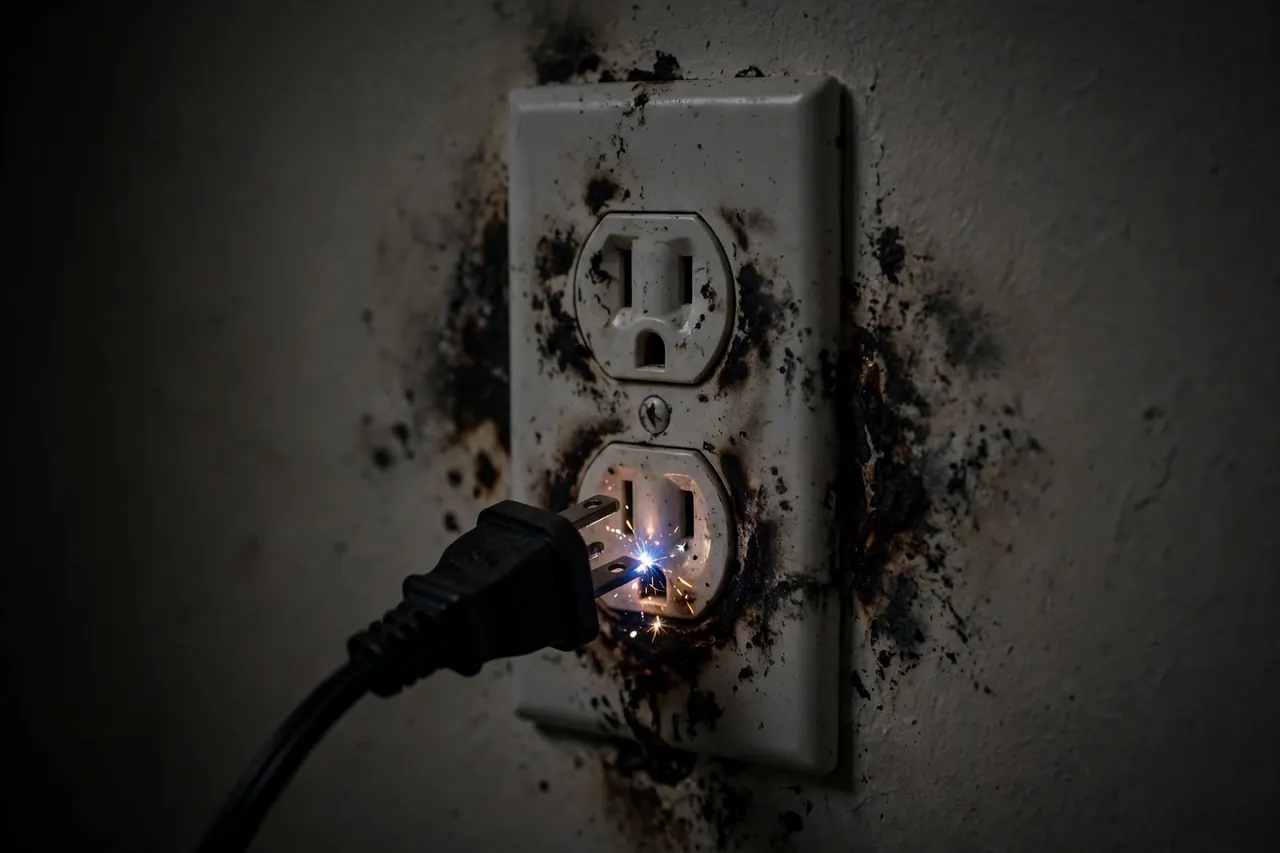 PROBLEM
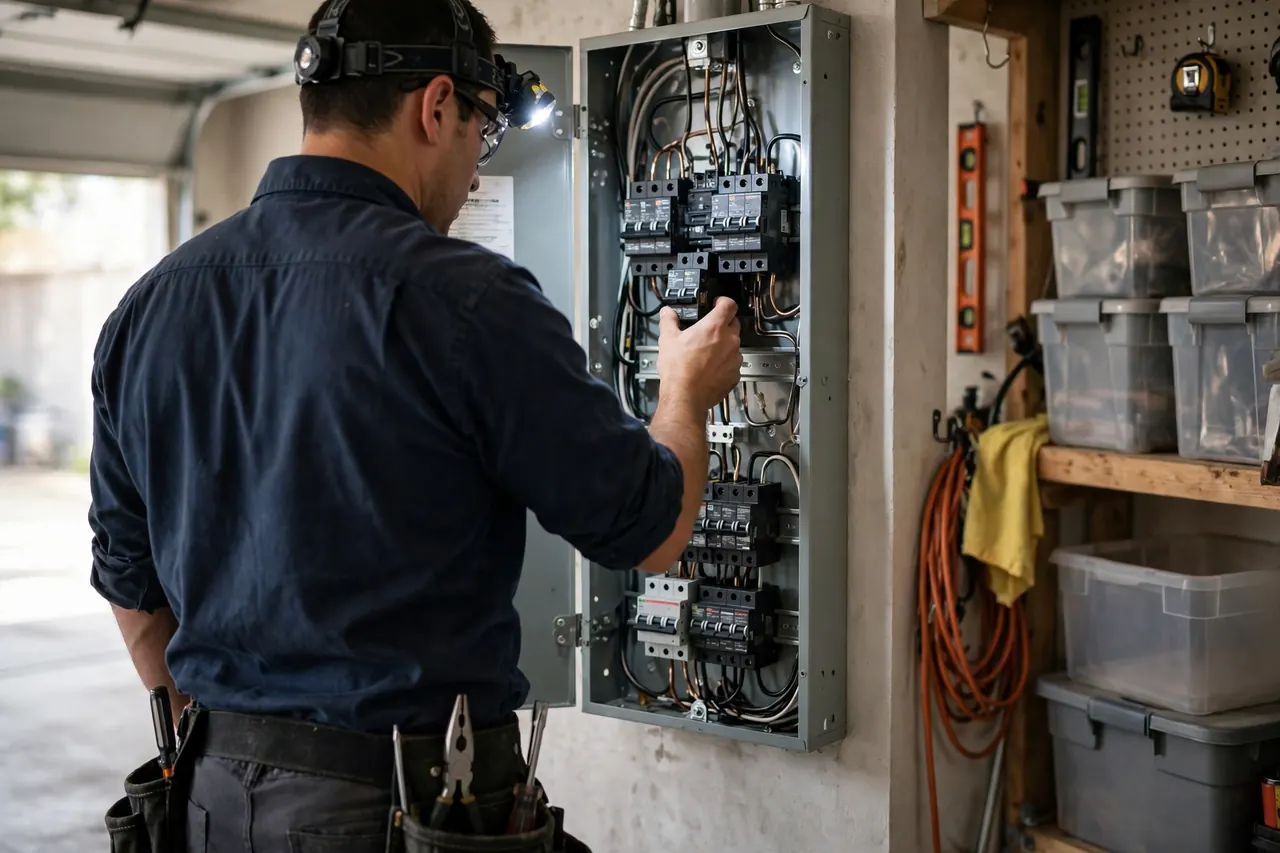 SOLUTION
How an emergency connection works
- Put safety first: move people and pets away from sparking, smoking, hot, or wet equipment, and do not touch anything that looks damaged or feels hot.
- If a single circuit is involved and you can reach the panel safely and dry, switch that breaker off and leave it off until the circuit has been assessed.
- If there is fire, heavy smoke, or a downed line, leave the area, call emergency services for fire or danger, and contact your utility about lines or service equipment.
- Note what happened in simple terms: what you saw, heard, or smelled, when it started, which rooms or circuits are affected, and whether water or storm damage is involved.
- Contact VoltReach USA with those details, so the request can be routed based on the kind of problem rather than treated as a routine repair call.
- The service connects you with an independent local electrician, who talks through the situation with you directly and agrees the next step for your home.
- Follow the guidance you are given about which circuits to leave off and which areas to avoid until the electrician has inspected the problem in person.
What shapes the job
- The nature of the hazard shapes everything, because active sparking, smoke, or water contact calls for isolation and assessment before any repair work can begin.
- Which part of the system is involved matters, since a problem in one branch circuit is handled differently from damage at the panel or at the service entrance.
- Whether the utility side of the system is affected changes the route, because service lines, meters, and poles are handled by the power company rather than a local electrician.
- Storm, flood, or impact damage widens the scope, since several circuits, the panel, and connected appliances may all need checking after a single event.
- The age and condition of the wiring and panel influence the visit, because older equipment may have existing wear that interacts with the new problem.
- Access and safety on site matter, including whether the panel can be reached dry and clear, and whether damaged areas can be kept isolated during the inspection.
- What the household depends on shapes planning, such as medical equipment, heating or cooling, or refrigeration, so the electrician understands what is at stake while work proceeds.
What counts as an electrical emergency, and what to do first
The word emergency should be reserved for conditions that can get worse or cause harm if electricity keeps flowing. Arcing is a clear example: when current jumps a gap, it produces intense heat and can ignite nearby material, so a sparking outlet or panel is never a wait-and-see problem. Heat is another signal. Outlets, switches, and breakers should not feel hot, and warmth paired with a burning or melting smell suggests a connection is failing or a component is breaking down. Water is the third major factor. Water lowers the resistance of skin and surfaces and gives current paths it should never have, which is why flooded basements, soaked outlets, and wet panel areas should be treated as unsafe until assessed. By contrast, a dead outlet with no heat, smell, or sound, or a breaker that tripped once under heavy load, is a repair concern to arrange promptly rather than a middle-of-the-night hazard. Sorting your situation into the right group helps you act at the right level: protect people first, isolate the circuit, then get the problem looked at.
The first minutes matter more for what you avoid than for what you fix. Keep hands off damaged, hot, or wet equipment. Do not pour water on an electrical fire, and do not try to open the panel or pull wiring to inspect it yourself. If one circuit is the problem and the panel is dry, reachable, and shows no damage, switching that breaker off is a sensible isolating step. If the panel itself is the source of smoke, sound, or heat, or if you are unsure which circuit is involved, it is safer to stay away and wait for professional guidance. Outside the home, the rule is simpler still: downed lines are the utility and emergency services territory. Stay inside or well away, warn others, and never assume a line is dead because it is quiet or not sparking. Lines can be energized without any visible sign, and objects touching them, including fences and puddles, can carry that danger with them.
Once the immediate hazard is contained, clear information makes the rest of the process work better. Write down when the problem started, what triggered it if you know, which rooms lost power or showed symptoms, and anything unusual in the days before, such as flickering, intermittent outlets, or breakers tripping more often. That history helps the independent local electrician who takes the call understand whether this is a sudden failure or the end of a longer decline, and what to check first on arrival. VoltReach USA routes your request using those details, and the electrician you are connected with decides with you how the visit should proceed. After the urgent problem is resolved, it is worth asking what the inspection revealed about the wider system. Emergencies sometimes expose aging panels, overloaded circuits, or water entry points that deserve planned attention later. Handling the hazard first and the underlying cause second is the pattern that keeps a frightening evening from becoming a repeat event in the months that follow.
Questions about emergency electrician
What should I do first if an outlet is sparking?
Is a burning smell from the panel an emergency?
Who should I call for a downed power line, you or the utility?
My power went out in half the house. Is that an emergency?
Can I use an outlet or circuit again after the emergency is over?
Find emergency electrician in your city
Alabama: Birmingham, Huntsville, Mobile, Montgomery, Tuscaloosa, Daphne–Fairhope, Auburn, Decatur, Florence–Muscle Shoals, Dothan
Alaska: Anchorage
Arizona: Phoenix, Tucson, Prescott, Lake Havasu City, Yuma, Flagstaff
Arkansas: Little Rock, Fayetteville–Springdale–Rogers, Fort Smith
California: Los Angeles, Riverside–San Bernardino, San Francisco, San Diego, Sacramento, San Jose, Fresno, Bakersfield, Oxnard–Ventura, Stockton, Modesto, Santa Rosa, Visalia, Vallejo, Santa Barbara, Salinas, Merced, San Luis Obispo, Santa Cruz, Chico, Yuba City, Redding, El Centro, Hanford
Colorado: Denver, Colorado Springs, Greeley, Fort Collins, Boulder, Pueblo, Grand Junction
Connecticut: Hartford, Bridgeport–Stamford, New Haven, Waterbury, Norwich–New London
Delaware: Dover
District of Columbia: Washington
Florida: Miami, Tampa, Orlando, Jacksonville, North Port–Sarasota, Cape Coral–Fort Myers, Lakeland, Daytona Beach, Palm Bay–Melbourne, Port St. Lucie, Pensacola, Ocala, Naples, Tallahassee, Gainesville, Crestview–Fort Walton Beach, Panama City, Punta Gorda, Sebastian–Vero Beach, Homosassa Springs, The Villages
Georgia: Atlanta, Augusta, Savannah, Columbus, Macon, Gainesville, Athens, Warner Robins, Valdosta, Dalton, Albany
Idaho: Boise, Coeur d'Alene, Idaho Falls
Illinois: Chicago, Peoria, Rockford, Champaign, Springfield, Bloomington
Indiana: Indianapolis, Fort Wayne, South Bend, Evansville, Lafayette, Elkhart, Terre Haute, Bloomington
Iowa: Des Moines, Davenport, Cedar Rapids, Iowa City, Waterloo, Sioux City
Kentucky: Louisville, Lexington, Bowling Green
Louisiana: New Orleans, Baton Rouge, Lafayette, Shreveport, Slidell, Lake Charles, Monroe, Houma, Alexandria
Maryland: Baltimore, Hagerstown, Lexington Park
Massachusetts: Boston, Worcester, Springfield, Barnstable Town, Amherst
Michigan: Detroit, Grand Rapids, Lansing, Flint, Ann Arbor, Kalamazoo, Saginaw, Muskegon, Jackson, Traverse City, Monroe, Niles
Minnesota: Minneapolis–St. Paul, Duluth, Rochester, St. Cloud
Mississippi: Jackson, Gulfport–Biloxi, Hattiesburg
Missouri: St. Louis, Kansas City, Springfield, Columbia, Joplin, Jefferson City
Montana: Billings
New Hampshire: Manchester
New Jersey: Trenton, Atlantic City, Vineland
New Mexico: Albuquerque, Las Cruces, Santa Fe
New York: New York, Buffalo, Rochester, Albany, Poughkeepsie, Syracuse, Utica, Binghamton, Kingston
North Carolina: Charlotte, Raleigh, Greensboro, Winston-Salem, Durham, Wilmington, Asheville, Fayetteville, Hickory, Jacksonville, Burlington, Greenville, Rocky Mount
North Dakota: Fargo
Ohio: Cincinnati, Columbus, Cleveland, Dayton, Akron, Toledo, Youngstown, Canton
Oklahoma: Oklahoma City, Tulsa
Oregon: Portland, Salem, Eugene, Bend, Medford
Pennsylvania: Philadelphia, Pittsburgh, Allentown, Harrisburg, Scranton, Lancaster, York, Reading, Erie, Chambersburg, State College, Lebanon
Rhode Island: Providence
South Carolina: Greenville, Charleston, Columbia, Myrtle Beach, Spartanburg, Hilton Head Island, Florence
South Dakota: Sioux Falls, Rapid City
Tennessee: Nashville, Memphis, Knoxville, Chattanooga, Clarksville, Kingsport, Johnson City, Jackson
Texas: Dallas–Fort Worth, Houston, San Antonio, Austin, McAllen, El Paso, Killeen–Temple, Corpus Christi, Brownsville, Beaumont, Lubbock, Waco, Longview, College Station, Laredo, Amarillo, Tyler, Midland, Abilene, Odessa, Sherman–Denison, Wichita Falls, Texarkana
Utah: Salt Lake City, Provo, Ogden, St. George, Logan
Vermont: Burlington
Virginia: Virginia Beach–Norfolk, Richmond, Roanoke, Lynchburg, Charlottesville, Blacksburg, Winchester
Washington: Seattle, Spokane, Kennewick, Olympia, Bremerton, Yakima, Bellingham
West Virginia: Huntington, Charleston, Morgantown
Wisconsin: Milwaukee, Madison, Green Bay, Appleton, Racine, Eau Claire, Oshkosh, La Crosse, Kenosha, Janesville
Need emergency electrician help?
One call routes you to an independent local electrician who handles this work in your area.