Home Rewiring — the short answer
Home rewiring replaces old, damaged, or ungrounded wiring with modern cable and grounded circuits sized for how a household actually lives today. VoltReach USA connects homeowners with independent local electricians who inspect existing wiring and carry out full or partial rewiring projects. Below: the signs that point to this job, how the work itself runs, and what shapes its scale.
The wiring inside your walls was installed for the household that lived in your home when it was built, and for many houses that household looked very different from yours. Older wiring may have only a handful of circuits for the entire house, outlets without a grounding path, and cable insulation that has grown brittle after decades of heat inside walls and ceilings. Rewiring replaces some or all of that branch-circuit wiring with modern cable, grounded outlets, and a circuit layout that matches how the home is actually used today, from the kitchen counter to the home office.
Homeowners usually start thinking about rewiring after a specific moment: a home inspection report that flags older wiring, outlets that will not hold a plug, a renovation that opens the walls, or the discovery of knob-and-tube or cloth-insulated wiring in the attic. Sometimes the trigger is protective rather than alarming. Grounded wiring allows modern safety devices to do their jobs properly, ground-fault protection depends on sound wiring, and surge protection for electronics works as intended only when a real grounding path exists. Rewiring is foundational work: it sits behind nearly every other electrical improvement a home might need.
Rewiring is also one of the larger projects a homeowner can take on, which is exactly why planning matters. A thoughtful approach starts with an inspection of what is actually in the walls, separates the circuits that need attention soon from those that can wait, and sequences the work so it pairs sensibly with remodeling plans. Some homes genuinely need a full rewire. Others need the kitchen, bathrooms, laundry, and a few worn circuits addressed, with the rest monitored. An honest evaluation should tell you which situation you are in, in plain language, before anyone talks about opening a wall.
VoltReach USA is a referral service, not an electrical company, and it does not rewire homes itself. We connect homeowners with independent local electricians who can inspect existing wiring, explain its condition, and carry out the work you choose together. Wiring hidden in walls can be damaged in ways that are not obvious, and working on it carries real risk, so this is firmly professional work. This page covers the signs that older wiring may need attention, how a rewiring project typically proceeds, and the factors that shape its scope, so you can plan with clear eyes.
Signs your home may need rewiring
- Your home has two-prong outlets with no grounding slot, so three-prong plugs need adapters and surge protection cannot work the way it is designed to.
- An inspector, electrician, or your own look in the attic turns up knob-and-tube wiring or cable with cloth or crumbling rubber insulation on the conductors.
- Breakers trip or fuses fail when ordinary combinations of appliances run, because too much of the house shares too few circuits.
- Outlets or switch plates feel warm, are discolored, or occasionally give off a faint burning smell when a circuit is under load.
- Lights flicker when appliances start, plugs fall loosely out of worn outlets, or you hear faint buzzing from switches or receptacles.
- The house relies heavily on extension cords and power strips because there are too few outlets where modern life needs them, especially in kitchens and offices.
- You are opening walls for a remodel anyway, and the exposed wiring is clearly dated, damaged, or was spliced in ways that do not meet current practice.
- A home purchase or insurance look over has raised written questions about the age or type of wiring, and you need a professional assessment of its real condition.
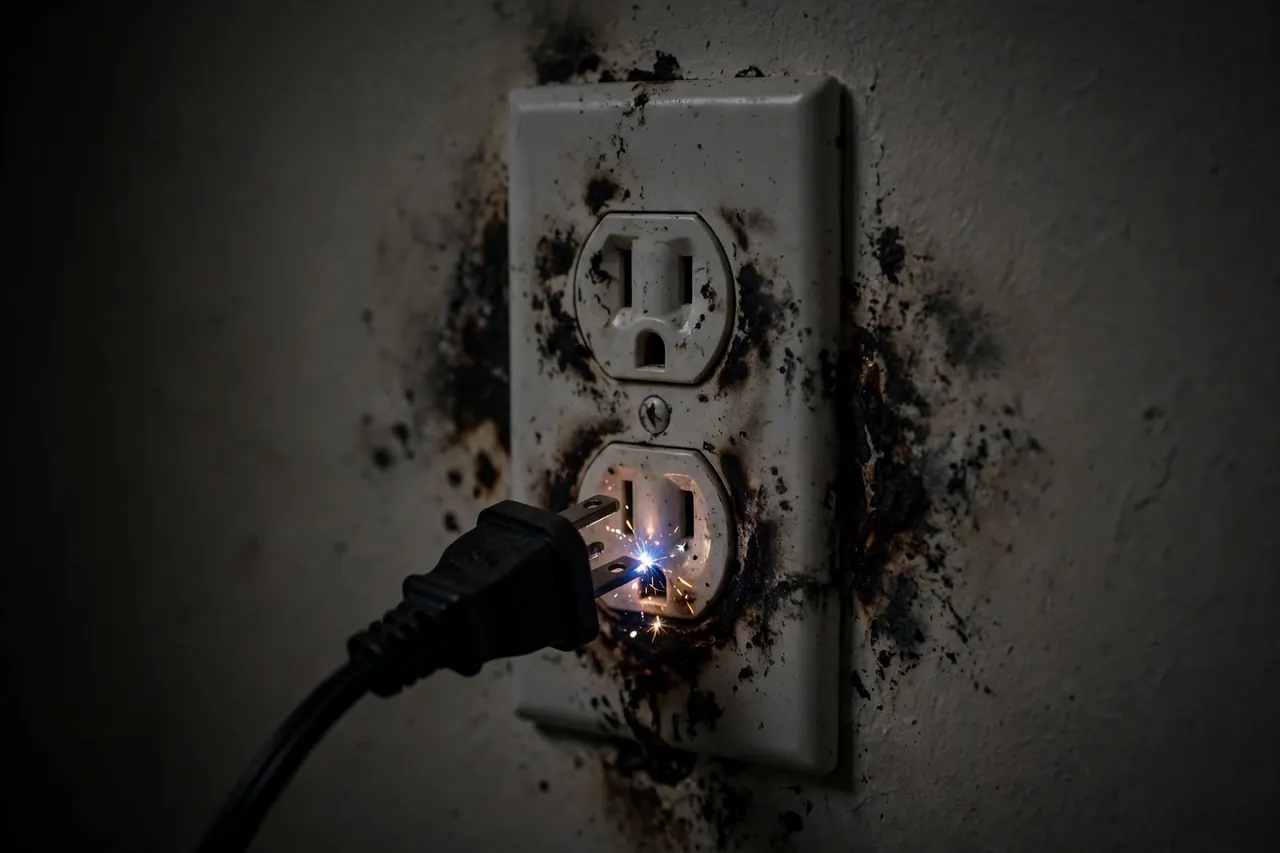 PROBLEM
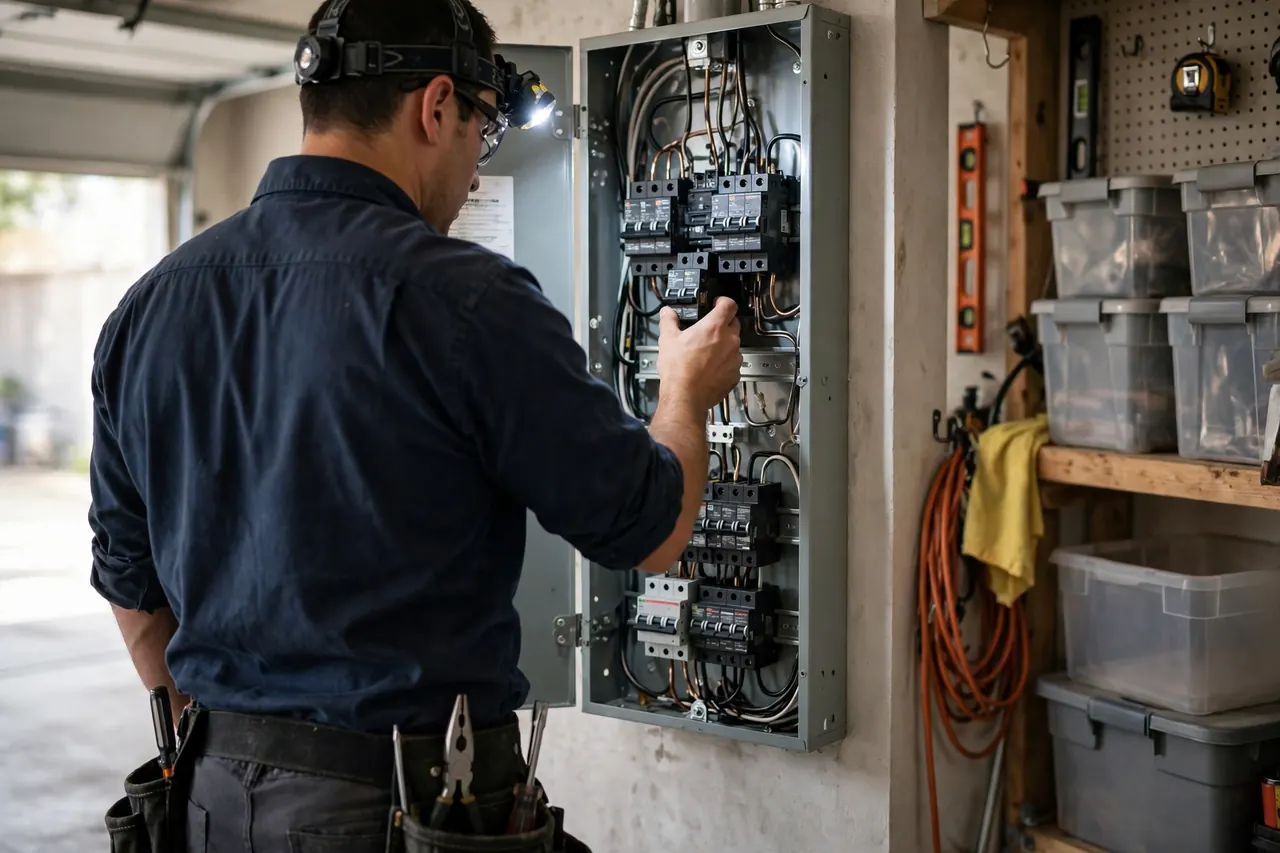 SOLUTION
How a home rewiring project works
- The project begins with an inspection of the existing wiring: the electrician checks the panel, tests outlets for grounding, looks at accessible cable in attics and basements, and opens selected boxes to judge insulation and connections.
- From those findings you receive a plan that identifies which circuits need replacement, which are sound, and which order makes sense, with full and partial options explained if both are realistic for your home.
- You and the electrician agree on scope in writing, including the rooms and circuits involved, the outlet and switch layout, and how wall openings will be made, patched, and finished.
- Before work starts, the electrician explains the local permitting and inspection steps that apply, and the sequencing with any remodeling work so wiring goes in before walls and finishes are closed.
- During the rough-in stage, new cable is run through framing, attics, basements, or access openings, new boxes are set, and circuits are organized and connected at the panel.
- Devices go in next: outlets, switches, and fixtures are installed, ground-fault and arc-fault protection is fitted where the current code calls for it, and every circuit is tested under load.
- A final inspection looks over the completed work, and you should receive a clearly labeled panel directory and a summary of what was replaced, so future electricians can see exactly what was done.
What shapes the job
- The size of the home and the number of circuits, outlets, switches, and fixtures directly shape how much cable is run and how long the work takes room by room.
- Access matters a great deal: open basements, attics, and crawl spaces give electricians routes for new cable, while finished ceilings and walls on every level make fishing wire slower and more involved.
- Whether the project is a full rewire or a staged partial rewire changes the scope completely, and many homeowners start with the kitchen, laundry, bathrooms, and any circuits in poor condition.
- Wall and floor construction plays a role, since plaster and lath, masonry, and dense framing are slower to work through than open stud cavities in newer drywall construction.
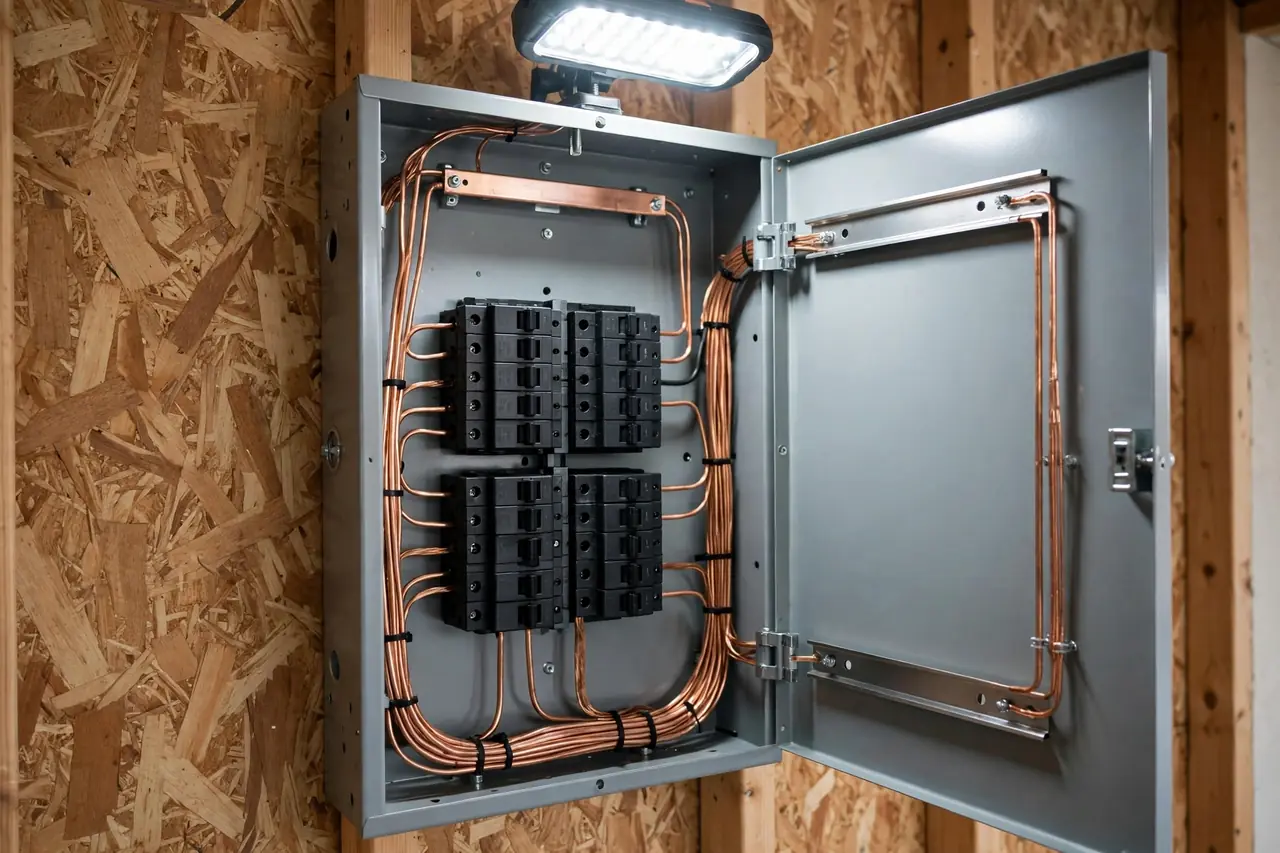
- The condition and capacity of the electrical panel can add a related project, because new circuits are often well paired with a modern panel that has room for them.
- Code expectations for the work, including arc-fault and ground-fault protection, grounded outlets, and tamper-resistant receptacles in certain areas, shape the devices and breakers that go in.
- Occupancy during the job affects scheduling: a vacant home or a home already under renovation allows faster, less disruptive work than a fully furnished, occupied house.
What a rewiring plan really involves
A rewiring plan starts with understanding what the home has now. Older houses may contain several generations of work at once: original cable from when the house was built, additions from later decades, and repairs of varying quality in between. Some of that wiring may be perfectly serviceable, and some may not. Cable insulation grows brittle with age and heat, and connections made long ago can loosen. An electrician evaluating a rewiring job will typically check the panel, sample outlets and switches, look into accessible attic and basement runs, and note which circuits are grounded and which are not. That survey turns a vague worry about old wiring into a specific list of circuits, rooms, and priorities you can act on.
Full rewiring and partial rewiring are both legitimate paths, and the right one depends on condition, budget planning, and timing. A full rewire replaces branch-circuit wiring throughout the house, reworks the circuit layout to suit how the home is used today, and pairs naturally with a panel upgrade when one is needed. A partial rewire may focus on the rooms with the heaviest loads, the circuits in the worst condition, or the areas already opened for remodeling. Many homeowners take the partial route in stages over several years. What matters is that the plan is deliberate: the highest-risk and highest-use circuits come first, completed work is documented, and later stages build on a known foundation rather than on guesswork.
The lived experience of a rewire deserves honest discussion before work begins. Running new cable through finished walls involves cutting access openings, fishing wire through framing, and patching afterward, and a skilled crew works to keep those openings as few and as tidy as the structure allows. Attics, basements, and crawl spaces often provide routes that reduce wall damage considerably. The home usually has power for most of the project, with individual circuits off while they are being replaced, but there will be noise, dust, and people moving through rooms. If the house is empty between purchase and move-in, or already opened for renovation, that is the easiest window. Ask the electrician how they protect floors and furnishings, how openings will be patched, and what the room-by-room sequence will look like.
Questions about home rewiring
Does my whole house need to be rewired, or can part of it be done?
What is knob-and-tube wiring, and why do people replace it?
Can we live in the house during a rewiring project?
Will rewiring tear up my walls?
What should a modern rewiring include that older wiring does not?
Find home rewiring in your city
Alabama: Birmingham, Huntsville, Mobile, Montgomery, Tuscaloosa, Daphne–Fairhope, Auburn, Decatur, Florence–Muscle Shoals, Dothan
Alaska: Anchorage
Arizona: Phoenix, Tucson, Prescott, Lake Havasu City, Yuma, Flagstaff
Arkansas: Little Rock, Fayetteville–Springdale–Rogers, Fort Smith
California: Los Angeles, Riverside–San Bernardino, San Francisco, San Diego, Sacramento, San Jose, Fresno, Bakersfield, Oxnard–Ventura, Stockton, Modesto, Santa Rosa, Visalia, Vallejo, Santa Barbara, Salinas, Merced, San Luis Obispo, Santa Cruz, Chico, Yuba City, Redding, El Centro, Hanford
Colorado: Denver, Colorado Springs, Greeley, Fort Collins, Boulder, Pueblo, Grand Junction
Connecticut: Hartford, Bridgeport–Stamford, New Haven, Waterbury, Norwich–New London
Delaware: Dover
District of Columbia: Washington
Florida: Miami, Tampa, Orlando, Jacksonville, North Port–Sarasota, Cape Coral–Fort Myers, Lakeland, Daytona Beach, Palm Bay–Melbourne, Port St. Lucie, Pensacola, Ocala, Naples, Tallahassee, Gainesville, Crestview–Fort Walton Beach, Panama City, Punta Gorda, Sebastian–Vero Beach, Homosassa Springs, The Villages
Georgia: Atlanta, Augusta, Savannah, Columbus, Macon, Gainesville, Athens, Warner Robins, Valdosta, Dalton, Albany
Idaho: Boise, Coeur d'Alene, Idaho Falls
Illinois: Chicago, Peoria, Rockford, Champaign, Springfield, Bloomington
Indiana: Indianapolis, Fort Wayne, South Bend, Evansville, Lafayette, Elkhart, Terre Haute, Bloomington
Iowa: Des Moines, Davenport, Cedar Rapids, Iowa City, Waterloo, Sioux City
Kentucky: Louisville, Lexington, Bowling Green
Louisiana: New Orleans, Baton Rouge, Lafayette, Shreveport, Slidell, Lake Charles, Monroe, Houma, Alexandria
Maryland: Baltimore, Hagerstown, Lexington Park
Massachusetts: Boston, Worcester, Springfield, Barnstable Town, Amherst
Michigan: Detroit, Grand Rapids, Lansing, Flint, Ann Arbor, Kalamazoo, Saginaw, Muskegon, Jackson, Traverse City, Monroe, Niles
Minnesota: Minneapolis–St. Paul, Duluth, Rochester, St. Cloud
Mississippi: Jackson, Gulfport–Biloxi, Hattiesburg
Missouri: St. Louis, Kansas City, Springfield, Columbia, Joplin, Jefferson City
Montana: Billings
New Hampshire: Manchester
New Jersey: Trenton, Atlantic City, Vineland
New Mexico: Albuquerque, Las Cruces, Santa Fe
New York: New York, Buffalo, Rochester, Albany, Poughkeepsie, Syracuse, Utica, Binghamton, Kingston
North Carolina: Charlotte, Raleigh, Greensboro, Winston-Salem, Durham, Wilmington, Asheville, Fayetteville, Hickory, Jacksonville, Burlington, Greenville, Rocky Mount
North Dakota: Fargo
Ohio: Cincinnati, Columbus, Cleveland, Dayton, Akron, Toledo, Youngstown, Canton
Oklahoma: Oklahoma City, Tulsa
Oregon: Portland, Salem, Eugene, Bend, Medford
Pennsylvania: Philadelphia, Pittsburgh, Allentown, Harrisburg, Scranton, Lancaster, York, Reading, Erie, Chambersburg, State College, Lebanon
Rhode Island: Providence
South Carolina: Greenville, Charleston, Columbia, Myrtle Beach, Spartanburg, Hilton Head Island, Florence
South Dakota: Sioux Falls, Rapid City
Tennessee: Nashville, Memphis, Knoxville, Chattanooga, Clarksville, Kingsport, Johnson City, Jackson
Texas: Dallas–Fort Worth, Houston, San Antonio, Austin, McAllen, El Paso, Killeen–Temple, Corpus Christi, Brownsville, Beaumont, Lubbock, Waco, Longview, College Station, Laredo, Amarillo, Tyler, Midland, Abilene, Odessa, Sherman–Denison, Wichita Falls, Texarkana
Utah: Salt Lake City, Provo, Ogden, St. George, Logan
Vermont: Burlington
Virginia: Virginia Beach–Norfolk, Richmond, Roanoke, Lynchburg, Charlottesville, Blacksburg, Winchester
Washington: Seattle, Spokane, Kennewick, Olympia, Bremerton, Yakima, Bellingham
West Virginia: Huntington, Charleston, Morgantown
Wisconsin: Milwaukee, Madison, Green Bay, Appleton, Racine, Eau Claire, Oshkosh, La Crosse, Kenosha, Janesville
Need home rewiring help?
One call routes you to an independent local electrician who handles this work in your area.