VoltReach USA connects Pueblo homeowners with independent local electricians. This page is built from the metro's own Census housing data, ZIP codes and climate record — the electrical problems described here are the ones Pueblo homes actually have.
12
ZIP codes covered
1
County in the metro
67,816
Households (Census ACS)
1974
Median year home built
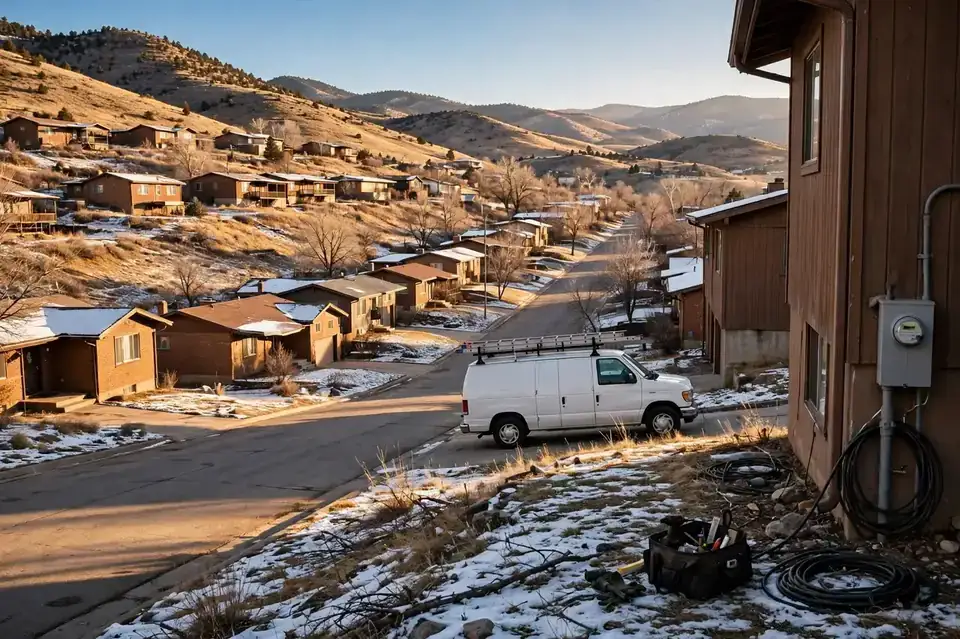
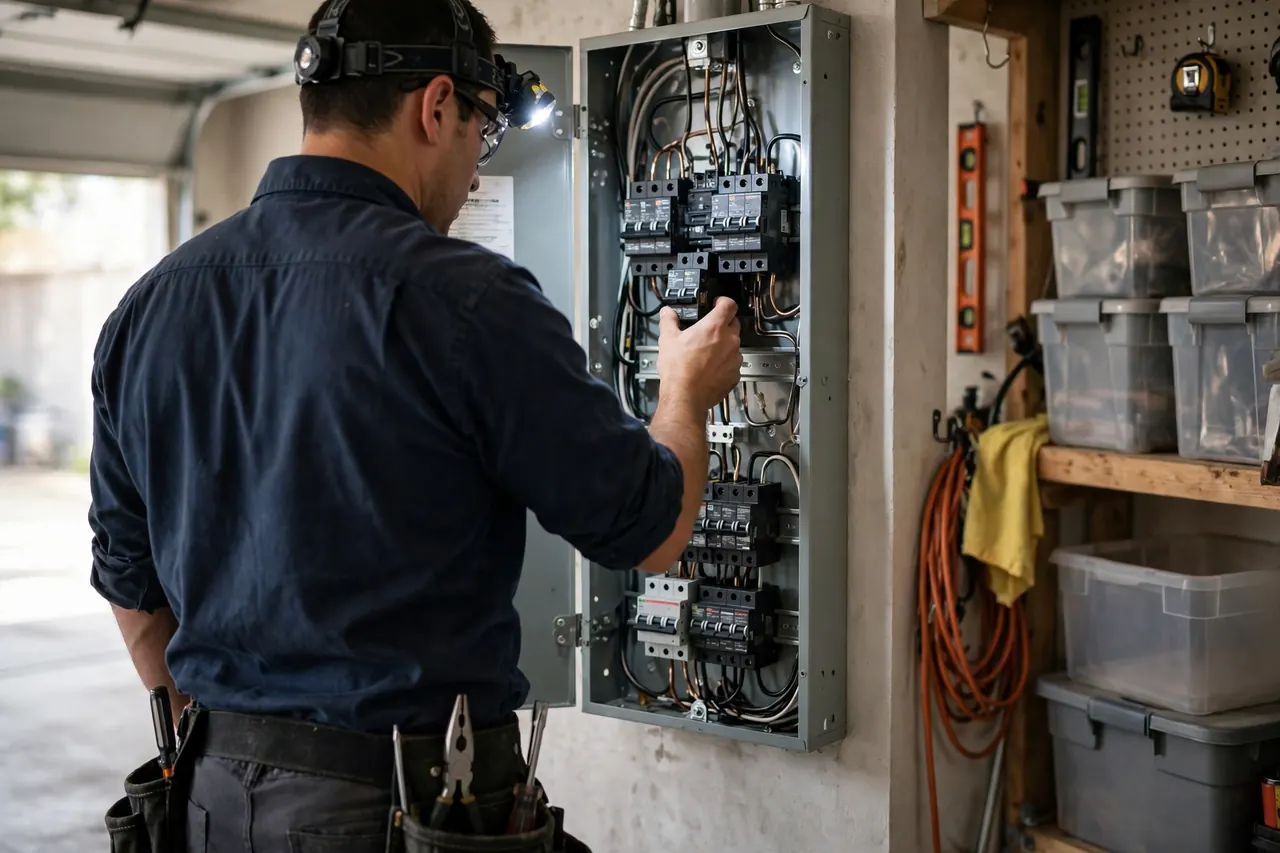
Pueblo, CO — electrical help across the metroLocal electricians serving Pueblo neighbourhoodsUpgrading a panel in a Pueblo home
Pueblo electrical work, in brief
The median Pueblo home was built in 1974; 59.3% of the stock predates 1980, and the pattern this metro's own data ranks first is heating load strain in pueblo. VoltReach USA is a referral service, not an electrical company: one call connects you with an independent local electrician serving your ZIP code.
The Pueblo housing stock, and what it means for wiring
Two numbers frame everything that follows: 68.3% of Pueblo homes are owner-occupied, and the median one was built in 1974. Ownership matters to electrical systems because owners inherit them whole — every decision a builder made in the 1970s or earlier is still behind the walls, ageing on its original schedule. With 59.3% of homes predating 1980 and 21.4% arriving since 2000, the metro is really two housing stocks sharing one map, and they are taken separately below before the problems are ranked.
Stand in one of Pueblo's older neighbourhoods and you are standing in its wiring's back catalogue. The homes there — part of the 43,307 built before 1980 across this metro — went up when a 60- or 100-amp panel was generous, a kitchen might have two circuits, and grounding was a rumour in half the rooms. Those budgets have now been spent many times over by modern loads. What it leaves behind is not universal failure but universal exposure: every panel, breaker and connection in those districts is operating past the horizon its makers planned for, in Pueblo County and beyond, and the failures arrive in the order the components tire.
There is a second way to read the growth figures: as a maintenance wave still approaching. The 15,629 homes built since 2000 were handed over with everything new at once — panels, breakers, detectors, devices — and new things age in convoy. The first replacements in those subdivisions have begun; the wave behind them is arithmetic. Households in Pueblo West and the other growth districts who learn their systems now, while the systems are still young, are the ones who will meet that wave as a schedule rather than a surprise.
The climate written over all of it comes from the NOAA station at PUEBLO MEM AP, CO US: an average year brings 5,334 heating degree days, 1,078 cooling degree days and 12.02 inches of precipitation. Those are not abstractions to a panel or a circuit — they set how hard heating and cooling equipment loads the system in January and July alike, how often storm seasons test the grid connection, and whether a space heater on an old circuit is a worry or a certainty. The problem sections that follow are selected by exactly these numbers, combined with the housing-age profile above.
The Pueblo electrical profile in numbers
The metro's building eras on one side, its weather record on the other — and its wiring where the two meet.
The distribution, in one breath: of every hundred Pueblo homes, 34.7 were standing before 1960, 24.6 went up in the two decades after, 19.3 in the two after that, and 21.4 have arrived since 2000. Percentages flatten the picture, so hold the counts beside them — 25,342 oldest-era homes, 15,629 newest — and the metro's electrical systems stop being an abstraction: that many panels, that many wiring generations, ageing in that order.
The defining fact about housing in Pueblo is how much of it predates 1960: 34.7 of the stock, 25,342 homes, with a median build year of 1974. Electrically, that era means fuse boxes or early small panels in some properties, service sizes of 60 to 100 amps, and in the earliest homes wiring methods such as knob-and-tube and cloth-insulated conductors that have now served for many decades. Ungrounded outlets are common findings. Across Pueblo, Pueblo West and Colorado City in Pueblo, the electrical profile of Pueblo, Colorado is therefore one of original systems, layered modifications and a real need for careful, era-aware assessment by independent local electricians. That inheritance also shapes decisions every week, from where a charger can go to whether a room can safely carry another heater through winter.
Mid-century housing as the runner-up era gives Pueblo a broad base of homes now well past fifty years old. In Pueblo West and Salt Creek, these properties typically combine copper or aluminium branch wiring from the period with panels sized for lighter demand and outlets that predate current grounding expectations. Independent local electricians working in Pueblo often find that a Pueblo home from this band is fundamentally sound in structure but ready for electrical renewal in stages, beginning with the panel and the highest-load circuits, a pattern repeated across this era throughout Colorado. Later additions near Salt Creek often reveal this band where an original early home was extended in a subsequent building wave.
Summer is the long electrical season in Pueblo. Across 71.6 days at or above 90 degrees and 1,078 cooling degree days at PUEBLO MEM AP, CO US, air conditioning dominates demand from late morning to late evening in Pueblo, Pueblo West and Salt Creek, ceiling fans run for months and garages, where many panels live, reach their highest temperatures of the year. The 53.2 average understates those peaks, which is why afternoon tripping is such a familiar report across 67,816 households in Pueblo. Any honest profile of Pueblo, Colorado must treat that sustained heat load as a central fact of its electrical life. Garages, attics and exterior walls, where much equipment sits, experience the extremes most directly, which is why their condition features in almost every local assessment.
For a homeowner in Pueblo, the practical value of this ranking is sequence. It suggests which checks come first for a home of a given era in this climate, whether that is panel condition before summer in Pueblo West, heating circuits before winter in Pueblo, or grounding and protection ahead of storm season in Colorado City. Across 67,816 households in Pueblo, the order differs by era and exposure, and independent local electricians can turn this metro-level picture into a home-specific order of attention for any property in Pueblo, Colorado.
Electrical problems Pueblo homes actually get
Selected and ranked from this metro's housing-age profile and climate record — not copied from another city's page.
Heating Load Strain in Pueblo
Heat pumps deserve a clear explanation for Pueblo homeowners, because their cold weather behaviour surprises many. In mild cold, a heat pump moves heat efficiently and draws moderately. As outdoor temperatures fall, its output drops just as the house needs more, and the system calls on auxiliary electric heat strips to close the gap. Those strips draw heavily, more like an electric furnace. A panel and circuit arrangement in Pueblo that handled the heat pump all autumn is suddenly feeding a much larger load in a cold snap. If breakers trip or rooms cool during the deepest cold in Pueblo West or Beulah Valley, that transition — not a mysterious new fault — is often where the diagnosis begins.
If heating trips a breaker repeatedly in a Pueblo home, treat the pattern carefully. Resetting once and watching is reasonable for many households. Repeated trips, a breaker that will not hold, warmth or smell at the panel, or discoloration at the heating disconnect are signs to stop resetting and call an electrician, because a breaker that keeps tripping under a sustained heating load is reporting a condition that resetting cannot fix. Keep the house as warm as the remaining system allows, use any heater you do run on a circuit of its own and attended, and give the electrician in Pueblo the timeline of trips and temperatures when you call.
There is also a building condition thread in Pueblo worth naming. On the coldest nights, heating systems run without pause, and every connection in the heating circuit carries sustained current for many hours. Sustained current is what finds weak points: a loose termination in a disconnect in Colorado City, a tired breaker in a panel in Salt Creek, insulation on conductors aged by decades of heat cycles. A fault that smoulders electrically at low load declares itself at full load. That is why winter calls in Pueblo so often involve heating circuits and panels rather than lighting or outlets, and why a pre season check of heating circuits in Pueblo is worth more than the same check in spring.
There is a household management side to this pattern that helps while professional work is arranged in Pueblo. Knowing which outlets share a circuit lets a family stagger the heavy hitters — dryer after cooking, heater on a less loaded circuit, microwave not alongside the air conditioner — and those habits reduce nuisance trips immediately. They are habits, though, not a substitute for layout work when daily life routinely exceeds what the circuits were built for. VoltReach USA connects Pueblo homeowners with independent local electricians for that work: circuit mapping, added circuits where the panel allows, and honest guidance on where behaviour change is enough and where wiring needs to change with the household.
Bathrooms and laundry rooms round out the usual circuit pressure points in Pueblo. Hair dryers are among the heaviest plug in loads in a house, and a bathroom circuit shared across two bathrooms in older Pueblo homes can trip when both are in morning use. Laundry areas combine washers, dryers on electric circuits in some homes, and irons or steamers. None of these appliances is faulty for drawing what it draws. The finding is simply that the circuit plan predates the routine. Dedicated circuits for these rooms, where an assessment supports them, end the morning negotiation over who dries hair first in a Pueblo household.
There is a subtler sign of strain across Pueblo that deserves attention alongside tripping: circuits that never quite trip but run near their limit for hours. Lights dim briefly when a compressor or dryer starts in Pueblo. An outlet strip in Pueblo West feeds a heater, a television and chargers because the room has too few receptacles for its current use. None of that announces itself as a fault, yet it describes a layout stretched past its intent. With 68.3 of Pueblo homes owner occupied, many residents have adapted gradually to these workarounds and stopped seeing them. Naming the pattern is the first step toward a circuit layout that fits the house as it is lived in now.
Insulation is the other modern collision for this wiring in Pueblo. Attics across Colorado have rightly been insulated more deeply over the years, including in the 25,342 homes built before 1960 here, where 5,334 heating degree days make insulation valuable. The difficulty is that knob-and-tube was designed to dissipate heat into open air, and burying live conductors in insulation removes that path while also hiding their condition from view. No homeowner should have to choose between an efficient attic and sound wiring from a position of uncertainty. An assessment establishes where active knob-and-tube runs, so insulation and electrical decisions in a Pueblo attic can be sequenced correctly rather than layered over each other blindly.
A practical caution belongs here for Pueblo homeowners: do not probe, move or test knob-and-tube wiring yourself, and be careful with stored items resting against old conductors in attics and basements. Brittle insulation can crack when disturbed, and conductors that look inert may be live. If insulation work, storage changes or a renovation will disturb areas where this wiring runs in a Pueblo home, have an electrician identify active runs first. That single sequencing step protects both the workers doing the later job and the wiring itself, and it takes little effort compared with repairing damage done in ignorance of what was hidden.
The oldest layer of Pueblo housing is substantial: Census data counts 25,342 homes built before 1960 — 34.7 of the stock — and the earliest of them in Pueblo, Pueblo West and Colorado City predate modern wiring methods entirely. Homes from before about 1950 in Pueblo were commonly wired with knob-and-tube, a system using separate single conductors run on ceramic knobs and through ceramic tubes. Where it survives in Pueblo, it survives in houses that have often been renovated room by room, leaving original wiring in the least disturbed places: attics, basements and wall cavities.
Freeze season in Pueblo is most clearly understood as a load season. Every house in Pueblo makes the same demands at once: heating at full stage, water heating recovering, cooking, laundry and lights, all while temperatures sit at their coldest. In homes among the 43,307 built before 1980 here, that combined peak can approach the service size for hours at a time. The practical responses are unglamorous and effective in Pueblo: stagger heavy loads where you can, give any space heater a circuit of its own, and treat repeated tripping in cold weather as a prompt for an electrician's assessment rather than a habit to live with until spring.
When sustained cold settles over Pueblo, the electrical system works differently. Heating equipment that cycles briefly in mild weather runs almost continuously, auxiliary strips add heavy draw during the coldest hours counted among 165.0 freezing days at PUEBLO MEM AP, CO US, and households in Pueblo West and Colorado City add space heaters room by room. In homes built in the 1970s across Pueblo, that load lands on circuits planned for far less. Flicker when the heating starts and trips that happen only before dawn are useful clues. Independent local electricians can assess heating load and circuit condition in Pueblo homes during freeze season.
A closer look: heating load strain in pueblo in Pueblo
There is a regional rhythm to this pattern in Pueblo that homeowners can use rather than merely endure. Cold strain arrives with warning: forecasts show the coldest nights days ahead, and the households that fare well in Pueblo and Salt Creek tend to have done small things early — heating circuits checked in autumn, heater placement planned onto suitable circuits, a clear sense of which loads to stagger when auxiliary heat is running. None of that requires new equipment. It requires treating winter peak as a known appointment the electrical system must keep. VoltReach USA's seasonal reminder for Pueblo is simple: book the heating circuit and panel check while the weather is still mild, mention any previous winter trips when you book, and let an independent local electrician find the loose termination in daylight rather than the cold finding it at midnight.
The numbers underneath it, for Pueblo: 73,031 housing units, a median build year of 1974, and a climate record at PUEBLO MEM AP, CO US of 5,334 heating degree days against 1,078 cooling degree days. Cross the housing record with the weather record and this pattern is what falls out at the top — rarely the most dramatic problem in electrical work, but the one this metro's stock and climate manufacture most steadily.
The first visit follows a short, diagnostic list — each item ruling a branch of the problem in or out:
Look for discoloration along the heating path
Verify main breaker condition under load history
Check circuits in the coldest rooms for overload
Assess generator coverage for heating essentials
Examine panel for signs of sustained heat
Advise on load staggering during cold snaps
Electrical services in Pueblo
Listed in the order this metro's housing and climate data supports.
Emergency Electrician in Pueblo
Water near outlets or a panel changes everything in Pueblo homes, from Pueblo to Colorado City. Keep clear of wet equipment, and let VoltReach USA connect you with an independent local electrician to judge when a circuit can be used again.
Urgency in Pueblo does not distribute evenly across its neighbourhoods. Older districts around Pueblo may contend with early wiring and panels at the end of their service life, while newer growth near Pueblo West, Colorado City and Salt Creek, which added 15,629 homes since 2000, faces construction-era issues and heavy simultaneous loads across 1 counties. A household in a 1920s house and a household in a new subdivision can both lose power, for entirely different reasons. Independent local electricians familiar with Pueblo across its 12 ZIP codes can bring that era awareness to an urgent visit in Colorado and focus quickly on the most plausible causes. If only part of a home near Pueblo is affected, noting exactly which rooms lost power helps separate internal faults from supply problems. Owner-occupiers, 68.3 of households in Pueblo, often plan electrical work alongside other projects, and independent local electricians can help sequence it sensibly for a property in Pueblo so walls are opened once and circuits are planned as a whole.
Urgent faults in Pueblo arise from a stock where 43,307 homes predate 1980 and the median build year is 1974, spread across 12 ZIP codes in 1 counties. Ageing systems meeting modern load is the recurring local pattern in Pueblo. Independent local electricians can make a Pueblo, Colorado home safe, isolate the fault and explain the likely role of the system's age and condition.
Many Pueblo homes were built around 1974, long before today's appliance loads. When a breaker in Pueblo starts tripping under everyday use, VoltReach USA connects the homeowner with an independent local electrician who checks the panel, the load, and the wiring as one picture.
Households in Pueblo keep adding load to circuits that were laid out for a lighter life. A microwave and an air fryer sharing a kitchen circuit, a space heater joining a bedroom circuit already carrying computers, or workshop tools on a garage circuit can push a healthy breaker to its limit without anything being broken. With 73,031 housing units and 68.3 owner occupancy, these patterns are everyday occurrences in Pueblo. Independent local electricians can map what actually runs on a tripping circuit in a Pueblo home, measure load where appropriate, and discuss redistributing appliances or adding capacity as distinct options from repairing the breaker itself. Owners in Pueblo West should note whether trips coincide with heating or cooling starting, because motor start-up draws heavily for a moment. In a metro of 67,816 households and 73,031 housing units, no two properties in Pueblo present quite the same picture, which is why independent local electricians assess each home in Pueblo on its own wiring, panel and patterns of use.
Panels across Pueblo span several generations because the housing does: 34.7 built before 1960, 24.6 from 1960 to 1979 and 19.3 from 1980 to 1999, across 73,031 housing units in Pueblo. Breaker age and type in a Pueblo, Colorado home therefore vary widely. Independent local electricians can identify the equipment present and test a suspect breaker in that context.
In Pueblo, rewiring questions usually start room by room: a kitchen in Pueblo, a nursery in Pueblo West, an office where grounded outlets matter. Independent local electricians can map the existing circuits and explain a sensible order of work. The findings are usually mapped circuit by circuit, so owners can see which rooms come first and which sound runs can stay in service longer.
The map of Pueblo is also a map of wiring age. Older districts near Pueblo hold the deepest stock of early housing, while growth near Pueblo West, Colorado City and Salt Creek added 15,629 homes since 2000 with contemporary wiring throughout. Between them, streets built in the 1960s, 1970s and 1980s fill 1 counties with their own mix. A homeowner comparing rewiring in Pueblo is really comparing eras, because access, wall construction and existing circuits differ sharply by neighbourhood and decade. Independent local electricians who work across Pueblo can explain those differences in practical terms and help owners in Colorado plan around occupancy and renovation timing. The mix of plaster, drywall and later additions found near Pueblo means opening walls is planned carefully, room by room, in advance. A Pueblo home's electrical story, its 1974 median era, its panel, its grounding and its climate load, is individual, and independent local electricians serving Colorado can read that story on site and explain the options it leaves open for the household.
In Pueblo, 24.6 of homes date from 1960 to 1979 and 34.7 from before 1960, together 43,307 homes whose wiring generations predate current expectations. Across 73,031 housing units in Pueblo, that makes wiring age a routine topic. Independent local electricians can identify which generation is present in a given Pueblo, Colorado home and where it remains in service.
In Pueblo, Colorado, panels installed for the the 1970s era often meet today's loads in Pueblo. VoltReach USA connects homeowners with independent local electricians who can evaluate capacity and condition in person.
EV drivers in Pueblo, Colorado charge fastest at home with a dedicated Level 2 circuit. VoltReach USA connects homeowners in Pueblo with independent local electricians who assess panels and parking layouts in person.
Standby generators in Pueblo, Colorado start automatically during outages, protecting heat, food, and pumps in Pueblo homes. VoltReach USA connects homeowners with independent local electricians who plan and install these systems.
Lost electronics to a surge in Pueblo? VoltReach USA connects you with an independent local electrician who can inspect your panel and explain realistic protection for the whole house.
Outdoor and indoor lighting projects in Pueblo start with how each space is used. Homeowners across 1 counties use VoltReach USA to reach independent local electricians for lighting installation and planning.
Ceiling fans in Pueblo, Colorado make rooms feel cooler through 71.6 hot days and return warm air in winter. VoltReach USA connects homeowners with independent local electricians who install fans on properly braced ceiling boxes.
In Pueblo, loose, warm, or crackling devices should be replaced, not tolerated. VoltReach USA connects you with an independent local electrician who can renew outlets and switches safely.
Old, chirping, or battery-only detectors in Pueblo can be upgraded to hardwired, linked units. VoltReach USA connects you with an independent local electrician to plan the change.
In Pueblo, shops, offices, and restaurants rely on panels and lighting every trading hour. VoltReach USA connects businesses with independent local electricians for assessment, repair, and planned work.
Ask where this metro's electrical diary fills up and the answer is a short story: Heating Load Strain in Pueblo first, overloaded circuits in Pueblo close behind, and the services that answer them doing the bulk of the booked work. Everything else on the list above is the supporting cast — necessary, frequent enough, but not what Pueblo's housing stock, at its age and in its climate, principally demands. Read the service list as a weather report for the metro's wiring and it stops looking like a catalogue.
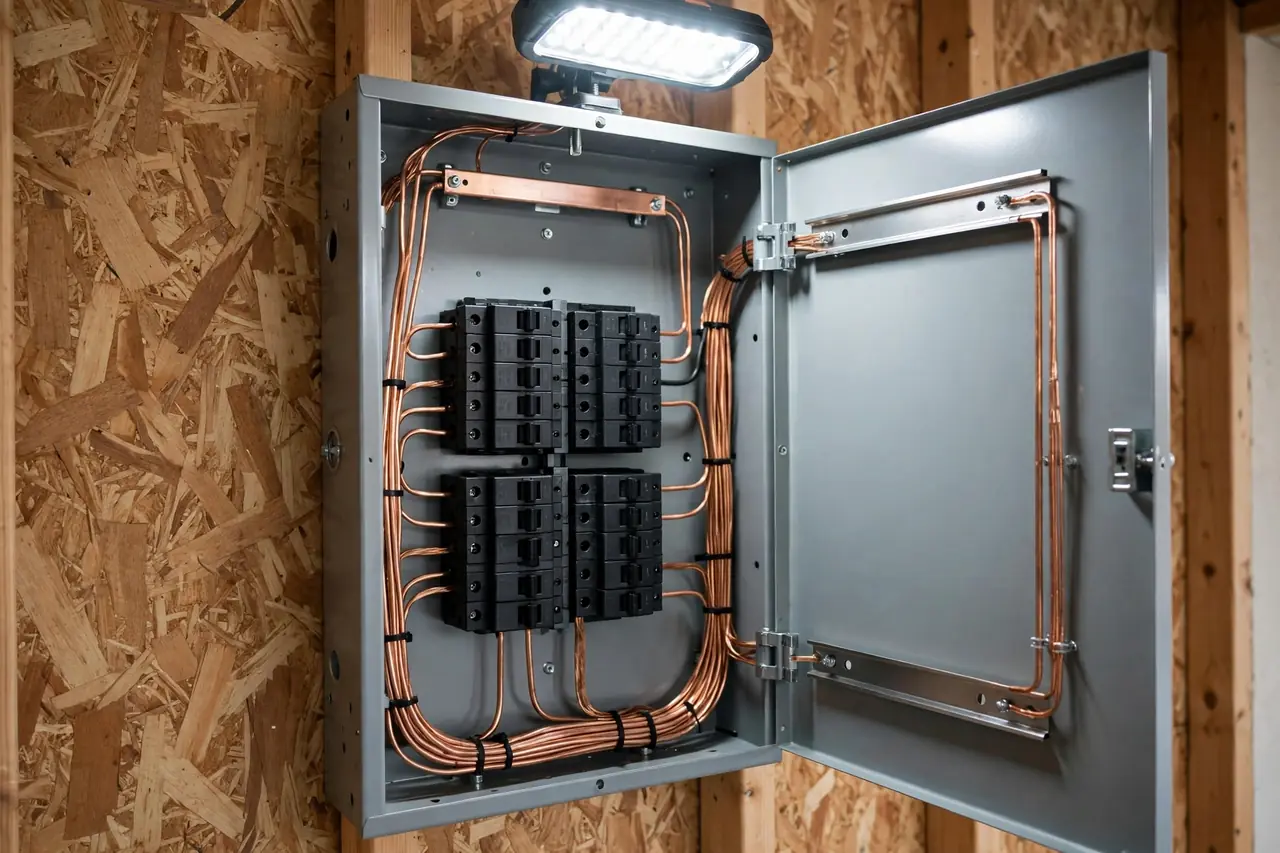
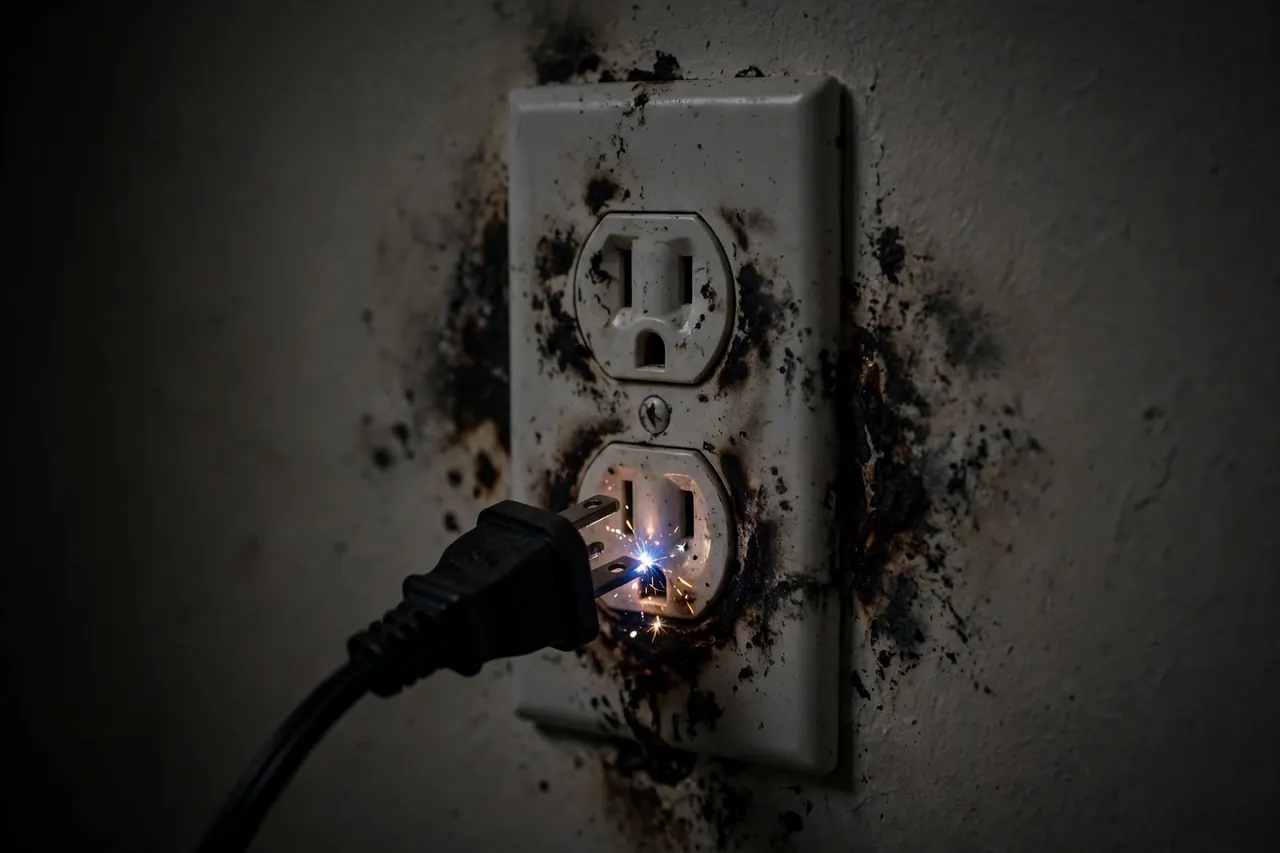
From problem to fixed, in Pueblo
PROBLEMAn electrical problem inside a Pueblo home
➔
SOLUTIONThe same system in Pueblo after professional repair
Areas covered in the Pueblo metro
Pueblo
Population 111,514
Pueblo West
Population 34,992
Colorado City
Population 1,791
Salt Creek
Population 852
Beulah Valley
Population 762
Blende
Population 646
Vineland
Population 332
Avondale
Population 298
Boone
Population 247
A metro is a federation of building decades wearing one name, and the grid above is Pueblo's federation: Pueblo at the centre, Pueblo West (34,992 residents) and Colorado City (1,791) in the next ring, and the smaller communities beyond, down to places a few thousand households deep. What unites them is one climate record and one routing; what divides them is the year their streets were wired. The ZIP list that follows is the practical definition of that federation — if your code is on it, your home's era is part of the data this page was built from.
Beyond the largest communities sit Salt Creek (852), Beulah Valley (762), Blende (646), Vineland (332), Avondale (298) — smaller places across Pueblo, covered on the same terms. Their housing tends to be older on average than the big suburbs', and their calls follow the older patterns on this page. One routing covers them all: find your ZIP code below and the rest is a phone call.
Start with Pueblo itself: 111,514 residents, 66.1% of the metro — the centre the rest of the map orbits. Pueblo West (34,992) and Colorado City (1,791) form the next ring out, housing with its own building decades and its own wiring generations. Beyond them the metro thins into the smaller communities in the grid above, each a few thousand households deep — small in population, identical in one respect: their circuits answer to the same eras and the same weather as the big city's.
One metro, 1 county lines drawn through it: Pueblo. The lines are invisible to the current and the weather, but they structure everything administrative around an electrical job — which office permits it, which inspector signs it, which code edition applies. Pueblo County, at the centre, carries the oldest housing and the heaviest share of the work this page describes; its neighbours carry the growth. A routed local electrician navigates the patchwork so the homeowner does not have to.
Beyond the metro line, the nearest covered metros are Colorado Springs, CO (51 miles away), Denver, CO (104 miles) and Boulder, CO (142 miles) — separate pages, separate profiles, because their housing and weather records are their own. Homeowners near the boundary sit between two datasets; the ZIP list above, not the map's edge, decides which page was written about your stock.
The region around Pueblo is a set of variations on its theme: Colorado Springs, CO, 51 miles off, runs a median build year of 1988 on a metro population of 781,796; Denver, CO (104 miles) medians 1986 on 3,092,037; Boulder, CO (142 miles) medians 1986 on 328,560. Nearness is not sameness — a few decades of median build year separate their wiring as surely as the miles separate their maps.
Divide the stock by the map and the densities appear: roughly 6,086 housing units for every covered ZIP code, 67,816 households to a county, 9 named communities in the grid. The balance between the generations reads 2.8 pre-1980 homes for every home built since 2000 — a single ratio that quietly predicts whether a metro's electrical week leans toward renewal work in the old districts or first-generation upkeep in the new ones.
One line of Pueblo arithmetic — a median home 52 years old · 46,318 owner-occupied homes against 21,498 renter-occupied · 2,112 pre-1960 homes for every covered ZIP code · a heating-to-cooling degree-day ratio of 4.95 · 305 mm of rain in an average year.
Pueblo electrical questions
How can I tell whether VoltReach USA covers my Pueblo address?
You can settle coverage before you make any contact. Compare the ZIP code on your utility bill or panel paperwork with the 12 codes shown for Pueblo, then compare your county with Pueblo. Both matching means you are in the area this page serves. The model matters here: VoltReach USA is a referral service, not the firm that will stand in front of your breaker panel. It maintains the Pueblo research, keeps the coverage list current and routes your call. An independent local electrician then handles the conversation about your home, the inspection of your wiring and circuits, and any work you decide to go ahead with. The population behind the boundary underlines its scale: 67,816 households in 73,031 homes across Pueblo, with 68.3% owner-occupied, means the coverage list is not a token gesture toward Pueblo but a working map of where local homeowners actually live, street by street and code by code, throughout the metro this page describes in its housing and weather research above. Compressed further, coverage here rests on three countable things: the code run beginning 81001, 81003, 81004, 81005, the 12 codes in total across Pueblo, and a housing base of 73,031 homes whose era profile, centred on the 1970s, is the reason this page exists for Pueblo at all. Stated as a housing count behind those codes: the era ledger reads 25,342 homes before 1960, 17,966 from 1960-1979, 14,095 from 1980-1999 and 15,629 since 2000 — 73,031 units, 67,816 households, 68.3% of them owner-occupied. The weather record behind it is PUEBLO MEM AP, CO US's: 5,334 heating degree-days against 1,078 cooling degree-days in an average year. Read it against a median build year of 1974 and a 59.3% share of homes from before 1980. The coverage behind this answer spans ZIP codes 81001 through 81008 - the ZIP list published on this page. It is written for a metro whose largest places are Pueblo (111,514 residents), Pueblo West (34,992) and Colorado City (1,791). Run the same ranking for nearby Greeley and its leading pattern is heating load strain - a different order from Pueblo's, which is why this site keeps a separate page for every metro.
Which Pueblo homes should watch their electrical systems most closely?
If your Pueblo home was built before 1980, put it in the close-watch group and keep it there. That group covers 43,307 homes locally, including 25,342 built before 1960. Those homes have commonly gained demand in layers: an added room here, a heavier appliance there, extra outlets worked into circuits that were modest at the start. The panel may look tidy while sitting near the edge of what its circuits can comfortably carry. Signs worth noting include breakers that need resetting more than rarely, lights that dip when a motor starts, outlets that have stopped working, and any burning smell near a switch or outlet. Noting the pattern, and when it happens, helps an electrician judge the system far faster. Geography sharpens that watch list across the Pueblo metro, because the oldest stock is not spread evenly: it concentrates in and around Pueblo and the earlier-settled parts of Pueblo, while the places that grew later, among them Salt Creek and Beulah Valley, carry younger panels and wiring on average, so two streets with the same postal city can sit a generation apart electrically across the 12 codes and 1 counties this page covers. The ownership figures add a practical edge to the watch list, because with 68.3% of 67,816 households owning their homes in Pueblo, most of the older stock is looked after by the people living in it, and the panel and wiring decisions for 43,307 pre-1980 homes rest with those households directly, which makes an honest yearly watch a normal part of owning an older Pueblo home. The compressed watch list for Pueblo reads by numbers: codes from 81001 to 81005 contain districts where 25,342 pre-1960 homes and 17,966 homes from 1960 to 1979 cluster, while Pueblo, at 111,514 residents, holds the densest share of the oldest wiring in the metro. For the watch list stated as an era count: the era ledger reads 25,342 homes before 1960, 17,966 from 1960-1979, 14,095 from 1980-1999 and 15,629 since 2000 — 73,031 units, 67,816 households, 68.3% of them owner-occupied. All of it describes the Pueblo metro as the Census defines it - 168,726 residents in 73,031 housing units. Read it against a median build year of 1974 and a 59.3% share of homes from before 1980. The footprint takes in Pueblo County - 1 covered county in all, each with its own page on this site. The housing ledger behind it counts 25,342 homes from before 1960 and 15,629 built since 2000 across the metro. It is written for a metro whose largest places are Pueblo (111,514 residents), Pueblo West (34,992) and Colorado City (1,791).
What is the most common electrical problem in Pueblo homes?
The leading electrical problem in Pueblo homes is Heating Load Strain in Pueblo, with overloaded circuits in Pueblo next in line. That order is not a guess. It comes from reading the local housing eras together with the local climate record, because most household electrical faults grow out of that pairing: older panels and circuits carrying modern loads, season after season of heating and cooling demand, and wiring that has cycled between hot and cold for decades. You may recognise the leader in your own home as a breaker that trips when appliances combine, a circuit that gives up under a familiar load, or protection that reacts more often than it once did. The ranking tells you where to look first, not what your home has. Only an inspection of your own panel and circuits can say that. The third name on the podium, knob-and-tube wiring in Pueblo, keeps the top two honest, because it shows the ranking is a genuine ordering rather than a single headline: each step down the podium corresponds to causes that are present in Pueblo but less widespread, whether measured by era share, by seasonal load at PUEBLO MEM AP, CO US, or by the share of homes whose panel and circuit layout exposes them to that particular failure pattern. The densest summary of why Heating Load Strain in Pueblo leads in Pueblo fits in one breath: 43,307 homes built before 1980, a median year of 1974, 12.02 of precipitation and a population of 168,726 whose daily demand lands on panels and wiring installed, in large part, for a lighter electrical age. With the leading problem stated against the era count: the era ledger reads 25,342 homes before 1960, 17,966 from 1960-1979, 14,095 from 1980-1999 and 15,629 since 2000 — 73,031 units, 67,816 households, 68.3% of them owner-occupied. Read it against a median build year of 1974 and a 59.3% share of homes from before 1980. The coverage behind this answer spans ZIP codes 81001 through 81008 - the ZIP list published on this page. The footprint takes in Pueblo County - 1 covered county in all, each with its own page on this site. All of it describes the Pueblo metro as the Census defines it - 168,726 residents in 73,031 housing units. The housing ledger behind it counts 25,342 homes from before 1960 and 15,629 built since 2000 across the metro.
What does the Pueblo climate do to panels, circuits and wiring?
Weather reaches a home electrical system mainly through load and through exposure. In Pueblo the record at PUEBLO MEM AP, CO US shows an average temperature of 53.2, with 5,334 heating degree days and 1,078 cooling degree days across a typical year. Those two totals describe how hard heating and cooling equipment works, and that equipment is among the heaviest demand on a panel. Long heating and cooling runs keep circuits busy for extended stretches, which exposes weak breakers and tired connections that light use might never reveal. Rain, at 12.02 across the year, tests outdoor outlets, exterior lighting circuits and any fitting whose seal has aged. Weather rarely breaks a sound system outright. It stresses a marginal one until the weakness shows. Read the PUEBLO MEM AP, CO US record as a metro average rather than a street forecast, because conditions in Pueblo vary between the built-up centre around Pueblo, the communities of Pueblo West and Colorado City, and the fringe areas near the county lines of Pueblo: elevation, tree cover and exposure differ, yet every part shares the same seasonal load swing, and it is that shared swing, acting on different ages of wiring, that produces such different electrical outcomes within one metro. Precipitation completes the local picture alongside temperature: 12.02 in a typical year at PUEBLO MEM AP, CO US means outdoor outlets, garage circuits and exterior fittings in Pueblo are wetted regularly across the seasons, and in a stock of 73,031 homes that steady wetting, working on covers and seals of very different ages, quietly decides which outdoor circuits stay sound and which begin to fail after storms. The station figures in their densest form for Pueblo are these: PUEBLO MEM AP, CO US records 53.2 on average, 71.6 days at the top of the heat range, 165.0 at freezing or below, and 12.02 of precipitation, numbers that between them govern load, cycling and moisture for every circuit in the metro. With the weather load stated against the era count: the era ledger reads 25,342 homes before 1960, 17,966 from 1960-1979, 14,095 from 1980-1999 and 15,629 since 2000 — 73,031 units, 67,816 households, 68.3% of them owner-occupied. The footprint takes in Pueblo County - 1 covered county in all, each with its own page on this site. The housing ledger behind it counts 25,342 homes from before 1960 and 15,629 built since 2000 across the metro. The weather record behind it is PUEBLO MEM AP, CO US's: 5,334 heating degree-days against 1,078 cooling degree-days in an average year. Run the same ranking for nearby Colorado Springs and its leading pattern is heating load strain - a different order from Pueblo's, which is why this site keeps a separate page for every metro. All of it describes the Pueblo metro as the Census defines it - 168,726 residents in 73,031 housing units.
What should I do first if I smell burning from an outlet or see sparks in the Pueblo metro?
Keep the response simple and conservative. Stop using the outlet at once. Keep people away. Do not plug anything else into the circuit to test whether it still works, and do not keep resetting a breaker that trips, because repeated resetting feeds a fault instead of clearing it. If conditions around the panel are dry and normal, switching that one breaker off and leaving it off is a reasonable protective step. If there is standing water, a wet floor, scorch marks on the panel, or any doubt at all, do not touch the panel. Flames, dense smoke, continuous sparking or a line down outside are emergency territory: leave, call emergency services, and contact the utility about the line. When everyone is safe, use this page to be connected with a local electrician who can inspect the circuit and explain what failed. Households across the Pueblo metro, in Pueblo, Pueblo West, Colorado City and the smaller communities between them, should treat that sequence identically wherever they sit within Pueblo: safety steps do not change by neighbourhood, and neither does the order of them, so keep the circuit off, keep the area clear, and only once emergency and utility matters are settled use this page, which covers 12 codes locally, to be connected with an independent electrician nearby. Once the immediate danger has passed, the details you pass on help more than you might expect: your ZIP code within the 12 listed for Pueblo, the room involved, whether water was anywhere nearby, and whether the breaker stayed off, together let the independent electrician arrive understanding the circuit's story, and in a metro of 67,816 households that clarity is what separates a focused first visit from a second one. In the compressed local record, incidents like this are read against 43,307 pre-1980 homes, a code list opening 81001, 81003, 81004, 81005, and a station history of 71.6 hot days loading older circuits hard, context that explains frequency without ever changing the safe first steps themselves. After an incident, stated for the record by codes: the codes run 81001, 81003, 81004, 81005 and 81006 among the 12 on the list, spread over Pueblo. The Census identity of this metro, Pueblo with 168,726 residents, 68.3% owner-occupied and a median build year of 1974, explains why such incidents cluster in older circuits here compared with Colorado Springs, CO at 51, Denver, CO at 104 and Boulder, CO at 142: the podium faults Heating Load Strain in Pueblo, overloaded circuits in Pueblo and knob-and-tube wiring in Pueblo all grow from the same ageing stock that makes conservative first steps so important locally. Walk the incident geography by code and the coverage becomes tangible in Pueblo: a report from 81001 and a report from 81008 sit at opposite ends of the local list that runs 81001, 81003, 81004, 81005, 81006, 81007, 81008, yet both follow the same safety sequence first and the same referral route afterwards, because neither distance across the metro nor position in the code list changes what safety requires. All of it describes the Pueblo metro as the Census defines it - 168,726 residents in 73,031 housing units. It is written for a metro whose largest places are Pueblo (111,514 residents), Pueblo West (34,992) and Colorado City (1,791). The weather record behind it is PUEBLO MEM AP, CO US's: 5,334 heating degree-days against 1,078 cooling degree-days in an average year. Run the same ranking for nearby Denver and its leading pattern is heating load strain - a different order from Pueblo's, which is why this site keeps a separate page for every metro. Read it against a median build year of 1974 and a 59.3% share of homes from before 1980.
When does a Pueblo home need rewiring rather than another repair?
Another repair makes sense while faults stay isolated and explicable. Rewiring becomes the honest option when the same story keeps repeating: the wiring generation in the walls is reaching the end of its serviceable life, and each repair simply moves the weakest point to the next section. Clues include repeated warm outlets on one wiring run, protection tripping without a new load to explain it, two-prong outlets throughout an older home, and evidence of many past alterations layered onto original circuits. In a metro where the median home dates to 1974, plenty of Pueblo houses sit exactly at this crossroads. An electrician making the call will look at the panel, test representative outlets and inspect accessible wiring runs before recommending a scope. Expect that reasoning, and ask for it, rather than accepting a recommendation without the inspection behind it. The rewiring question lands differently across Pueblo depending on which ring of the metro a home occupies: the pre-1960 core around Pueblo and the older streets of Pueblo produce the pattern cases most often, the 1960 to 1979 suburbs through Pueblo West and Colorado City produce the material cases, and the newer ground toward Salt Creek and Beulah Valley produces mostly isolated repairs, a geography written by the 43,307 homes built before 1980 across 12 codes. The era percentages translate the rewiring judgement into local proportions for Pueblo: 24.6% of homes from 1960 to 1979 and 34.7% from before 1960 together form the pool where system-wide findings concentrate, while the 19.3% from 1980 to 1999 and the share built since 2000 produce them far less often, so the same fault history carries different weight depending on which slice of the local stock your home occupies. Compressed, the renewal case in Pueblo rests on the ledger: 25,342 homes before 1960, 17,966 from 1960 to 1979, districts running from code 81001 to code 81005, and a largest community, Pueblo, whose 111,514 residents live amid the oldest wiring generations in the metro. On renewal, stated against the era count in question: the era ledger reads 25,342 homes before 1960, 17,966 from 1960-1979, 14,095 from 1980-1999 and 15,629 since 2000 — 73,031 units, 67,816 households, 68.3% of them owner-occupied. The weather record behind it is PUEBLO MEM AP, CO US's: 5,334 heating degree-days against 1,078 cooling degree-days in an average year. The housing ledger behind it counts 25,342 homes from before 1960 and 15,629 built since 2000 across the metro. The footprint takes in Pueblo County - 1 covered county in all, each with its own page on this site. It is written for a metro whose largest places are Pueblo (111,514 residents), Pueblo West (34,992) and Colorado City (1,791). Read it against a median build year of 1974 and a 59.3% share of homes from before 1980. In Pueblo the pre-1960 generation dominates (34.7% of homes), which is why this page's version of the check leans toward that era's failure modes before the newer ones.
Does VoltReach USA carry out the electrical work itself in the Pueblo metro?
Plainly: VoltReach USA does not do the work, does not quote the work as the attending firm, and does not send its own staff to homes in Pueblo. It is a referral service. Its contribution happens before and during your search: it assembles the local evidence on this page, from the 59.3% pre-1980 housing share to the seasonal load pattern, so you can describe your problem with useful context, and it routes your call to an independent local electrician. That electrician, a separate business, is wholly responsible for the visit and for anything done at your panel or on your circuits. You can ask them about their business, their findings and their proposed scope before agreeing to anything. That direct relationship between homeowner and electrician is exactly how the model is designed to work. That division of roles holds in every community this page covers, from Pueblo through Pueblo West, Colorado City, Salt Creek and Beulah Valley, across all 12 ZIP codes and 1 counties listed for Pueblo: VoltReach USA publishes and routes in each of them, and in each of them the attending work belongs to an independent local electrician, so the model a homeowner in the oldest core street meets is exactly the model a homeowner on the newest edge street meets. The scale of the publishing side is worth picturing: this one page summarises a metro of 168,726 residents, 73,031 homes and 12 ZIP codes for a reader deciding whom to contact, and that summary work, repeated across 300 city pages nationally, is the whole of what VoltReach USA does, while the whole of what happens inside a home in Pueblo belongs to the independent electrician the referral connects you with. The model in compressed form for Pueblo: one publisher maintaining research across codes 81001 to 81005 and the full list of 12, one metro of 168,726 residents including Pueblo with 111,514, and independent electricians, separate from the publisher, doing every piece of work in every home the referral reaches. On who does the work, stated by coverage codes: the codes run 81001, 81003, 81004, 81005 and 81006 among the 12 on the list, spread over Pueblo. The housing ledger behind it counts 25,342 homes from before 1960 and 15,629 built since 2000 across the metro. Run the same ranking for nearby Colorado Springs and its leading pattern is heating load strain - a different order from Pueblo's, which is why this site keeps a separate page for every metro. Read it against a median build year of 1974 and a 59.3% share of homes from before 1980. The footprint takes in Pueblo County - 1 covered county in all, each with its own page on this site. The weather record behind it is PUEBLO MEM AP, CO US's: 5,334 heating degree-days against 1,078 cooling degree-days in an average year.
Which electrical checks should I do each year in my Pueblo home?
A yearly round in a Pueblo home has two halves: checks a homeowner can safely do, and checks that belong to a professional. Your half is simple and needs no tools. Press the test button on every GFCI outlet in kitchens, bathrooms, the garage and outdoors, confirm it trips, then reset it. Test smoke and carbon monoxide detectors with their test buttons and replace batteries where the design calls for it. Walk the panel and look, without opening it, for scorch marks, rust or a breaker that sits warm. Switch each breaker fully off and on once so the mechanism moves. Outside, check that outdoor outlet covers close properly. The professional half covers anything inside the panel, anything involving wiring, and any fault your half uncovered. Keep the halves separate: recognition is your job, repair is not. The checklist scales with the metro behind it: 73,031 homes across Pueblo share the same short list of homeowner-safe checks, yet the findings those checks produce follow the age map, surfacing panel and wiring concerns more often in the older communities near Pueblo, Pueblo West and Colorado City, and surfacing mostly detector dates and outdoor-cover wear in the younger stock, so your street's era, within the Pueblo pattern of 59.3% built before 1980, predicts your likely findings. Timing the round to the local year helps it stick: many Pueblo households pair the checks with the turn into the heavy-load season their PUEBLO MEM AP, CO US record implies, whether that is the cooling load of the 71.6 hottest days or the heating load across the 165.0 coldest, because testing GFCI protection and exercising breakers just before the system works hardest is when a failure found at the panel still leaves time to arrange a professional visit. The yearly round in compressed form for Pueblo: test protection in the homes behind codes 81001, 81003, 81004, 81005, where the ledger counts 25,342 pre-1960 homes, and repeat it in the newest districts too, because detectors expire and outdoor covers age in Pueblo, population 111,514, exactly as they do everywhere else. For the yearly round, stated by the communities it covers: the community ledger reads Pueblo (111,514 residents), Pueblo West (34,992), Colorado City (1,791), Salt Creek (852) and Beulah Valley (762), out of 168,726 residents metro-wide. The housing ledger behind it counts 25,342 homes from before 1960 and 15,629 built since 2000 across the metro. It is written for a metro whose largest places are Pueblo (111,514 residents), Pueblo West (34,992) and Colorado City (1,791). The weather record behind it is PUEBLO MEM AP, CO US's: 5,334 heating degree-days against 1,078 cooling degree-days in an average year. The footprint takes in Pueblo County - 1 covered county in all, each with its own page on this site. Run the same ranking for nearby Greeley and its leading pattern is heating load strain - a different order from Pueblo's, which is why this site keeps a separate page for every metro. The local starting point is the dominant era - pre-1960 homes are 34.7% of the stock here - so the findings above are read against that generation's panels and circuits first.
How was this page's problem ranking worked out in the Pueblo metro?
The ranking was built from public data about Pueblo itself, scored the same way for every metro on this site. The housing half comes from the Census American Community Survey: how many homes fall into each build era, which sets how much of the stock carries each generation of wiring and panel design. The climate half comes from NOAA normals for PUEBLO MEM AP, CO US: heating and cooling degree days, temperature and precipitation, which set how hard those systems work across a year. Each known problem is then scored against the eras and loads actually present. A fault tied to pre-1960 wiring scores heavily where pre-1960 homes are numerous and barely registers where they are rare. That is why rankings differ between cities even though the method does not. The method is uniform; the inputs are local, and the local inputs decide the order. Because the inputs are metro-wide, the ranking describes Pueblo as a place rather than any single district within it: era shares spanning 25,342 pre-1960 homes to 15,629 built since 2000, read alongside the PUEBLO MEM AP, CO US climate record, produce one ordering for the whole territory of Pueblo, and local variation then does the rest, since a district dominated by one era will feel its era's problems more strongly than the metro ordering alone suggests to a reader in Pueblo or Beulah Valley. Readers can test the ranking against their own knowledge of Pueblo in one specific way: if the podium, Heating Load Strain in Pueblo, overloaded circuits in Pueblo and knob-and-tube wiring in Pueblo, matches the faults neighbours in similar-era homes describe, the method is showing its local grounding, and where a street's experience diverges, the divergence usually traces to that street's era or exposure differing from the metro profile of 1974 median build year that the scoring started from. Strip the method to its tokens and it remains local: 81001, 81003, 81004, 81005 for place, 1974 for the median home, 34.7%, 24.6% and 19.3% for the era shape, and 53.2 with 12.02 for the climate, a set of figures no other metro on this site shares in exactly this combination. For the method, stated through its community evidence: the community ledger reads Pueblo (111,514 residents), Pueblo West (34,992), Colorado City (1,791), Salt Creek (852) and Beulah Valley (762), out of 168,726 residents metro-wide. Comparison with neighbouring metros is the method's own sanity check: Colorado Springs, CO at 51, Denver, CO at 104 and Boulder, CO at 142 were scored by the identical process, yet their podiums reorder Heating Load Strain in Pueblo, overloaded circuits in Pueblo and knob-and-tube wiring in Pueblo differently, which is the expected result when one fixed method meets genuinely different housing eras and climates across a region rather than copying one city's answer onto the next. A second code-level reading underlines the same point for Pueblo: from 81001 at one end of the published list through 81003, 81004, 81005 and 81006 to 81007 and 81008 at the other, the homes counted in the Census inputs and the homes living under the PUEBLO MEM AP, CO US climate inputs are the same homes, which is why the ranking can claim to describe the whole metro rather than a sampled corner of it. All of it describes the Pueblo metro as the Census defines it - 168,726 residents in 73,031 housing units. Run the same ranking for nearby Fort Collins and its leading pattern is heating load strain - a different order from Pueblo's, which is why this site keeps a separate page for every metro. The weather record behind it is PUEBLO MEM AP, CO US's: 5,334 heating degree-days against 1,078 cooling degree-days in an average year. It is written for a metro whose largest places are Pueblo (111,514 residents), Pueblo West (34,992) and Colorado City (1,791). The footprint takes in Pueblo County - 1 covered county in all, each with its own page on this site.
What wiring and panels should I expect in an older Pueblo home?
Expect variety, because oldest in Pueblo spans more than one electrical generation. Homes from before 1960, 34.7% of the stock, may carry original wiring in places, panels that have been partly renewed, and circuits added in waves as kitchens and bathrooms were modernised. Some retain two-prong outlets on older runs. Some have grounded circuits only where later work reached. The 1960 to 1979 stock around them, 24.6% of homes, typically started with more capacity yet includes wiring materials electricians inspect closely today. The practical point is that age alone does not describe a system. Two neighbouring pre-1960 homes can differ completely depending on what each owner renewed. That is why assessment in the oldest districts is always house by house, system by system, panel by panel. Communities keep their electrical character for decades, which is why the oldest-home story in Pueblo is really several stories: the deep-core story in Pueblo, the mid-century story across Pueblo West and Colorado City, and the transition story in Salt Creek and Beulah Valley, where older farm-era or early-subdivision homes can sit among far newer builds, and where the 25,342 pre-1960 homes and 17,966 homes from 1960 to 1979 are scattered rather than concentrated, making house-by-house assessment the only reliable guide. The ownership figure adds a final layer to the oldest-homes picture, because at 68.3% owner-occupied across 67,816 households, the oldest stock in Pueblo is largely held by long-term owners whose renewal decisions, full, partial or deferred, are written into the systems an electrician finds today, which is why two pre-1960 homes on one street can present so differently despite sharing a build year, a wiring generation and a panel maker. The oldest-homes story compressed to its tokens for Pueblo: codes beginning 81001, 81003, 81004, 81005, an era ledger opening at 25,342 pre-1960 homes, a core community Pueblo of 111,514 residents, and a median build year of 1974 that places half the metro's homes on the older side of the line. For the oldest homes, stated through their communities: the community ledger reads Pueblo (111,514 residents), Pueblo West (34,992), Colorado City (1,791), Salt Creek (852) and Beulah Valley (762), out of 168,726 residents metro-wide. This metro's Census identity, Pueblo with 168,726 residents, 68.3% owner-occupied and a median build year of 1974, frames its oldest districts against Colorado Springs, CO at 51, Denver, CO at 104 and Boulder, CO at 142: a lower median year means a deeper bench of old-core homes, more surviving early wiring, and more of the Heating Load Strain in Pueblo, overloaded circuits in Pueblo and knob-and-tube wiring in Pueblo pattern that checks in those districts keep confirming. Run the same ranking for nearby Colorado Springs and its leading pattern is heating load strain - a different order from Pueblo's, which is why this site keeps a separate page for every metro. It is written for a metro whose largest places are Pueblo (111,514 residents), Pueblo West (34,992) and Colorado City (1,791). The coverage behind this answer spans ZIP codes 81001 through 81008 - the ZIP list published on this page. The weather record behind it is PUEBLO MEM AP, CO US's: 5,334 heating degree-days against 1,078 cooling degree-days in an average year. The footprint takes in Pueblo County - 1 covered county in all, each with its own page on this site.
What does an electrical check flag most often in Pueblo homes?
Expect an electrician checking a Pueblo home to spend attention in proportion to risk, and expect the flags to sound familiar if you have read this page. Repeated breaker trips under ordinary combinations of appliances. GFCI protection that has failed silently in a wet location. Outlets or switches that run warm, or show heat discolouration. Breakers carrying two conductors where the design expects one, a common legacy of circuits added over the years. A panel whose capacity and layout strain against the demand of the home as it is lived in now, not as it was wired. Detector cover with gaps in the rooms that need it most. Each flag arrives with a reason and a remedy scope, and a homeowner is entitled to hear both explained plainly. A check that only lists faults without explaining consequence has done half its job. Expect the balance of those findings to shift as you move across Pueblo: checks in the older core around Pueblo and Pueblo flag panel and wiring findings most heavily, checks through Pueblo West and Colorado City flag a mix of load and protection findings, and checks toward Salt Creek and Beulah Valley flag proportionally more detector and outdoor findings, a spread that follows directly from the era map spread across 12 ZIP codes and 1 counties on this page. The podium problems and the check findings are two views of one reality in Pueblo: Heating Load Strain in Pueblo leads the ranking because the conditions behind it are what checks keep finding, and overloaded circuits in Pueblo follows in both lists for the same reason, so a homeowner who reads the ranking first and then hears similar findings at their own panel is watching the metro-level evidence and the house-level evidence agree, each lending the other credibility. Compressed, the check findings for Pueblo map onto the ledger without forcing: 43,307 pre-1980 homes behind codes 81001 to 81005, load figures of 5,334 heating and 1,078 cooling degree days at PUEBLO MEM AP, CO US, and a core of 111,514 residents in Pueblo living in the stock where heat, protection and panel findings concentrate. For check findings, stated against the housing checked: the era ledger reads 25,342 homes before 1960, 17,966 from 1960-1979, 14,095 from 1980-1999 and 15,629 since 2000 — 73,031 units, 67,816 households, 68.3% of them owner-occupied. The footprint takes in Pueblo County - 1 covered county in all, each with its own page on this site. All of it describes the Pueblo metro as the Census defines it - 168,726 residents in 73,031 housing units. The weather record behind it is PUEBLO MEM AP, CO US's: 5,334 heating degree-days against 1,078 cooling degree-days in an average year. The coverage behind this answer spans ZIP codes 81001 through 81008 - the ZIP list published on this page. Read it against a median build year of 1974 and a 59.3% share of homes from before 1980. Start from the stock itself: 34.7% of Pueblo homes are pre-1960 builds, the metro's dominant era, and the check is written for what that generation of wiring does as it ages.
 PROBLEM
 SOLUTION