Signs Your Electrical Panel Needs Replacing
Your electrical panel is the distribution point for power around your home, dividing the incoming supply into separate circuits and protecting each one. Like the rest of a home, it ages, and the demands placed on it change as families add appliances, heating and cooling, home offices, and vehicle charging. This guide explains panel capacity in plain terms, the visible and practical signs that a panel may be reaching its limits, and the moments — such as a renovation or a major new appliance — when arranging a professional assessment makes good sense.
Panel capacity explained in plain terms
Panels are described by their capacity in amps, which is a measure of how much electrical current the panel is designed to handle overall. Older homes were often built with smaller capacities, such as 60-amp or 100-amp services, at a time when homes had fewer appliances and no air conditioning, home offices, or large modern kitchens. Many newer and updated homes have a 200-amp service, which provides more overall headroom for the way homes are used today. These numbers are not a score, and a smaller panel is not automatically a problem. What matters is the match between the capacity of the panel, the condition it is in, and the actual demand your household places on it. An electrician works this out with a load calculation, which looks at the size of the home and the major appliances and systems it uses, rather than guessing from the age of the house alone. If your panel's capacity is regularly being approached, you may notice practical effects such as breakers tripping when several appliances run together. Understanding capacity in this general way helps you have a clearer conversation with a professional about whether repair, reorganisation, or replacement is the appropriate next step for your home.
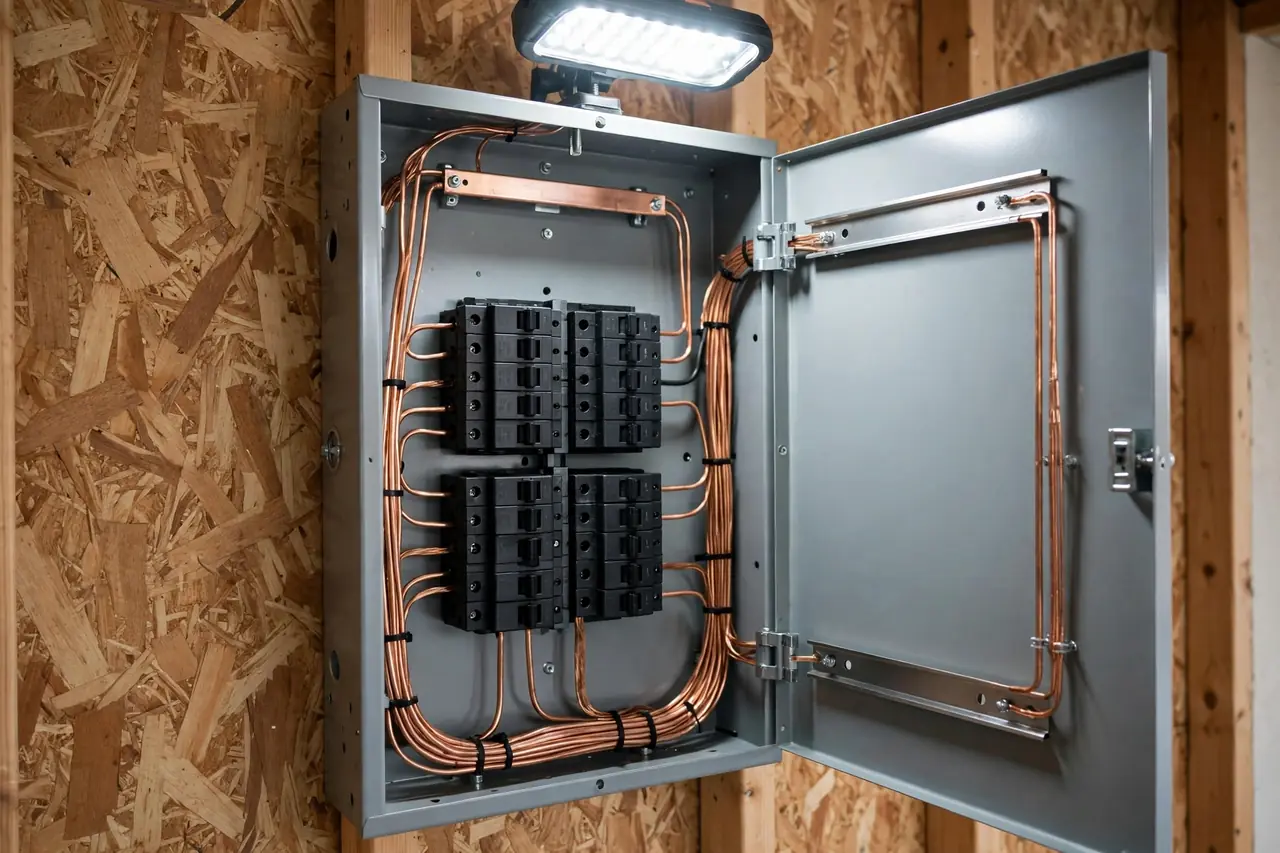
Age, fuse boxes, and panels from another era
Age alone does not condemn a panel, but it is a useful prompt to look more closely. Electrical equipment does not last forever: connections can loosen over time, breakers can wear, and components that were ordinary when they were installed may no longer suit modern expectations or modern loads. Homes that still use a fuse box rather than breakers are working with technology from an earlier period. Fuses can still provide protection when they are the correct type and size, but a fuse box often goes hand in hand with a smaller overall capacity, fewer circuits, and a history of adaptations made over decades. Warning signs in any older installation include makeshift changes, circuits that have been doubled up to share a single breaker space, and a panel that no longer has clear labelling for what each circuit serves. None of these observations, on their own, prove that replacement is needed, and this guide does not make claims about specific makes or models. What they do justify is a professional assessment, where the panel can be inspected and tested properly, its condition explained in plain language, and any options set out clearly before you decide how to proceed.
Rust, moisture, warmth, and other physical warnings
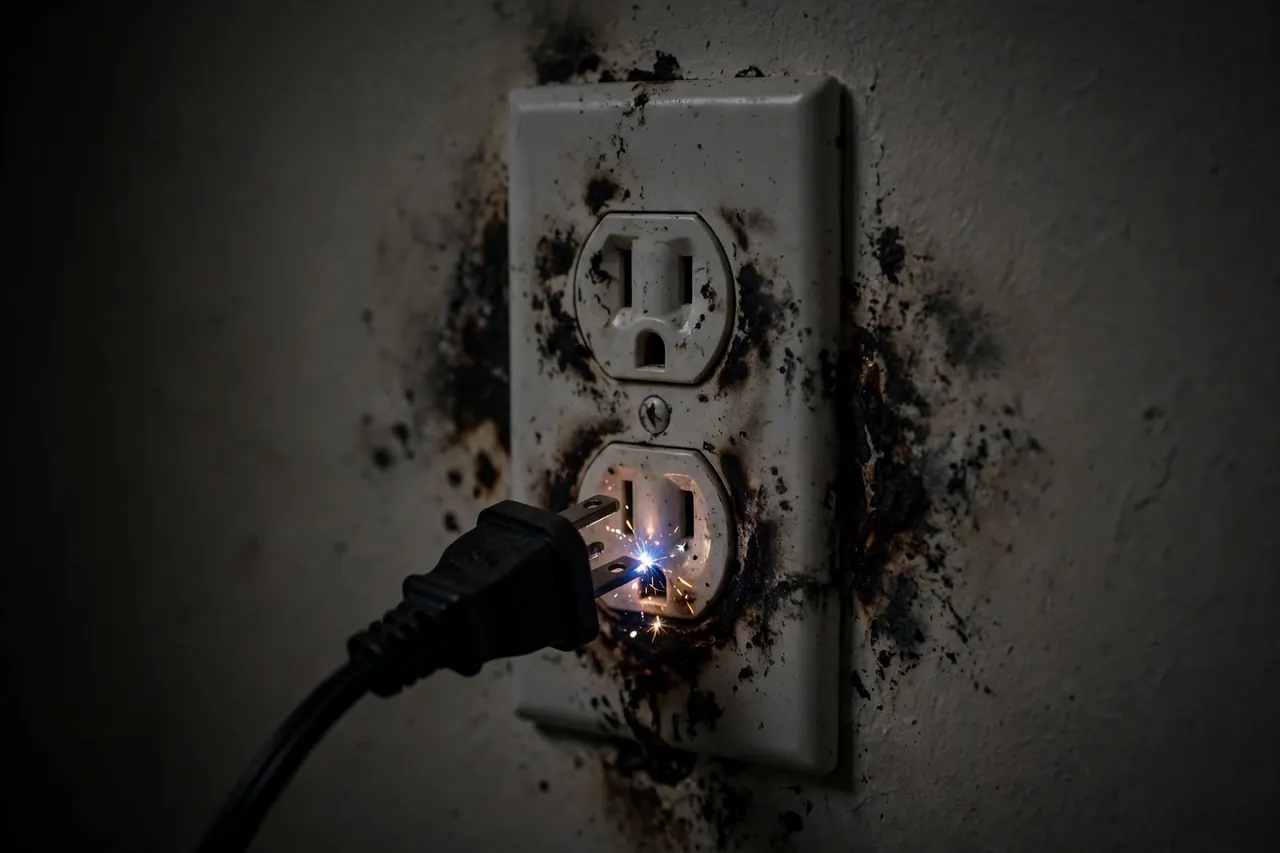
Some of the clearest signs that a panel needs professional attention are physical, and you can notice them without touching any wiring. Rust or corrosion on or inside the panel enclosure, water staining nearby, or signs that moisture has reached the equipment are all reasons for concern, because electricity and moisture are a poor combination and corrosion can affect connections over time. A panel cover that feels warm to the touch, a buzzing or crackling sound coming from the panel, a burning or sharp smell near it, or scorch marks around breakers are more urgent signs. If you notice heat, smell, or damage, do not open the panel, do not touch breakers unnecessarily, and arrange professional help promptly — and if there is smoke or fire, contact emergency services first. Other physical clues are subtler: breakers that feel loose, a door that no longer closes properly, or visible damage to the enclosure. Panels should also be accessible, not buried behind stored items or built over during renovations, because both homeowners and professionals need to reach them quickly. Reporting exactly what you have seen, heard, or smelled helps an electrician judge urgency before they arrive.
Frequent trips, flickering, and struggling under load
Breakers are protective devices. An occasional trip when a circuit is genuinely overloaded — for example, several high-demand appliances running on the same circuit at once — can be the system doing its job. Tripping that happens often, happens on the same circuit, or happens under modest use is different, and it deserves investigation rather than repeated resetting. Flickering or dimming lights when a large appliance starts, such as a heating system, air conditioner, or laundry appliance, can suggest that demand is straining the available capacity, that a connection needs attention, or that a circuit is carrying more than it should. Lights that flicker throughout the home, rather than in one room, are worth mentioning in detail when you seek help. So are appliances that seem to underperform, outlets that work intermittently, and breakers that will not reset or that trip again immediately. An electrician will consider the whole picture — the panel, the individual circuits, and the appliances involved — because the same symptom can have more than one cause. Replacing a panel without finding the cause would be guesswork, which is why assessment comes before any recommendation in a proper inspection.
No spare spaces and a home that has outgrown its circuits
Open a panel door in many older homes and you may find every space occupied, with no room to add a circuit for anything new. Over the years, extra circuits may have been squeezed in, sometimes by placing two circuits where one was intended, which can leave an installation crowded and difficult to maintain. A lack of spare capacity becomes practical very quickly: a kitchen remodel, a finished basement, a workshop, a hot tub, or a new heating and cooling system may each need dedicated circuits that the existing panel simply cannot provide. Homeowners sometimes work around this with extension cords and multi-outlet adapters used permanently, which is itself a sign that the fixed wiring no longer matches how the home is used, and a pattern worth avoiding for safety. If you are planning changes, it is far better to have the panel assessed at the planning stage than to discover its limits partway through a project. A professional can explain whether the existing panel can support the planned work, whether reorganisation is possible, or whether a panel upgrade should be included in the project from the start, so timelines and decisions are based on the real condition of your installation.
Renovations, new demands, and arranging an assessment
Certain moments should automatically trigger a panel conversation, even if nothing appears to be wrong. A major renovation, an addition, a new kitchen, conversion of a garage or basement, installation of a large new appliance or heating and cooling system, and preparing a home for vehicle charging all change the electrical demand on a property. Insurance, sale, or purchase of a home can also be a natural point to understand what you have, because a panel's age, type, and condition are part of the basic facts about a house. An assessment is not a commitment to replacement. A good assessment involves inspecting the panel and its connections, reviewing capacity against the home's actual and planned loads, checking for the physical warning signs described in this guide, and explaining findings in plain terms. Ask what was found, what is urgent, what can wait, and what options exist, and expect those answers in writing. That measured approach — recognise the signs, understand capacity, and let a tested assessment drive the decision — is the safest way to decide whether your panel needs repair, reorganisation, or replacement.
What a panel assessment actually involves
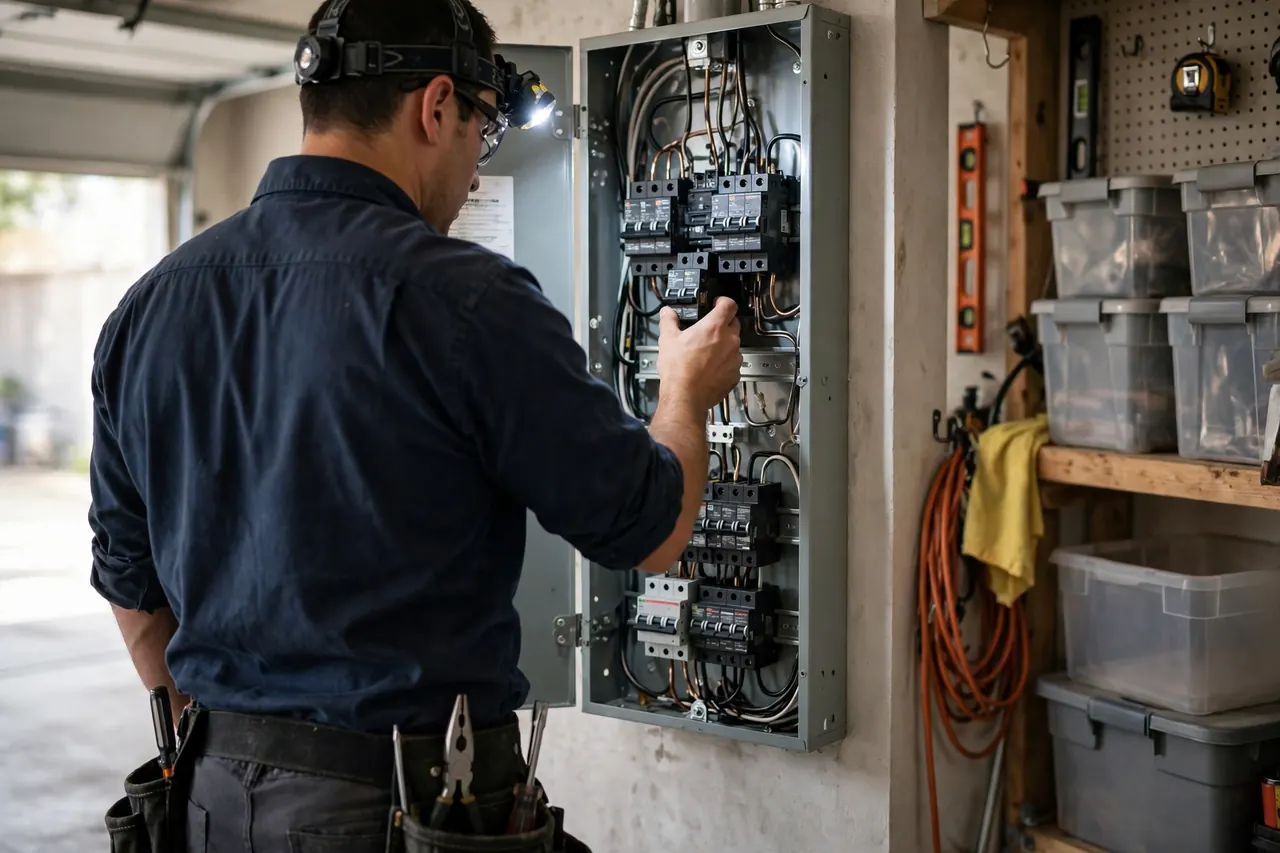
Homeowners often ask what an electrician actually does during a panel assessment, beyond opening the door and looking. A thorough assessment starts with the service size and how it compares with the home's connected load, then moves breaker by breaker: which circuits exist, what they feed, and whether any breaker shows heat discoloration, corrosion or a loose fit on the bus. The electrician checks the condition of the bus bars themselves, looks for signs of past overheating or water entry, notes whether breakers are double-tapped or oversized for their wiring, and confirms the panel can still accept the breakers it was built for. Grounding and bonding get checked as well, because panel work and grounding age together. You should come away from an assessment with a clear account of what was found, which findings are safety items and which are capacity items, and what your options are in plain language - repair, reorganisation or replacement - with the reasoning attached to each. If a finding is urgent, a good assessment says so and says why. That written picture is what lets you decide calmly instead of urgently, and it is the same picture this guide's signs are teaching you to read in advance.
 PROBLEM
 SOLUTION
Related service: Electrical Panel Upgrade
How long does an electrical panel usually last?
What is the difference between 60, 100, and 200 amp service?
Can I just add more breakers instead of replacing the panel?
Are flickering lights always a panel problem?
Need an electrician now?
One call connects you with an independent local electrical professional in your metro.