Circuit Breaker Repair — the short answer
Circuit breaker repair addresses breakers that trip often, fail to reset, feel warm, or no longer protect a circuit reliably. VoltReach USA connects homeowners with independent local electricians who can inspect the panel and explain the next step clearly. Below: the signs that point to this job, how the work itself runs, and what shapes its scale.
A circuit breaker is a protective switch inside your electrical panel. Its job is to stop the flow of electricity when a circuit carries more current than it was designed to handle, or when a fault creates an unsafe condition. When a breaker trips, it is usually giving you information rather than simply causing an inconvenience. Resetting it once after an obvious overload, such as too many appliances running at the same time, can be reasonable. Repeated tripping, a breaker that will not stay reset, or one that feels hot or looks damaged is a different situation. Those signs point to a problem that deserves a careful inspection before the circuit is used again as normal.
The panel is the center of your home electrical system, and small changes there can affect safety throughout the house. Breakers age, connections can loosen over time, and circuits that once matched household habits may no longer match how you actually live. A kitchen that now runs an air fryer, a microwave, and a coffee maker on the same circuit is asking more of that circuit than it may have been asked to handle years ago. Home offices, space heaters, window air conditioners, and workshop tools add similar demands. A breaker that trips under those loads may be protecting the wiring exactly as intended, which means the fix is about the load or the circuit, not just the switch.
Homeowners often wonder whether a tripping breaker is an emergency or a repair they can schedule. The answer depends on what else you notice. A single trip with a clear cause and no other symptoms is usually less concerning than repeated trips on the same circuit. Burning smells, buzzing or crackling sounds from the panel, scorch marks, visible damage, or a breaker that is hot to the touch are reasons to stop using that circuit and seek help promptly. Power loss to a refrigerator, medical equipment, or heating and cooling can also raise the urgency for your household, even when the underlying issue turns out to be straightforward to explain and address.
VoltReach USA is a referral service, not an electrical company, and it does not perform repair work itself. When you reach out, the service connects you with an independent local electrician who can look at the panel in person, test the circuit, and talk through what was found. That in-person view matters because the same symptom can have different causes. One home may need a worn breaker replaced, another may have a faulty appliance tripping the circuit, and another may have a circuit that is simply overloaded by everyday use. Clear diagnosis comes first, and any repair decision follows from what the inspection actually shows in your home.
Signs you may need circuit breaker repair
- A breaker trips repeatedly on the same circuit, even after you reduce the number of appliances or devices running at the same time.
- You reset a breaker and it trips again right away, or it will not stay in the on position at all when you try to reset it.
- The breaker, the panel cover, or the area around the panel feels warm or hot, which is not normal for equipment that should stay near room temperature.
- You notice a burning smell, a sharp electrical odor, or buzzing, sizzling, or crackling sounds coming from the panel or from an outlet on the circuit.
- You can see scorch marks, discoloration, melted material, or other visible damage on a breaker, in the panel, or around an outlet or switch.
- Lights flicker, dim, or brighten when an appliance starts, or power cuts in and out on one part of the home without a clear pattern.
- Part of the home loses power while the rest stays on, and the pattern points to one circuit rather than a wider outage in the neighborhood.
- A breaker feels loose, does not click firmly into place, or looks older and worn compared with the way the rest of the panel operates.
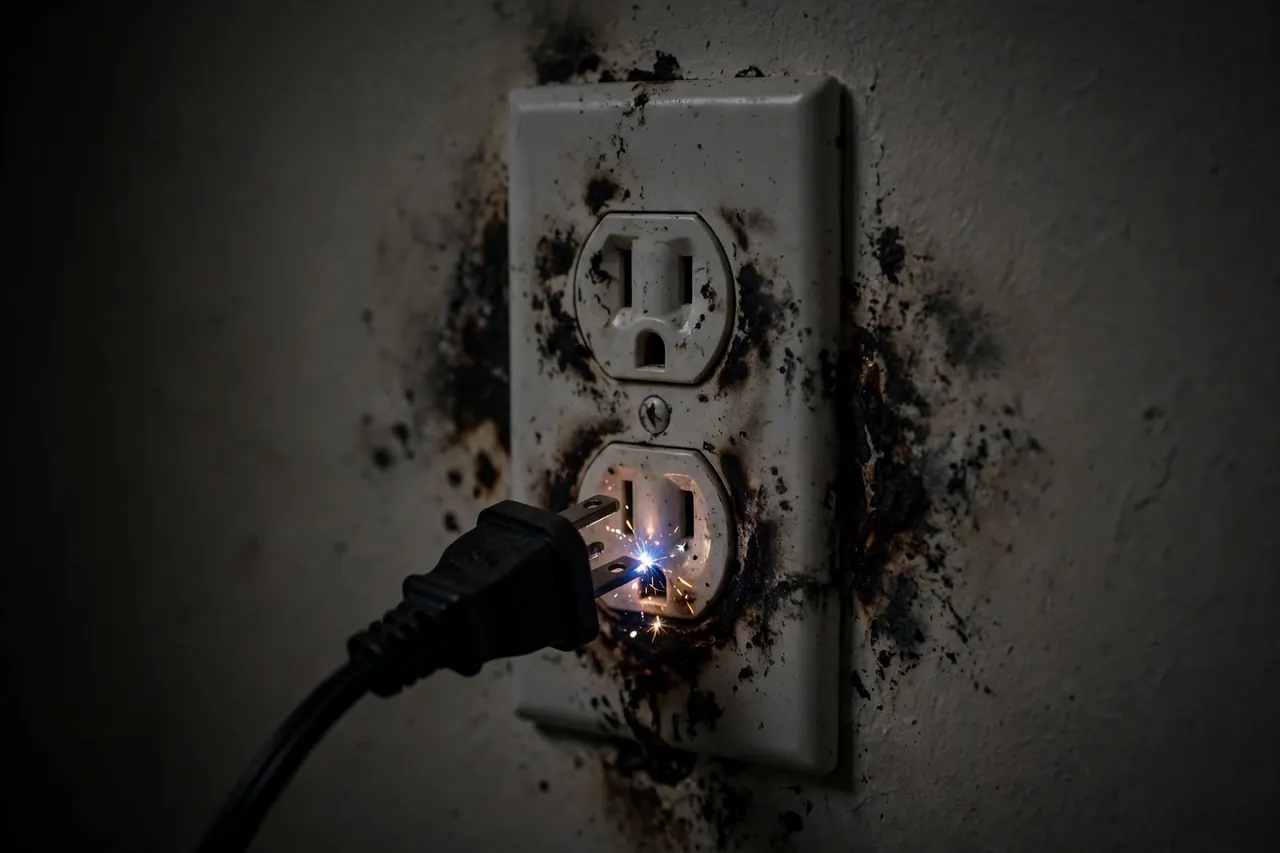 PROBLEM
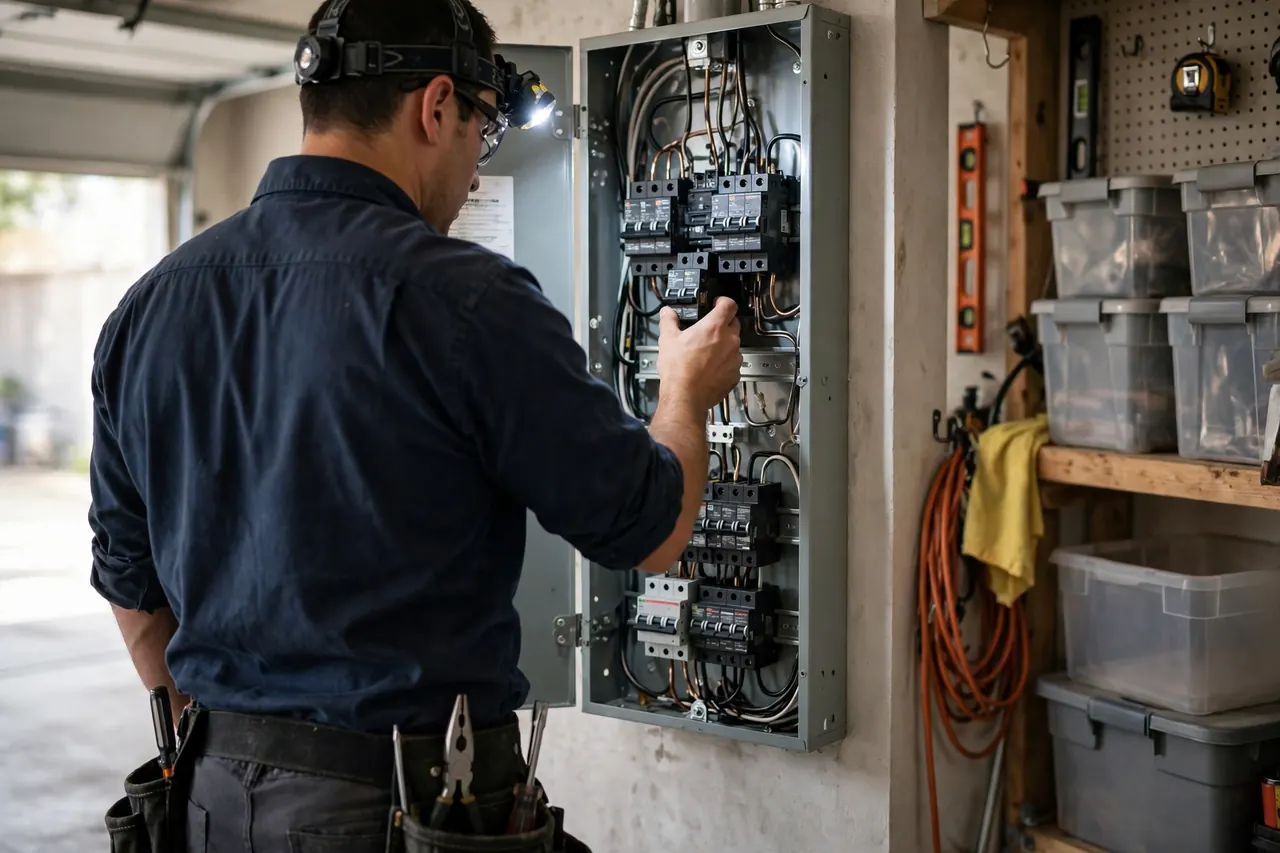 SOLUTION
How circuit breaker repair works
- Start by noting which circuit trips, when it happens, and what was running at the time, because that pattern is useful information for the electrician who visits.
- Unplug or switch off devices on the affected circuit, especially heaters, cooking appliances, and anything that was running when the breaker tripped most recently.
- If you see damage, smell burning, or hear sounds from the panel, leave the breaker off and avoid using that circuit until it has been looked at in person.
- Share the details with VoltReach USA, including how often tripping happens and whether any other symptoms, such as flickering lights or warm outlets, appear alongside it.
- The referral service connects you with an independent local electrician, who arranges a visit and inspects the panel and the affected circuit at your home.
- During the visit, the electrician checks the breaker, the panel connections, and the load on the circuit, and may test appliances or outlets to narrow down the cause.
- After the inspection, the electrician explains what was found in plain language, outlines the repair or adjustment options, and completes agreed work or plans the next step with you.
What shapes the job
- The age and condition of the panel matter, because older panels can have worn parts, limited space for changes, and breakers that no longer operate as smoothly as they should.
- What the circuit serves shapes the work, since a circuit feeding a kitchen, a laundry room, or a workshop carries different everyday demands than one serving a spare bedroom.
- The pattern of tripping is a key clue, because a breaker that trips under heavy load points in a different direction than one that trips with almost nothing running.
- The condition of wiring and connections on the circuit matters, including outlets, switches, and junction points that may have loosened or deteriorated over time.
- Whether a single appliance is causing the trip changes the scope, since a faulty appliance can mimic a panel problem until it is tested separately from the circuit.
- How accessible the panel is affects the visit, because a clear, reachable panel in a dry location is simpler to inspect than one behind storage or in a damp area.
- Any previous changes to the home matter too, such as added rooms, finished basements, or new appliances that increased demand on circuits that were sized for earlier use.
Understanding what a tripping breaker is telling you
A breaker trip is a protective action, and treating it that way changes how you respond. Inside the panel, each breaker watches over one circuit. If current rises beyond the level that circuit was designed to carry, or if a fault creates a sudden surge of current, the breaker opens and stops the flow. That interruption protects wiring from overheating and gives you a chance to find the cause. Repeatedly forcing a breaker back on without understanding why it tripped works against that protection. If the cause is an overload, the wiring is being asked to carry too much. If the cause is a fault, such as damaged insulation or a failing appliance, the risk sits somewhere on the circuit itself. Either way, the trip is the symptom worth investigating, not a nuisance to silence. An electrician looks at the whole picture: the breaker, the load, the wiring, and the devices, then explains which part of that picture explains the behavior you have been seeing at home.
Not every breaker problem means the breaker itself has failed. Sometimes the breaker is doing its job and the real issue is how the circuit is being used. Plugging a space heater into a circuit that already serves several other loads is a common example. Sometimes a breaker does wear out and no longer holds or trips the way it should. Connections inside the panel can also change over time as metal expands and contracts with heat, and a loose connection can create heat and unreliable behavior. Because several causes can look similar from the outside, guessing from the symptom alone often leads to the wrong fix. Testing separates those causes. The electrician can isolate the circuit, check the breaker under controlled conditions, and see whether the trip follows the breaker, the wiring, or something plugged in. That methodical approach is what turns a frustrating, repeating problem into a clear explanation and a repair that actually matches the cause found.
Panel work is an area where caution matters more than confidence. The panel contains energized parts even when individual breakers are off, and opening it without training can expose you to serious hazards. Homeowners can safely note symptoms, reduce loads, unplug devices, and leave a suspect breaker off. Beyond that, inspection and repair belong with an independent local electrician who can work in the panel and test circuits with the right instruments. It also helps to think ahead after a repair. If your household has added major appliances, a home office, or new heating and cooling equipment, mention it during the visit. The conversation can include whether your circuits still match your daily life, which helps prevent the same tripping pattern from returning. Good breaker repair is not only about restoring power to one circuit. It is about understanding why protection operated, confirming the circuit is safe to use, and leaving you with a panel you do not have to think about every time you run an appliance.
Questions about circuit breaker repair
Is it safe to keep resetting a breaker that trips?
Why does my breaker trip when I use the microwave or a space heater?
How can I tell if the breaker itself is bad or if something else is wrong?
What should I do if I smell burning near the panel?
Can a breaker problem affect only part of my home?
Find circuit breaker repair in your city
Alabama: Birmingham, Huntsville, Mobile, Montgomery, Tuscaloosa, Daphne–Fairhope, Auburn, Decatur, Florence–Muscle Shoals, Dothan
Alaska: Anchorage
Arizona: Phoenix, Tucson, Prescott, Lake Havasu City, Yuma, Flagstaff
Arkansas: Little Rock, Fayetteville–Springdale–Rogers, Fort Smith
California: Los Angeles, Riverside–San Bernardino, San Francisco, San Diego, Sacramento, San Jose, Fresno, Bakersfield, Oxnard–Ventura, Stockton, Modesto, Santa Rosa, Visalia, Vallejo, Santa Barbara, Salinas, Merced, San Luis Obispo, Santa Cruz, Chico, Yuba City, Redding, El Centro, Hanford
Colorado: Denver, Colorado Springs, Greeley, Fort Collins, Boulder, Pueblo, Grand Junction
Connecticut: Hartford, Bridgeport–Stamford, New Haven, Waterbury, Norwich–New London
Delaware: Dover
District of Columbia: Washington
Florida: Miami, Tampa, Orlando, Jacksonville, North Port–Sarasota, Cape Coral–Fort Myers, Lakeland, Daytona Beach, Palm Bay–Melbourne, Port St. Lucie, Pensacola, Ocala, Naples, Tallahassee, Gainesville, Crestview–Fort Walton Beach, Panama City, Punta Gorda, Sebastian–Vero Beach, Homosassa Springs, The Villages
Georgia: Atlanta, Augusta, Savannah, Columbus, Macon, Gainesville, Athens, Warner Robins, Valdosta, Dalton, Albany
Idaho: Boise, Coeur d'Alene, Idaho Falls
Illinois: Chicago, Peoria, Rockford, Champaign, Springfield, Bloomington
Indiana: Indianapolis, Fort Wayne, South Bend, Evansville, Lafayette, Elkhart, Terre Haute, Bloomington
Iowa: Des Moines, Davenport, Cedar Rapids, Iowa City, Waterloo, Sioux City
Kentucky: Louisville, Lexington, Bowling Green
Louisiana: New Orleans, Baton Rouge, Lafayette, Shreveport, Slidell, Lake Charles, Monroe, Houma, Alexandria
Maryland: Baltimore, Hagerstown, Lexington Park
Massachusetts: Boston, Worcester, Springfield, Barnstable Town, Amherst
Michigan: Detroit, Grand Rapids, Lansing, Flint, Ann Arbor, Kalamazoo, Saginaw, Muskegon, Jackson, Traverse City, Monroe, Niles
Minnesota: Minneapolis–St. Paul, Duluth, Rochester, St. Cloud
Mississippi: Jackson, Gulfport–Biloxi, Hattiesburg
Missouri: St. Louis, Kansas City, Springfield, Columbia, Joplin, Jefferson City
Montana: Billings
New Hampshire: Manchester
New Jersey: Trenton, Atlantic City, Vineland
New Mexico: Albuquerque, Las Cruces, Santa Fe
New York: New York, Buffalo, Rochester, Albany, Poughkeepsie, Syracuse, Utica, Binghamton, Kingston
North Carolina: Charlotte, Raleigh, Greensboro, Winston-Salem, Durham, Wilmington, Asheville, Fayetteville, Hickory, Jacksonville, Burlington, Greenville, Rocky Mount
North Dakota: Fargo
Ohio: Cincinnati, Columbus, Cleveland, Dayton, Akron, Toledo, Youngstown, Canton
Oklahoma: Oklahoma City, Tulsa
Oregon: Portland, Salem, Eugene, Bend, Medford
Pennsylvania: Philadelphia, Pittsburgh, Allentown, Harrisburg, Scranton, Lancaster, York, Reading, Erie, Chambersburg, State College, Lebanon
Rhode Island: Providence
South Carolina: Greenville, Charleston, Columbia, Myrtle Beach, Spartanburg, Hilton Head Island, Florence
South Dakota: Sioux Falls, Rapid City
Tennessee: Nashville, Memphis, Knoxville, Chattanooga, Clarksville, Kingsport, Johnson City, Jackson
Texas: Dallas–Fort Worth, Houston, San Antonio, Austin, McAllen, El Paso, Killeen–Temple, Corpus Christi, Brownsville, Beaumont, Lubbock, Waco, Longview, College Station, Laredo, Amarillo, Tyler, Midland, Abilene, Odessa, Sherman–Denison, Wichita Falls, Texarkana
Utah: Salt Lake City, Provo, Ogden, St. George, Logan
Vermont: Burlington
Virginia: Virginia Beach–Norfolk, Richmond, Roanoke, Lynchburg, Charlottesville, Blacksburg, Winchester
Washington: Seattle, Spokane, Kennewick, Olympia, Bremerton, Yakima, Bellingham
West Virginia: Huntington, Charleston, Morgantown
Wisconsin: Milwaukee, Madison, Green Bay, Appleton, Racine, Eau Claire, Oshkosh, La Crosse, Kenosha, Janesville
Need circuit breaker repair help?
One call routes you to an independent local electrician who handles this work in your area.