Generator Installation — the short answer
Generator installation adds a permanently installed standby generator and transfer switch, or a safe connection for a portable unit, so essential circuits keep running when the grid fails. VoltReach USA connects homeowners with independent local electricians who plan and install backup power systems. Below: the signs that point to this job, how the work itself runs, and what shapes its scale.
Every home has a short list of things that must keep running when the power goes out. The heating system in winter. The refrigerator and freezer. A sump pump during a storm, a well pump if your water depends on one, lights, phone charging, and internet equipment for anyone who works from home. A standby generator protects that list automatically. Permanently installed outside the home and connected through a transfer switch, it senses an outage, starts on its own, and carries the circuits you selected until utility power returns, whether you are home, asleep, or away.
Choosing a generator starts with deciding what it needs to carry. Some households want only the essentials covered: heat, refrigeration, water pumps, a few lights, and outlets. Others want the whole home to function normally, including air conditioning, which calls for a larger unit and a transfer switch that can manage heavy loads in sequence. Portable generators sit at the other end of the range: smaller, moved and started by hand, fueled from cans, and connected either to individual items by extension cord or, when an electrician installs an inlet and manual transfer switch, to selected house circuits in a safe, orderly way.
The installation itself is a coordinated project. The generator sits on a level pad with required clearances from windows, doors, and vents so exhaust stays away from the house. A transfer switch is installed at the panel, fuel is arranged, either a natural gas connection with the capacity verified or a propane tank placed and piped, and the system is tested under load so you can see it start, transfer, and carry the house before you ever need it in a real outage. Placement, fuel, and equipment choices made at the planning stage determine how the system behaves for years.
VoltReach USA is a referral service, not an electrical company, and it does not install generators itself. We connect homeowners with independent local electricians who can look over your outage priorities, explain portable and standby options honestly, and install the system you choose together. Carbon monoxide from any generator is a serious, invisible danger, so placement and proper transfer equipment are not details to improvise. This page explains the signs that backup power may be worth planning, how installation typically proceeds, and the factors that shape the project at your home.
Signs backup power may be worth planning
- A past outage lasted long enough to spoil food, freeze pipes, or make the home unlivable for a night, and you do not want to repeat the experience unprepared.
- Your home depends on electric-powered essentials, such as a well pump for water, a sump pump to keep the basement dry, or a heating system that stops entirely without power.
- Someone in the household uses powered medical equipment, works from home, or otherwise cannot treat a day without electricity as a minor inconvenience.
- Outages in your area are not rare, whether from storms, ice, heat-driven demand, or an aging local grid, and short interruptions regularly reset clocks, routers, and routines.
- You travel or keep a second residence schedule, and want the home protected automatically while it sits empty, rather than depending on a neighbor to notice a problem.
- You already own a portable generator and are tired of moving it, fueling it, and running cords in bad weather, or you want it connected through proper transfer equipment.
- A finished basement, stored belongings, or a wine cellar or freezer collection raises the stakes of a pump or cooling failure during an outage.
- You are planning other electrical work, such as a panel upgrade, and want backup power designed in while the panel is already being addressed.
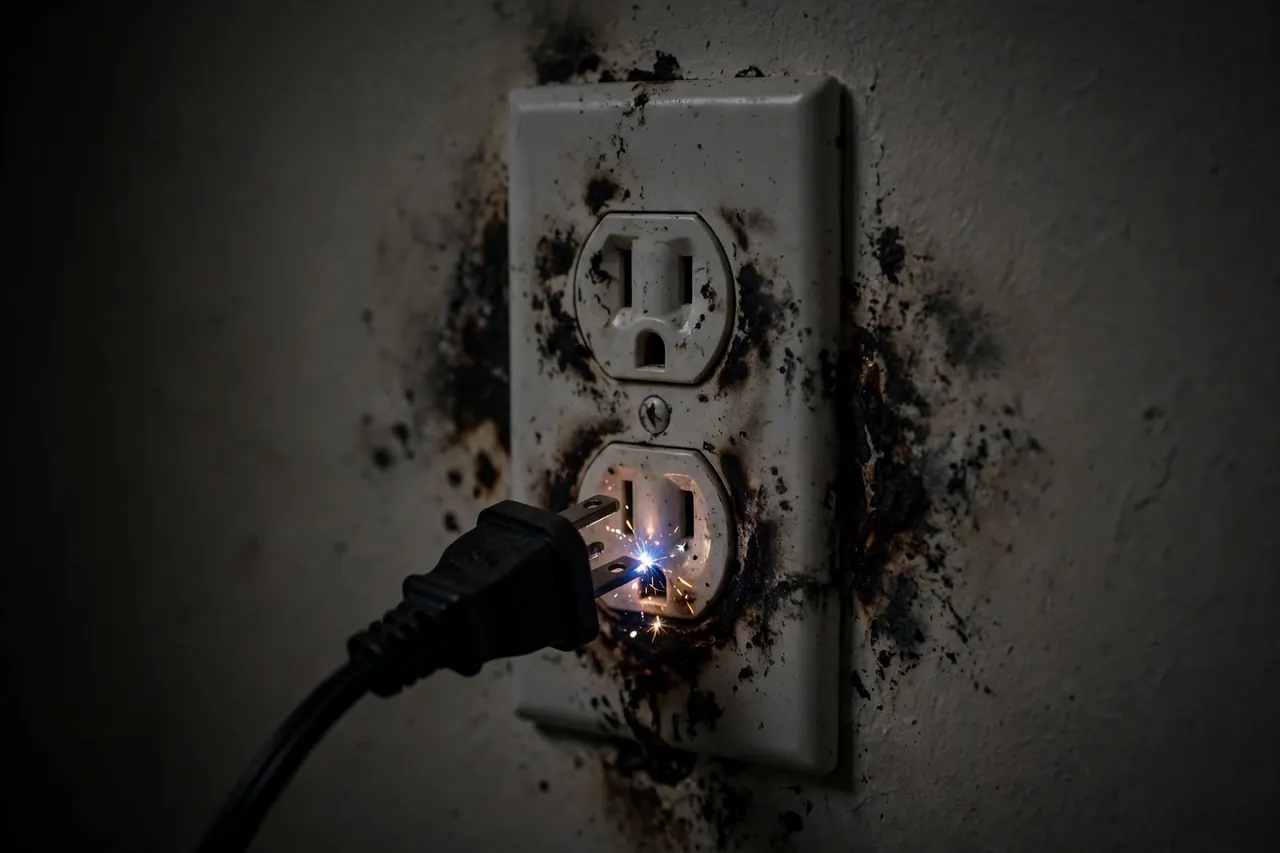 PROBLEM
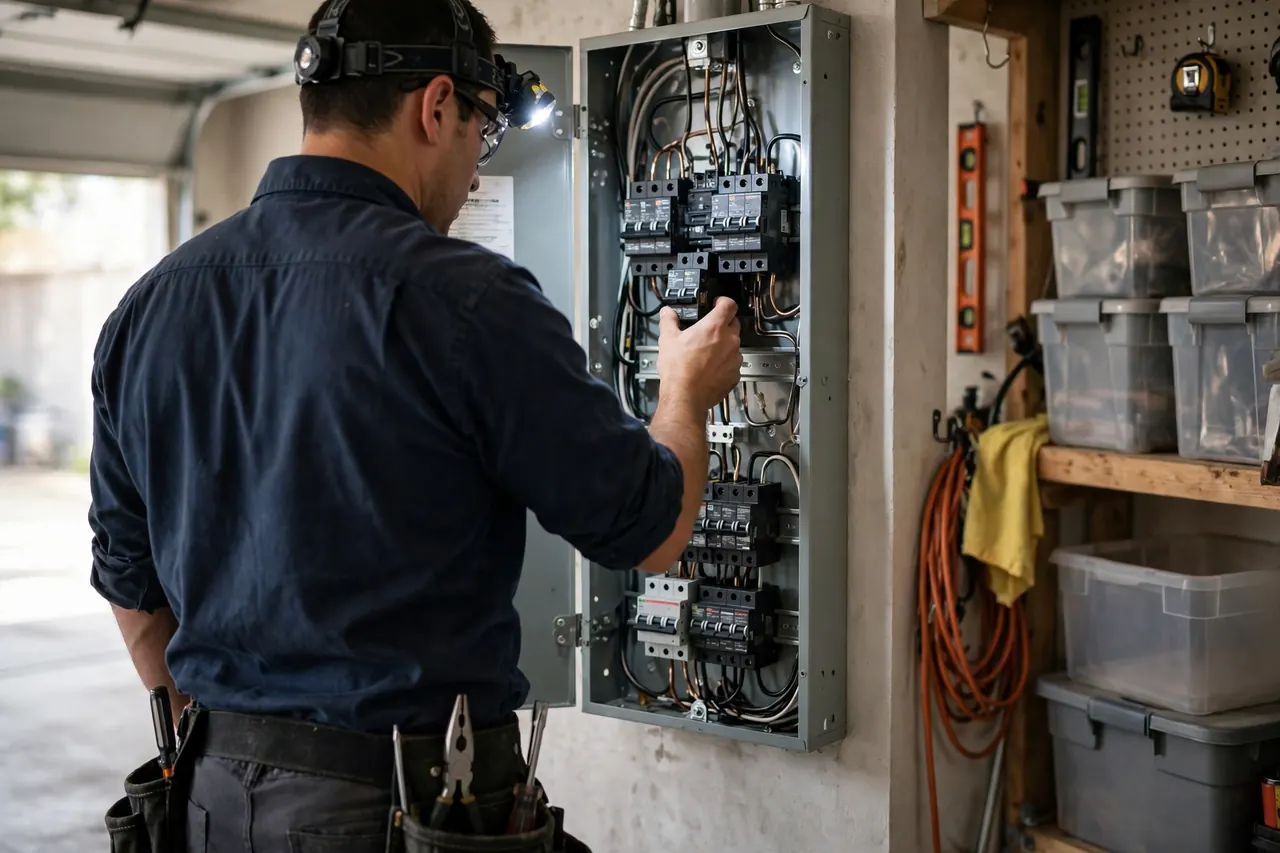 SOLUTION
How generator installation works
- The process begins with an outage-priority conversation: which circuits and appliances must run, which would be nice to have, and which the household can do without for a day or two.
- The electrician looks over your panel, service size, and fuel situation, and proposes a generator size and transfer approach matched to that priority list, with portable and standby options compared if both are realistic.
- You agree on the plan in writing, including generator placement, the transfer switch type, the circuits covered, and the fuel work involved, whether that is a natural gas connection or a propane tank and line.
- The electrician explains the local permitting, inspection, and any utility coordination steps that apply, and the installation is scheduled with those steps in mind.
- Site work follows: a level pad is set, the generator is placed with required clearances, fuel is connected, and the transfer switch and wiring are installed at the panel.
- The system is then started and tested under real load, so you can watch it sense a simulated outage, transfer the house, carry the selected circuits, and return to utility power smoothly.
- Before the job closes out, you are shown the exercise schedule, the basic checks to keep up, and how to read the unit's status indicators, and the installation is inspected as your local rules require.
Portable generator vs Standby generator
Portable generator
- Moved into place and started by hand
- Runs on gasoline stored on site
- Powers selected items or circuits
- Lower equipment scale, more hands-on during outages
- Must be operated outdoors, away from windows
Standby generator
- Permanently installed on a pad outside
- Starts automatically when utility power fails
- Runs on natural gas or propane supply
- Can carry essential circuits or the whole home
- Exercises itself and reports its status
What shapes the job
- System size is set by what you want to run: covering essential circuits such as the furnace, refrigerator, and pumps takes a smaller unit than carrying the whole home including central air conditioning.
- Fuel availability shapes the project, since natural gas service may need a capacity check while propane involves tank selection, placement, and a fuel line run to the generator.
- The transfer switch type, automatic or manual, and the number of circuits it serves influence both the equipment involved and the panel work required to connect it.
- Placement is governed by clearance and exhaust rules: the unit needs a level pad, distance from windows, doors, and vents, and room for service access, which can limit where on the lot it can go.
- Distance between the generator, the panel, and the fuel source affects cable and piping runs, and longer runs add labor and materials to the installation.
- Local permitting, inspection, and any utility notification requirements add steps to the schedule and vary by jurisdiction, so they should be identified at the planning stage.
- Noise and neighborhood considerations can influence model choice and placement, particularly on smaller lots where the generator sits close to a property line or a bedroom window.
Transfer switches, fuel, and upkeep
The transfer equipment is the heart of a safe generator installation, and it deserves explanation. A transfer switch does two jobs at once: it moves the home's selected circuits from utility power to generator power when an outage begins, and it disconnects the generator from the utility lines so electricity cannot flow backward onto the grid. That second job, called preventing backfeed, protects utility workers repairing lines who have every reason to expect those lines to be dead. It is also why a generator should never be connected to a home through an ordinary outlet or an improvised cord arrangement. Automatic transfer switches handle the changeover on their own and signal the generator to start; manual switches mean a trip outside to start the unit and throw the switch. Either way, the switch is what makes generator power orderly and safe.
Fuel choice shapes the installation and the ownership experience. Standby generators most commonly run on natural gas where a gas service already reaches the home, or on propane from an on-site tank where it does not. Natural gas offers a continuous supply without refueling, provided the gas service and meter can carry the added load, which the installer will verify. Propane requires tank sizing and placement decisions, and a sense of how long a tank lasts at the generator's rate of use during an extended outage. Portable generators run on gasoline stored in cans, with all the freshness and storage attention that involves. Discuss fuel honestly at the planning stage, because it affects placement, utility coordination, and how the system performs in a long event.
A standby generator is also a machine that must be maintained to be trusted. It exercises itself on a regular schedule, running briefly to keep oil moving and the battery charged, and it reports faults through its controller or a connected app on many models. Oil, filters, spark plugs, and battery condition all follow service intervals similar to a small engine, and the unit appreciates being kept clear of snow, leaves, and overgrown planting. Homeowners who want the system to start on the worst night of the year should plan for that upkeep from the beginning, whether they do simple checks themselves or arrange service. During the installation conversation, ask what routine the manufacturer expects and who handles each part of it, so the generator remains a dependable appliance rather than a forgotten one.
Questions about generator installation
What is the difference between a portable and a standby generator?
How much of my home can a standby generator power?
Why do I need a transfer switch? Can I just plug the generator into an outlet?
What fuel does a standby generator use, and do I need a gas line?
What maintenance does a standby generator need?
Find generator installation in your city
Alabama: Birmingham, Huntsville, Mobile, Montgomery, Tuscaloosa, Daphne–Fairhope, Auburn, Decatur, Florence–Muscle Shoals, Dothan
Alaska: Anchorage
Arizona: Phoenix, Tucson, Prescott, Lake Havasu City, Yuma, Flagstaff
Arkansas: Little Rock, Fayetteville–Springdale–Rogers, Fort Smith
California: Los Angeles, Riverside–San Bernardino, San Francisco, San Diego, Sacramento, San Jose, Fresno, Bakersfield, Oxnard–Ventura, Stockton, Modesto, Santa Rosa, Visalia, Vallejo, Santa Barbara, Salinas, Merced, San Luis Obispo, Santa Cruz, Chico, Yuba City, Redding, El Centro, Hanford
Colorado: Denver, Colorado Springs, Greeley, Fort Collins, Boulder, Pueblo, Grand Junction
Connecticut: Hartford, Bridgeport–Stamford, New Haven, Waterbury, Norwich–New London
Delaware: Dover
District of Columbia: Washington
Florida: Miami, Tampa, Orlando, Jacksonville, North Port–Sarasota, Cape Coral–Fort Myers, Lakeland, Daytona Beach, Palm Bay–Melbourne, Port St. Lucie, Pensacola, Ocala, Naples, Tallahassee, Gainesville, Crestview–Fort Walton Beach, Panama City, Punta Gorda, Sebastian–Vero Beach, Homosassa Springs, The Villages
Georgia: Atlanta, Augusta, Savannah, Columbus, Macon, Gainesville, Athens, Warner Robins, Valdosta, Dalton, Albany
Idaho: Boise, Coeur d'Alene, Idaho Falls
Illinois: Chicago, Peoria, Rockford, Champaign, Springfield, Bloomington
Indiana: Indianapolis, Fort Wayne, South Bend, Evansville, Lafayette, Elkhart, Terre Haute, Bloomington
Iowa: Des Moines, Davenport, Cedar Rapids, Iowa City, Waterloo, Sioux City
Kentucky: Louisville, Lexington, Bowling Green
Louisiana: New Orleans, Baton Rouge, Lafayette, Shreveport, Slidell, Lake Charles, Monroe, Houma, Alexandria
Maryland: Baltimore, Hagerstown, Lexington Park
Massachusetts: Boston, Worcester, Springfield, Barnstable Town, Amherst
Michigan: Detroit, Grand Rapids, Lansing, Flint, Ann Arbor, Kalamazoo, Saginaw, Muskegon, Jackson, Traverse City, Monroe, Niles
Minnesota: Minneapolis–St. Paul, Duluth, Rochester, St. Cloud
Mississippi: Jackson, Gulfport–Biloxi, Hattiesburg
Missouri: St. Louis, Kansas City, Springfield, Columbia, Joplin, Jefferson City
Montana: Billings
New Hampshire: Manchester
New Jersey: Trenton, Atlantic City, Vineland
New Mexico: Albuquerque, Las Cruces, Santa Fe
New York: New York, Buffalo, Rochester, Albany, Poughkeepsie, Syracuse, Utica, Binghamton, Kingston
North Carolina: Charlotte, Raleigh, Greensboro, Winston-Salem, Durham, Wilmington, Asheville, Fayetteville, Hickory, Jacksonville, Burlington, Greenville, Rocky Mount
North Dakota: Fargo
Ohio: Cincinnati, Columbus, Cleveland, Dayton, Akron, Toledo, Youngstown, Canton
Oklahoma: Oklahoma City, Tulsa
Oregon: Portland, Salem, Eugene, Bend, Medford
Pennsylvania: Philadelphia, Pittsburgh, Allentown, Harrisburg, Scranton, Lancaster, York, Reading, Erie, Chambersburg, State College, Lebanon
Rhode Island: Providence
South Carolina: Greenville, Charleston, Columbia, Myrtle Beach, Spartanburg, Hilton Head Island, Florence
South Dakota: Sioux Falls, Rapid City
Tennessee: Nashville, Memphis, Knoxville, Chattanooga, Clarksville, Kingsport, Johnson City, Jackson
Texas: Dallas–Fort Worth, Houston, San Antonio, Austin, McAllen, El Paso, Killeen–Temple, Corpus Christi, Brownsville, Beaumont, Lubbock, Waco, Longview, College Station, Laredo, Amarillo, Tyler, Midland, Abilene, Odessa, Sherman–Denison, Wichita Falls, Texarkana
Utah: Salt Lake City, Provo, Ogden, St. George, Logan
Vermont: Burlington
Virginia: Virginia Beach–Norfolk, Richmond, Roanoke, Lynchburg, Charlottesville, Blacksburg, Winchester
Washington: Seattle, Spokane, Kennewick, Olympia, Bremerton, Yakima, Bellingham
West Virginia: Huntington, Charleston, Morgantown
Wisconsin: Milwaukee, Madison, Green Bay, Appleton, Racine, Eau Claire, Oshkosh, La Crosse, Kenosha, Janesville
Need generator installation help?
One call routes you to an independent local electrician who handles this work in your area.