Everything on this page was computed for Cleveland and nowhere else: the problem ranking from its Census housing profile, the seasonal risks from its NOAA station record, the coverage from its own ZIP codes. VoltReach USA connects you to an independent local electrician; the page itself is the homework, done in public, so the call you make is an informed one.
114
ZIP codes covered
6
Counties in the metro
927,394
Households (Census ACS)
1962
Median year home built
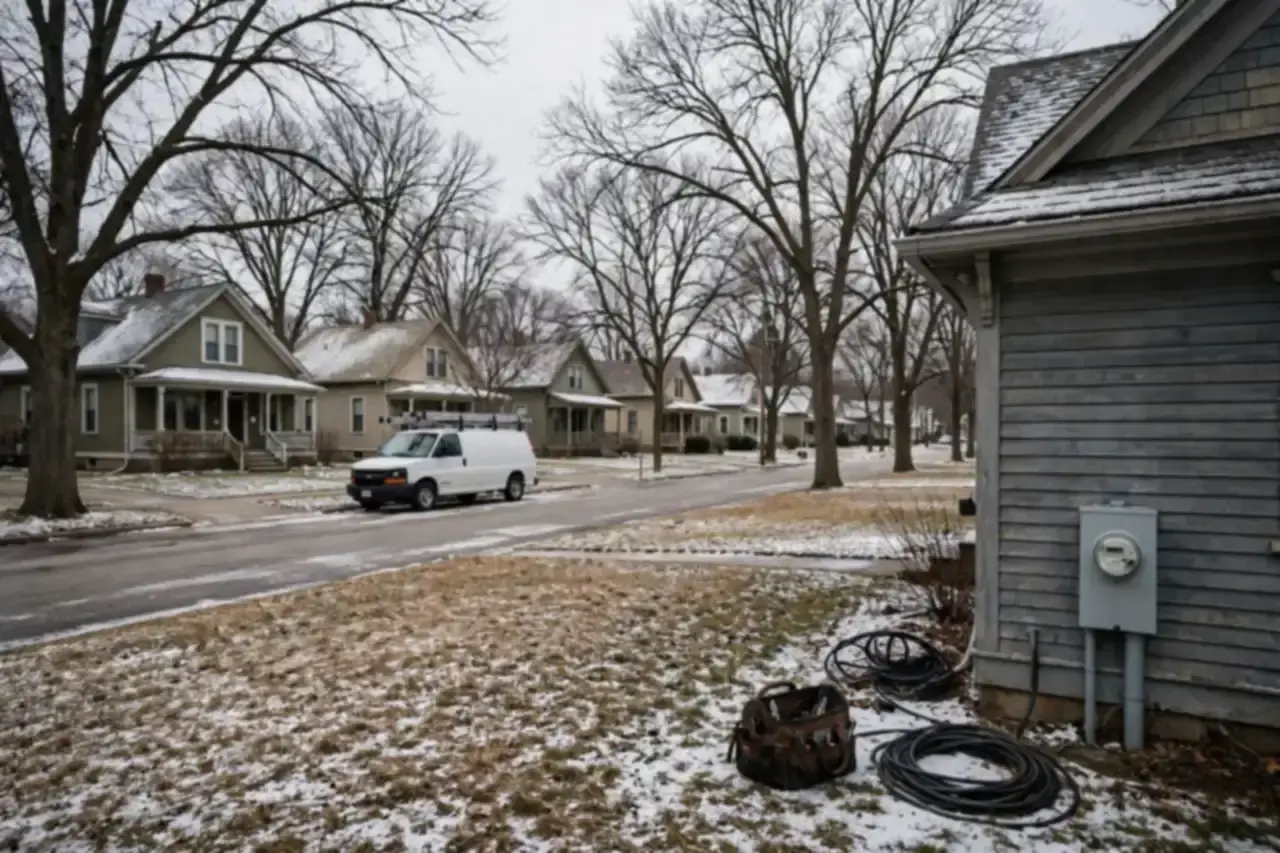
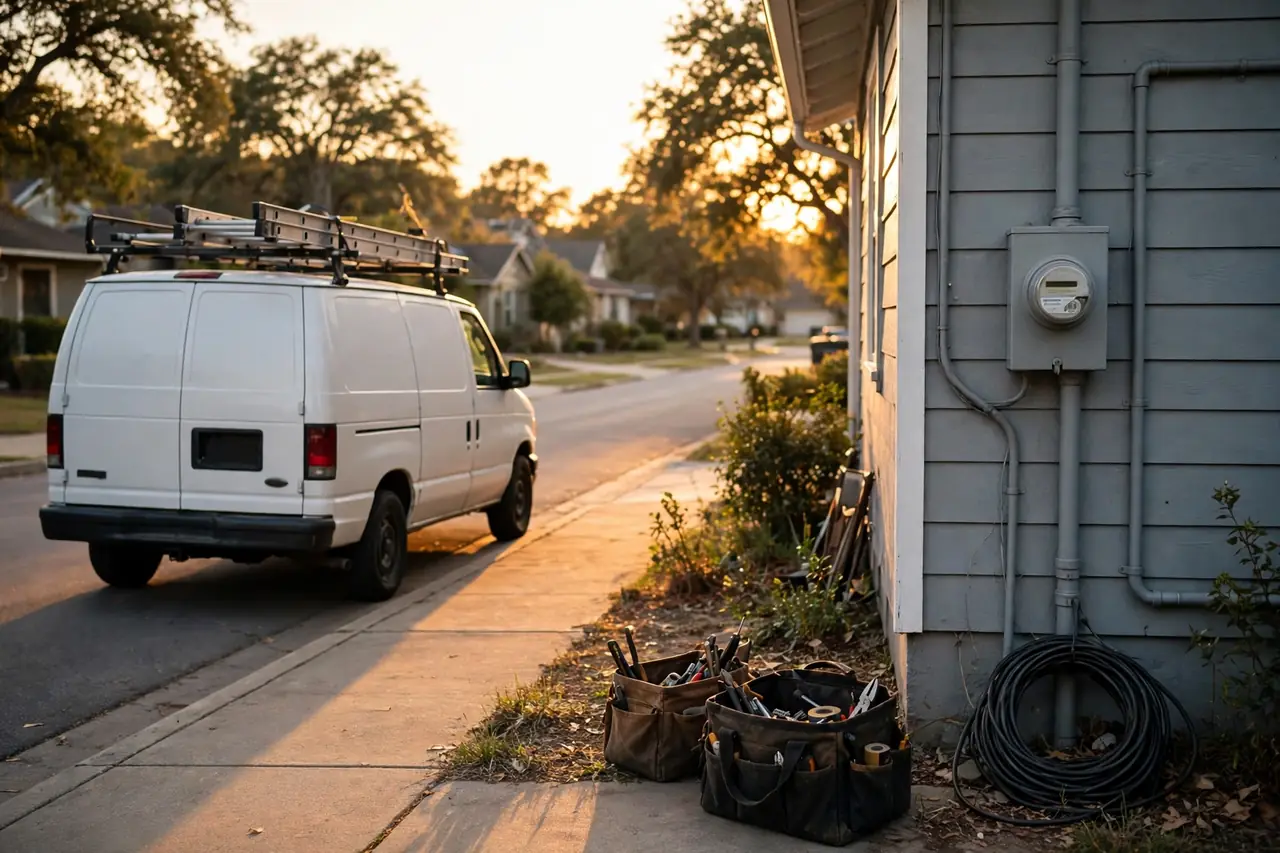
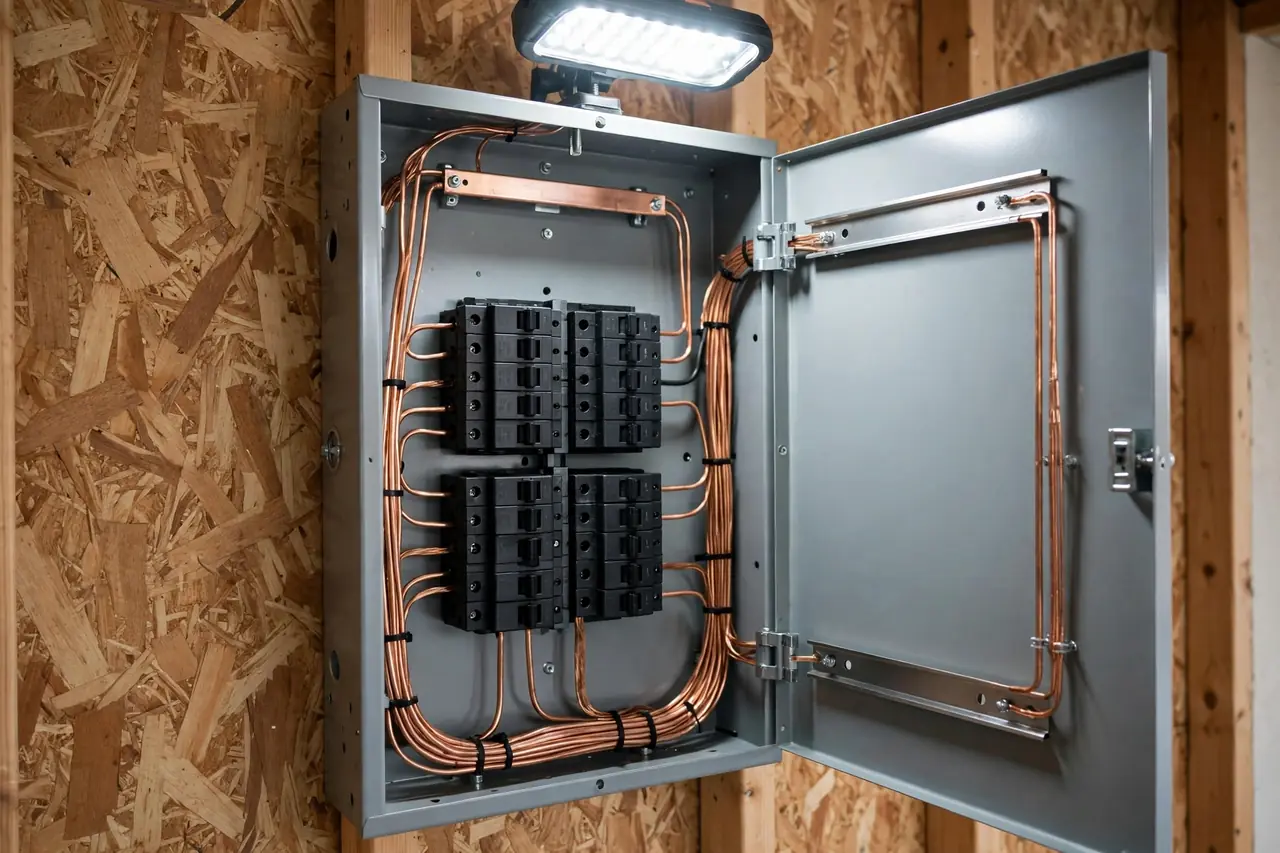
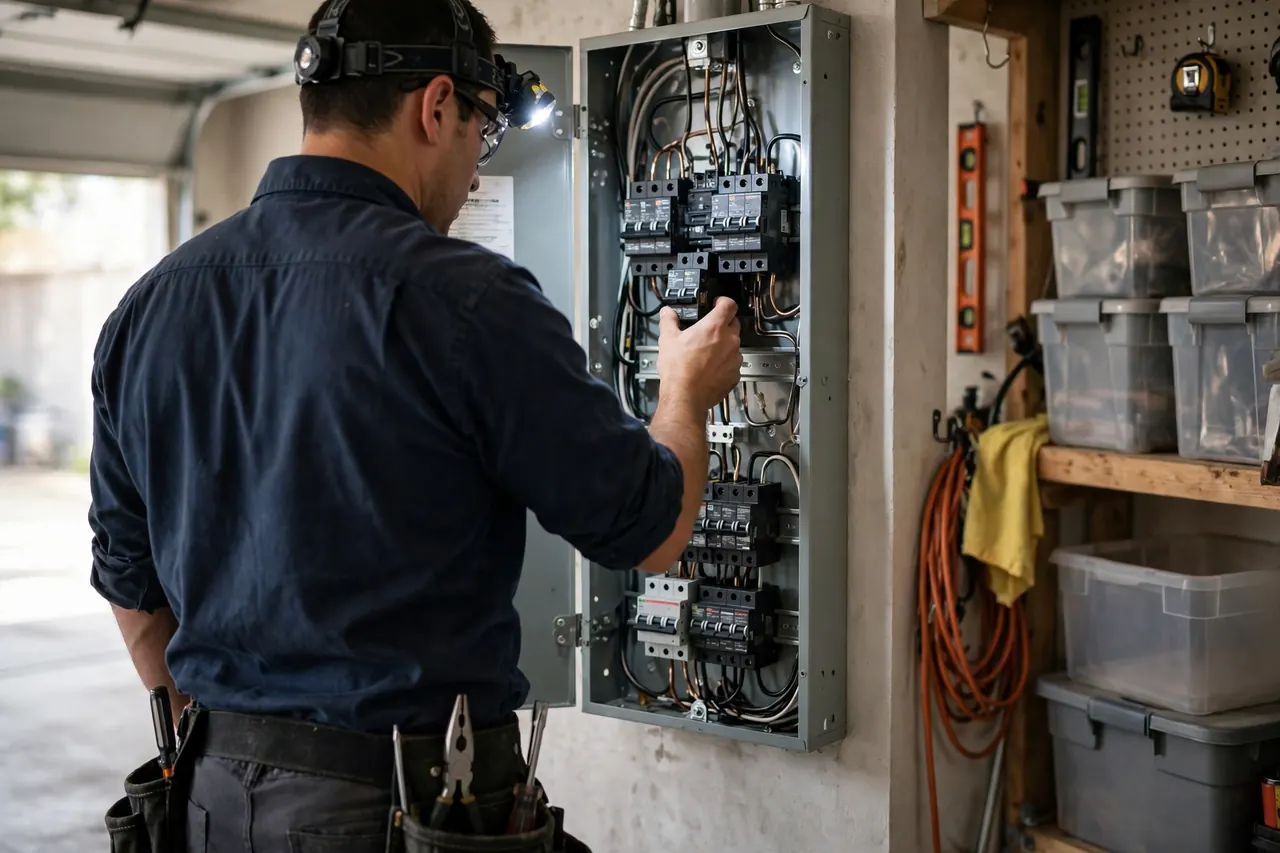
Cleveland, OH — electrical help across the metroA service van between calls in ClevelandUpgrading a panel in a Cleveland home
Cleveland electrical work, in brief
The median Cleveland home was built in 1962; 72.6% of the stock predates 1980, and the pattern this metro's own data ranks first is heating load strain in cleveland. VoltReach USA is a referral service, not an electrical company: one call connects you with an independent local electrician serving your ZIP code.
The Cleveland housing stock, and what it means for wiring
Two numbers frame everything that follows: 66.1% of Cleveland homes are owner-occupied, and the median one was built in 1962. Ownership matters to electrical systems because owners inherit them whole — every decision a builder made in the 1960s or earlier is still behind the walls, ageing on its original schedule. With 72.6% of homes predating 1980 and 11.5% arriving since 2000, the metro is really two housing stocks sharing one map, and they are taken separately below before the problems are ranked.
Ask how Cleveland's older homes have been kept electrically and the honest answer is: in pieces. A panel swapped here, a circuit added there, one kitchen rewired while the rest of the system carries on — across 738,094 pre-1980 homes, the patchwork is the norm rather than the exception. That history is written behind the walls of Ashtabula County and everywhere else the early stock stands: systems that are part original, part renewed, and entirely individual. It is also why the guidance on this page keeps returning to patterns rather than single faults — in a patchwork system, the pattern is the diagnosis.
Uniformity is the newer stock's defining trait. A subdivision in Parma or Lorain went up in a handful of years, fitted with one generation of panels, one approach to circuit layouts, one set of devices. That uniformity writes a calendar the whole street shares: the first GFCI failures, the first breaker replacements and the first EV-charger capacity questions arrive together, years before the same streets need anything structural. With 11.5% of the metro built since 2000, that calendar governs a large and growing share of Cleveland's electrical work — predictable work, if a household reads the calendar early.
Over the housing sits one more dataset, the sky's: 5,513 heating degree days and 925 cooling degree days in the average year at CLEVELAND BURKE AP, OH US, an average temperature of 52.3 degrees, extremes at both ends faithfully recorded. A metro's electrical systems are sized — to the extent they are sized at all — for the middle of that record, and they strain at the record's edges. What follows is a page about the edges: the cold snaps, the storm weeks, the long hot stretches, and the systems they find first.
The Cleveland electrical profile in numbers
Housing eras and climate, joined — the two datasets every section of this page is built from.
Break the stock down by building era and the profile sharpens. Before 1960: 46.9% of homes, roughly 476,813 of them. From 1960 to 1979: 25.7%, about 261,281. From 1980 to 1999: 15.8%, about 160,632. Since 2000: 11.5%, about 116,916. Four eras, four generations of panels and wiring — and the balance among them is this metro's electrical character in a single paragraph.
The defining fact about housing in Cleveland is how much of it predates 1960: 46.9 of the stock, 476,813 homes, with a median build year of 1962. Electrically, that era means fuse boxes or early small panels in some properties, service sizes of 60 to 100 amps, and in the earliest homes wiring methods such as knob-and-tube and cloth-insulated conductors that have now served for many decades. Ungrounded outlets are common findings. Across Cleveland, Parma and Lorain in Ashtabula, the electrical profile of Cleveland, Ohio is therefore one of original systems, layered modifications and a real need for careful, era-aware assessment by independent local electricians. That inheritance also shapes decisions every week, from where a charger can go to whether a room can safely carry another heater through winter.
Mid-century housing as the runner-up era gives Cleveland a broad base of homes now well past fifty years old. In Parma and Elyria, these properties typically combine copper or aluminium branch wiring from the period with panels sized for lighter demand and outlets that predate current grounding expectations. Independent local electricians working in Ashtabula often find that a Cleveland home from this band is fundamentally sound in structure but ready for electrical renewal in stages, beginning with the panel and the highest-load circuits, a pattern repeated across this era throughout Ohio. Later additions near Elyria often reveal this band where an original early home was extended in a subsequent building wave.
Precipitation and storms give Cleveland its third electrical load: exposure. The 33.34 recorded annually at CLEVELAND BURKE AP, OH US arrives in events that test exterior fittings, bring lightning and surges, and interrupt power across Ashtabula, Cuyahoga, Geauga, Lake, Lorain, Medina, sometimes for the 927,394 households least able to manage without it. In Cleveland, Lorain and Elyria, outage experience varies with service type and tree cover, but the underlying pattern is metro-wide. Combined with temperature extremes of 9.2 hot days and 91.5 freezing days, the climate profile of Cleveland, Ohio asks a lot of grounding, protection and backup planning in Ashtabula homes. Households feel the same reality as routine, in afternoon trips, cold-morning callouts and storm-season checks that recur with the calendar across the metro each year.
This ranking is where the two halves of the profile meet in Cleveland. Housing era alone does not decide a home's electrical condition, and climate alone does not either; it is their overlap, an older panel in Cleveland carrying peak summer load, or a mid-century circuit in Parma serving space heaters through freeze nights in Ashtabula, that produces the findings homeowners actually face. Independent local electricians can place a specific Cleveland, Ohio home within this ranking and explain, from its era and its exposure, what deserves attention first.
Electrical services in Cleveland
Ordered by what this metro's data says its homes need most.
Emergency Electrician in Cleveland
Partial power loss in Cleveland, Ohio is usually a prompt repair rather than an emergency, unless heat, smell, sound, or water comes with it. VoltReach USA helps you describe the symptoms so the request reaches an independent local electrician.
Some electrical problems in Cleveland become urgent because of what the household depends on. Powered medical equipment, refrigerated medication, a well or sump system, remote work that cannot pause, or very young or elderly residents can turn a modest fault into a pressing one for a particular family in Ashtabula. With 2,171,978 residents and 927,394 households, those circumstances are common and deserve to be stated plainly when seeking help. Independent local electricians can prioritise restoring the circuits a Cleveland household depends on most, once the situation is safe, and explain any temporary limitations honestly rather than promising a full restoration that conditions do not allow. Owners in Parma are advised to unplug sensitive electronics during a serious fault, protecting equipment while the cause is investigated. A Cleveland home's electrical story, its 1962 median era, its panel, its grounding and its climate load, is individual, and independent local electricians serving Ohio can read that story on site and explain the options it leaves open for the household.
Urgent faults in Cleveland arise from a stock where 738,094 homes predate 1980 and the median build year is 1962, spread across 114 ZIP codes in 6 counties. Ageing systems meeting modern load is the recurring local pattern in Ashtabula. Independent local electricians can make a Cleveland, Ohio home safe, isolate the fault and explain the likely role of the system's age and condition.
In Cleveland this service is booked most often through the problem patterns at the top of this page — the metro's housing data, not habit, sets the order. If your home is in the 72.6% built before 1980, mention its age on the call: it changes the parts the electrician loads before heading to Cleveland and the rest of the metro.
In Cleveland, rewiring questions usually start room by room: a kitchen in Cleveland, a nursery in Parma, an office where grounded outlets matter. Independent local electricians can map the existing circuits and explain a sensible order of work. The findings are usually mapped circuit by circuit, so owners can see which rooms come first and which sound runs can stay in service longer.
Daily life has changed inside homes in Cleveland in ways the original wiring never anticipated. Kitchens now carry multiple countertop appliances, bathrooms carry heated floors and high-draw dryers, and bedrooms carry chargers, computers and entertainment equipment on circuits once meant for a lamp and a radio. With 2,171,978 residents and 66.1 owner occupancy, demand for grounded, properly spaced receptacles keeps rising. Rewiring lets homeowners in Ashtabula align the hidden system with present use, adding grounded protection where modern equipment expects it. Independent local electricians can walk through a Cleveland home load by load, room by room, and distinguish what needs attention now from what can be planned for later. Where a Cleveland home has been extended over time, tracing how each addition was fed is often the first task undertaken. For households in Cleveland, Parma and across Ashtabula, the practical next step is an assessment by independent local electricians who can relate the work to a Cleveland home built in the 1960s and to the loads it carries today.
In Cleveland, 25.7 of homes date from 1960 to 1979 and 46.9 from before 1960, together 738,094 homes whose wiring generations predate current expectations. Across 1,016,658 housing units in Ashtabula, that makes wiring age a routine topic. Independent local electricians can identify which generation is present in a given Cleveland, Ohio home and where it remains in service.
Where this service gets booked in Cleveland follows the map on this page: the older districts generate the deep-end work, the post-2000 subdivisions the wear-and-tear work, and the 160,632 homes in between split the difference. Telling the call taker your home's build decade — most Cleveland owners know it within a few years — puts the right kit on the van the first time.
Weather in Ashtabula swings from 91.5 days at or below freezing to 9.2 days of real heat, so heating and cooling loads in Cleveland are not small. A panel sized for an earlier era can struggle when those systems run hard. A panel that can carry those peaks without strain also removes the daily guessing about which appliances can safely run at the same time together.
Modern loads rarely arrive one at a time in Cleveland. A home office, a workshop, a hot tub, a second refrigerator and a vehicle charger can all appear within a few years, each drawing on the same service that served a simpler household. With 66.1 owner occupancy and 1,016,658 housing units across the metro, that pattern repeats in ranch homes, split-levels and newer two-storey houses alike. The question behind a panel upgrade is seldom a single appliance; it is whether total demand, spaced across circuits, still fits the panel safely. Independent local electricians serving Cleveland can map existing circuits, note where capacity is concentrated, and help homeowners in Ashtabula sequence additions sensibly. Owners in Parma who are planning a kitchen project frequently start here, months ahead, so later work is not held up. Across 114 ZIP codes in Cleveland, Ohio, homeowners who start with a clear evaluation, grounded in the age of the property and its 1962 era context, are well placed to decide what should happen now and what can be planned for later with independent local electricians.
At CLEVELAND BURKE AP, OH US, Cleveland records 925 cooling degree days and 5,513 heating degree days, with 9.2 days at or above 90 degrees. Peak seasonal load is when panel capacity in Cleveland homes is tested hardest, especially in the 160,632 homes built from 1980 to 1999 whose panels are now decades old. Independent local electricians can factor that seasonal peak into an assessment.
One local habit worth copying: Cleveland homeowners who mention their street's building era when they book get a better-matched visit, because an electrician heading to a the 1960s home in Ashtabula County loads different parts than one heading to a new-build subdivision in Parma. The service is the same; the preparation is local.
Cold snaps and heat waves both stress circuits in Cleveland, where winters average 91.5 days at or below freezing and summers bring their own cooling load. VoltReach USA helps Cleveland homeowners reach independent local electricians when breaker behavior changes from occasional to frequent.
Breaker safety in Cleveland turns on one simple habit: a breaker that trips should not be reset again and again without investigation. Heat at the panel, a burning smell, a breaker that will not hold, or one that feels loose are reasons to stop using the circuit and seek help promptly. In older Cleveland, Ohio homes, including the 476,813 built before 1960, ageing connections can hide behind an apparently simple trip. Independent local electricians can inspect the panel and circuit, check terminations, and advise the household in Cleveland or Parma clearly about what can be used safely in the meantime and what should stay off. Labelling circuits accurately after a repair in Cleveland turns the next incident, whenever it comes, into a far quicker diagnosis. Homeowners in Cleveland, Ohio who notice Heating Load Strain in Cleveland or knob-and-tube wiring in Cleveland are encouraged to have the circuit checked rather than work around it, and independent local electricians can advise whether the issue is isolated or part of a wider pattern in the home.
Breaker trips in Cleveland often cluster at seasonal peaks recorded at CLEVELAND BURKE AP, OH US: 9.2 hot days driving cooling load and 91.5 freezing days driving heating load, within 925 cooling and 5,513 heating degree days annually. That timing is diagnostic. Independent local electricians can use when a Cleveland household reports trips to focus testing on the circuits and loads most likely involved in Ashtabula, Cuyahoga, Geauga, Lake, Lorain, Medina.
One local habit worth copying: Cleveland homeowners who mention their street's building era when they book get a better-matched visit, because an electrician heading to a the 1960s home in Ashtabula County loads different parts than one heading to a new-build subdivision in Parma. The service is the same; the preparation is local.
Standby generators in Cleveland, Ohio start automatically during outages, protecting heat, food, and pumps in Ashtabula homes. VoltReach USA connects homeowners with independent local electricians who plan and install these systems.
In Cleveland, the distance from panel to garage and the panel's spare capacity shape every charging installation. Local electricians serving Cleveland and Parma can measure both and explain your options.
In Cleveland, whole-home surge protection starts at the panel and covers hardwired equipment too. VoltReach USA connects you with an independent local electrician to discuss whether it fits your home.
Dark counters, glare, or switches in the wrong place in a Cleveland home are design problems with electrical solutions. Local electricians serving Cleveland and Parma can rework layout, fixtures, and dimming.
Ceiling fans in Cleveland, Ohio make rooms feel cooler through 9.2 hot days and return warm air in winter. VoltReach USA connects homeowners with independent local electricians who install fans on properly braced ceiling boxes.
Need more outlets or GFCI protection in Cleveland, Ohio? VoltReach USA refers homeowners to independent local electricians who plan device work around your rooms and circuits.
CO coverage matters in Cleveland, Ohio homes with fuel-burning appliances or attached garages. VoltReach USA refers you to an independent local electrician to place alarms near sleeping areas.
In Cleveland, shops, offices, and restaurants rely on panels and lighting every trading hour. VoltReach USA connects businesses with independent local electricians for assessment, repair, and planned work.
If this page's services were ranked by Cleveland's call patterns rather than listed in catalogue order, they would come out much as they do here — because the ranking behind them is data, not habit. Heating Load Strain in Cleveland leads the metro's problem table and knob-and-tube wiring in Cleveland follows, so the services answering them lead the list. The long tail of a metro's electrical life — device failures, lighting calls, the one circuit nobody can explain — fills in the diary around them, here as everywhere.
Electrical problems Cleveland homes actually get
Selected and ranked from this metro's housing-age profile and climate record — not copied from another city's page.
Heating Load Strain in Cleveland
Preparation is the constructive side of this pattern for Cleveland households. A pre winter electrical check of heating circuits, disconnects and the panel — arranged in autumn, when diaries are calm — looks for exactly the weak points deep cold will test: loose or heat marked terminations on heating circuits, tired breakers, overloaded circuits where heaters will land, and panels with no margin for auxiliary heat. VoltReach USA connects Cleveland homeowners with independent local electricians for that seasonal check and for urgent help when heating strain stops a system midwinter. The aim is a house in Cleveland whose heaviest night of the year is unremarkable electrically, because its limits were found in October rather than January.
Frozen building risks touch wiring indirectly in Cleveland, and a balanced page should place them correctly. The primary freeze threats are to plumbing, not conductors, but burst pipes and the water they release can reach outlets, panels and junction boxes in basements and crawl spaces in Lorain, and heating failures that cause freezes often begin with the electrical supply to the heating system. Keeping heating circuits sound is therefore freeze protection in a real sense for a Cleveland home. After any freeze event involving water inside the structure, electrical equipment the water reached should be inspected before being trusted, exactly as after a flood in Ashtabula.
There is also a building condition thread in Cleveland worth naming. On the coldest nights, heating systems run without pause, and every connection in the heating circuit carries sustained current for many hours. Sustained current is what finds weak points: a loose termination in a disconnect in Lorain, a tired breaker in a panel in Elyria, insulation on conductors aged by decades of heat cycles. A fault that smoulders electrically at low load declares itself at full load. That is why winter calls in Ashtabula so often involve heating circuits and panels rather than lighting or outlets, and why a pre season check of heating circuits in Cleveland is worth more than the same check in spring.
The grounding gap matters for modern life in a Cleveland home, and it is worth explaining plainly. Many current appliances, electronics and surge protection devices are designed around a grounded outlet. Fitting three prong receptacles onto an ungrounded system without addressing the underlying wiring can create the appearance of grounding where none exists, which helps no one. There are recognised approaches for improving safety on older circuits, and an electrician can explain which apply in Ashtabula, but the durable solution for heavily used circuits is usually rewiring them to modern standards. In the oldest parts of Cleveland, that rewiring is often planned room by room alongside other renovation, spreading the disruption sensibly.
Planning a rewire in a Cleveland older home goes more smoothly when it is coordinated with the house's other needs. Rewiring while a room is being renovated, while ceilings are open for other work, or alongside a panel upgrade shares access and reduces repeated disruption to plaster and finishes that give older Cleveland homes their character. An electrician who has mapped the house can suggest an order that follows the load and condition findings: heaviest used and poorest condition circuits first, lighting only remnants later. Over one project or several, that map turns a century old wiring system into a finished, documented modern installation for the next owners of the house.
A final piece of local evidence is how Cleveland homes evolve. Few houses here have been rewired in one project; most have been updated in stages — a new panel one decade, a kitchen circuit later, bathroom work after that. The untouched remainder is where knob-and-tube persists, often still feeding a few ceiling lights or outlets in bedrooms in Cleveland. Census data showing a median build year of 1962 for the wider city understates how old this remaining layer is in the earliest streets. Mapping what is left, circuit by circuit, turns a vague worry about old wiring into a specific, plannable list for a Cleveland homeowner.
Homeowners in Cleveland, Lorain and Elyria usually meet this issue at a trigger moment: a kitchen remodel, a heat pump installation, a hot tub, or an electric vehicle charger that needs a dedicated circuit. The appliance itself may be straightforward, but the panel behind it has no capacity or no space. That discovery is frustcapacity mid project, which is why checking the panel early matters in Cleveland. An assessment before work begins establishes whether the existing service can support the addition, what a load calculation shows, and whether rebalancing circuits, adding a subpanel where appropriate, or upgrading the service is the sound route.
Grounding and bonding deserve attention alongside capacity in older Cleveland homes. As services are upgraded or altered over decades, grounding arrangements from different eras can end up mixed together, and later work may assume a grounding path that was never completed. An electrician assessing an ageing panel will typically check the grounding electrode system, bonding of metal piping where required, and the separation and arrangement inside the panel. These details rarely show symptoms a homeowner can see, which is precisely why they belong in a professional assessment rather than being judged from the condition of the cover or the neatness of the wiring.
Ask what changed in Cleveland homes and the answer is load, not age alone. A house in Parma or Lakewood built around 1962 might have started with gas heat, window fans and one television. Today the same address in Cleveland, Ohio may run air conditioning through 925 cooling degree days, plus an electric dryer, a dishwasher, computers and chargers on every counter. The original panel sits at the centre of that change. When breakers begin tripping as appliances overlap, that is often the first plain signal the service size and the present household no longer match.
Watch for
Double tapped breakers visible on inspection
Rust or corrosion on the panel enclosure
Appliances that cannot run at the same time
Frequent trips on hot afternoons in {city}
Old panel brands flagged by your electrician for assessment
Home sale inspection notes raising panel questions
Homeowners in Cleveland sometimes ask whether every aluminium wired house must be fully rewired, and the honest answer is that recognised options exist at different scales. At one end, complete rewiring replaces branch circuits with copper, which is thorough and often aligns with a major renovation. At the other, remediation focuses on the connections themselves, using connectors and devices specifically listed for joining aluminum to copper or for terminating aluminum, installed to their instructions. Which route fits a house in Cleveland or Parma depends on condition, plans for the home, and what sampling shows. Independent local electricians can explain both paths for the actual house in front of them.
Mixed wiring deserves a mention in Cleveland, because few houses of this age are untouched. A 1970s addition in Parma may be copper, a replaced circuit in the kitchen may be copper, and the original bedrooms may remain aluminum, all meeting in the same panel. Problems arise when the two metals are joined casually in a box with a connector meant only for copper. An electrician mapping a house will note where transitions happen and whether each one uses a connector listed for that pairing. That map, once made, guides any remediation in a sensible order, starting with connections showing heat or looseness.
Renovation is often what brings aluminum wiring to light in Cleveland. A kitchen refresh in Parma, new lighting in Lorain, or an outlet replacement in Elyria opens a box and reveals silvery conductors where copper was expected. Work then pauses on a fair question: proceed as planned, or understand the wider picture first? That pause is valuable. A Cleveland electrician can confirm the wiring material, check how earlier work was terminated, and explain recognised remediation approaches, from approved connectors and devices rated for the purpose through to rewiring circuits, so the renovation rests on known facts about the house.
A circuit breaker protects the wiring in its circuit from carrying more current than it was sized for, and tripping is that protection working. When a breaker in a Cleveland home trips repeatedly, the useful question is why the load keeps crossing the limit, not how to stop the breaker from objecting. Fitting a larger breaker without changing the wiring would silence the warning while removing the protection, which is why electricians do not treat that as a repair. The real work is diagnostic: map what the circuit feeds, measure or calculate the combined draw, inspect the breaker and connections, and then correct the cause, whether that is redistributing loads, dedicating a circuit, or repairing a genuine fault.
Extension cords and multi outlet strips deserve a direct word in Cleveland, because they are where overload quietly concentrates. A strip that gathers a heater, entertainment equipment and chargers onto one receptacle in Parma can load a single outlet and its circuit heavily while looking tidy. Cords are for temporary use; used permanently, especially coiled or under rugs, they add heat and wear points the circuit was never planned around. An electrician assessing an overloaded room in a Cleveland home will often recommend additional receptacles on suitable circuits as the durable fix, so the room's layout invites safe use instead of workarounds that gather load in one place.
Look at how rooms are used now in Cleveland and the mismatch grows clearer. Home offices in Lakewood run computers, monitors and printers from bedroom circuits. Kitchens in Ashtabula homes carry air fryers, espresso machines and microwaves on counter outlets wired when small appliances were few. Bathrooms add high draw hair tools to circuits shared with lighting. Census data counts 160,632 homes built from 1980 to 1999 here and 116,916 built since 2000, but even newer layouts strain when several high draw devices land on one circuit. Overloading in Cleveland is a distribution pattern, not a comment on any one house.
Long cold winters test a Cleveland home electrically like nothing else in the year. With 5,513 heating degree days and 91.5 days at or below freezing recorded at CLEVELAND BURKE AP, OH US, heating systems run for hours without pause, heat pumps call on auxiliary strips, and space heaters appear in the coldest rooms of homes in Cleveland and Parma. Panels and circuits that felt ample in October carry their heaviest sustained loads in January, and weak points — a loose termination, a tired breaker — declare themselves on the coldest nights. A pre season check of heating circuits in Cleveland, plus a clear plan for generator readiness if outages threaten heat, turns deep winter from an annual gamble into a known, managed peak.
When sustained cold settles over Cleveland, the electrical system works differently. Heating equipment that cycles briefly in mild weather runs almost continuously, auxiliary strips add heavy draw during the coldest hours counted among 91.5 freezing days at CLEVELAND BURKE AP, OH US, and households in Parma and Lorain add space heaters room by room. In homes built in the 1960s across Ashtabula, that load lands on circuits planned for far less. Flicker when the heating starts and trips that happen only before dawn are useful clues. Independent local electricians can assess heating load and circuit condition in Cleveland homes during freeze season.
A closer look: heating load strain in cleveland in Cleveland
Sustained current changes the failure physics in Cleveland in a way worth understanding. Connections throughout a heating circuit — breaker stabs, lugs, disconnect contacts, equipment terminals — each carry a small resistance. At brief loads, the heat that resistance generates dissipates harmlessly. At the multi hour full draw of a cold night in Ashtabula, heat accumulates faster than it sheds, temperatures at marginal connections climb, and materials age or fail at the warmest point first. This is why a connection can serve for years and fail in a single cold snap: the snap is the first time duration and current combined crossed its threshold. Electricians inspecting after such a failure in Cleveland look along the whole heating path, not just at the failed point, because other connections of the same age and type have lived the same life and deserve the same scrutiny before the next cold night tests them.
Read the ranking backwards and it reads as a data summary: 2,171,978 residents in 1,016,658 housing units, 46.9% of the housing from before 1960, 33.34 inches of rain in an average year. The pattern leads because the exposure is broad — counted not in individual unlucky houses but in whole eras of the metro's building, stacked one on another.
On a first visit for this pattern, a local electrician's checks run in a practised order:
Look for discoloration along the heating path
Verify main breaker condition under load history
Check circuits in the coldest rooms for overload
Assess generator coverage for heating essentials
Examine panel for signs of sustained heat
Advise on load staggering during cold snaps
From problem to fixed, in Cleveland
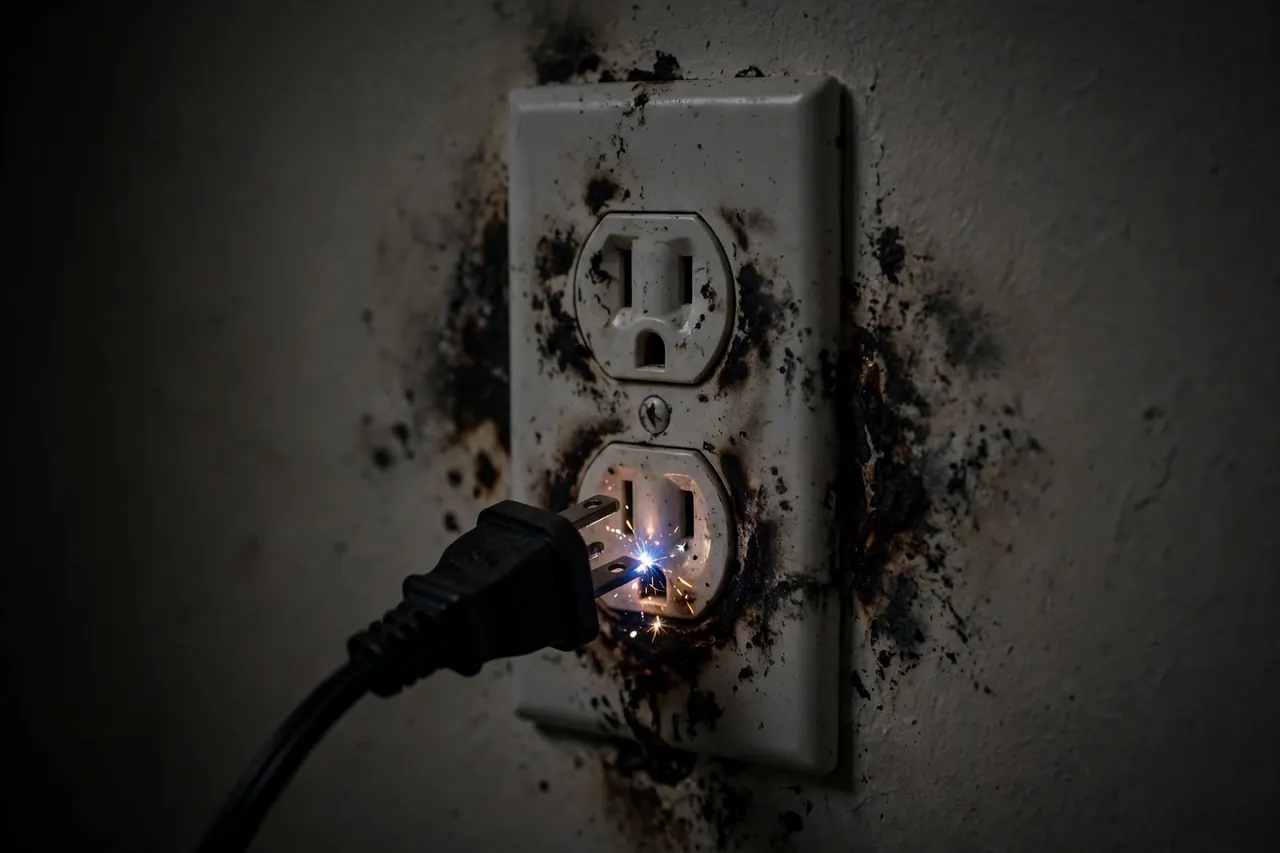
PROBLEMAn electrical problem inside a Cleveland home
➔
SOLUTIONThe same system in Cleveland after professional repair
Areas covered in the Cleveland metro
Cleveland
Population 367,523
Parma
Population 80,131
Lorain
Population 65,207
Elyria
Population 52,833
Lakewood
Population 50,229
Euclid
Population 48,991
Mentor
Population 47,215
Strongsville
Population 46,022
Cleveland Heights
Population 44,694
North Ridgeville
Population 36,043
Brunswick
Population 35,284
Westlake
Population 34,036
Also in the Cleveland metro: North Olmsted (population 32,031), North Royalton (population 31,013).
Read the grid as a building programme spread over a century. The oldest communities sit where the metro began; the youngest are still adding streets at its edge; and Parma and Lorain, with 80,131 and 65,207 residents, stand for the rings in between. Each ring wired in its era's materials, and each is now ageing, wearing or holding in its era's characteristic order. The ZIP codes below draw the coverage boundary; the eras inside it draw everything else on this page — the problems ranked, the services ordered, the checks advised.
Beyond the largest communities sit Elyria (52,833), Lakewood (50,229), Euclid (48,991), Mentor (47,215), Strongsville (46,022) — smaller places across Ashtabula, Cuyahoga, Geauga, Lake, Lorain, Medina, covered on the same terms. Their housing tends to be older on average than the big suburbs', and their calls follow the older patterns on this page. One routing covers them all: find your ZIP code below and the rest is a phone call.
Start with Cleveland itself: 367,523 residents, 16.9% of the metro — the centre the rest of the map orbits. Parma (80,131) and Lorain (65,207) form the next ring out, housing with its own building decades and its own wiring generations. Beyond them the metro thins into the smaller communities in the grid above, each a few thousand households deep — small in population, identical in one respect: their circuits answer to the same eras and the same weather as the big city's.
Draw the metro by its paperwork and it resolves into Ashtabula, Cuyahoga, Geauga, Lake, Lorain, Medina — 6 jurisdictions sharing one housing stock and one weather system. Ashtabula County holds the historic centre and the densest share of the older homes; the surrounding counties hold the rings of growth around it. Permits and inspections follow those boundaries even though current never does, which is part of why the electrician this page connects you to works these streets specifically.
Three neighbouring coverage areas begin where this one ends: Akron, OH, some 28 miles off; Youngstown, OH, 45 miles; and Canton, OH, 60 miles. Each keeps its own page because each keeps its own numbers — a different median build year, a different climate station, a different problem ranking. Boundary households should trust the ZIP list over the map: the code, not the compass, assigns the dataset.
The region around Cleveland is a set of variations on its theme: Akron, OH, 28 miles off, runs a median build year of 1968 on a metro population of 701,780; Youngstown, OH (45 miles) medians 1963 on 423,678; Canton, OH (60 miles) medians 1966 on 400,246. Nearness is not sameness — a few decades of median build year separate their wiring as surely as the miles separate their maps.
Count the metro per unit of itself: 8,918 housing units per covered ZIP code; 154,566 households per county; 14 communities sharing 6 county governments. Then weigh the generations against each other — 6.3 older homes for each newer one — and the service pattern on this page stops being a list and becomes a proportion: that much of the diary written by ageing systems, the rest by young ones wearing in.
The Cleveland record in one line — median home age: 64 years · owner-occupied homes: 613,007 · renter-occupied homes: 314,387 · pre-1960 homes per covered ZIP code: 4,183 · heating-to-cooling degree-day ratio: 5.96 · average rainfall: 847 mm a year.
Cleveland electrical questions
How can I tell whether VoltReach USA covers my Cleveland address?
This page covers the part of Cleveland described by its own ZIP and county lists, and nothing vaguer than that. The lists name 114 codes and the counties collected as Ashtabula, Cuyahoga, Geauga, Lake, Lorain, Medina. Homes in Cleveland and the other communities profiled on this page sit inside that same defined area. If you live just beyond a listed code, treat this page as background reading rather than as your connection route, because the electrician network behind it is organised around those codes. VoltReach USA does not do the electrical work itself. Its role is to publish clear local information and to connect a homeowner in the covered area with an independent electrician nearby. The population behind the boundary underlines its scale: 927,394 households in 1,016,658 homes across Ashtabula, Cuyahoga, Geauga, Lake, Lorain, Medina, with 66.1% owner-occupied, means the coverage list is not a token gesture toward Cleveland but a working map of where local homeowners actually live, street by street and code by code, throughout the metro this page describes in its housing and weather research above. Compressed further, coverage here rests on three countable things: the code run beginning 44001, 44003, 44004, 44010, the 114 codes in total across Ashtabula, Cuyahoga, Geauga, Lake, Lorain, Medina, and a housing base of 1,016,658 homes whose era profile, centred on the 1960s, is the reason this page exists for Cleveland at all. Stated as a list of codes: the codes run 44001, 44003, 44004, 44010 and 44011 among the 114 on the list, spread over Ashtabula, Cuyahoga, Geauga, Lake, Lorain, Medina. The weather record behind it is CLEVELAND BURKE AP, OH US's: 5,513 heating degree-days against 925 cooling degree-days in an average year. Run the same ranking for nearby Toledo and its leading pattern is heating load strain - a different order from Cleveland's, which is why this site keeps a separate page for every metro. The footprint takes in Ashtabula County, Lorain County and Cuyahoga County - 6 covered counties in all, each with its own page on this site. The coverage behind this answer spans ZIP codes 44001 through 44017 - the ZIP list published on this page. The housing ledger behind it counts 476,813 homes from before 1960 and 116,916 built since 2000 across the metro.
Does the age of my Cleveland home change how closely I should watch its electrics?
Start with build year. In Cleveland the median home dates to 1962, so half the stock is older than that, and the pre-1980 share stands at 72.6%. Homes from before 1960, at 46.9% of the total, sit at the top of the watch list because their wiring and panels belong to an era of far lighter electrical demand. The 1960 to 1979 group, 25.7% of homes, comes next, a period when some wiring materials and panel layouts now draw extra scrutiny from electricians. Newer homes are not exempt from faults, yet faults in newer stock are more often isolated incidents. In older stock, one fault can be a clue about the whole system, so patterns matter more than single events. Across the wider metro the same pattern repeats from Cleveland through Parma and Lorain into the outer communities: the closer a neighbourhood sits to the historic core of Cleveland, the older its era profile tends to be, with 476,813 homes built before 1960 and 261,281 from 1960 to 1979 shaping the risk map far more than any single street, which is why this page reads age by area rather than treating Cleveland as one uniform stock. The ownership figures add a practical edge to the watch list, because with 66.1% of 927,394 households owning their homes in Cleveland, most of the older stock is looked after by the people living in it, and the panel and wiring decisions for 738,094 pre-1980 homes rest with those households directly, which makes an honest yearly watch a normal part of owning an older Cleveland home. In ledger form the priority is stark: 46.9% before 1960 and 25.7% from 1960 to 1979, set against a CLEVELAND BURKE AP, OH US record of 91.5 freezing days and 9.2 hot days cycling those old circuits yearly, which is the whole argument for watching the oldest third of Cleveland housing closest. For the watch list stated as an era count: the era ledger reads 476,813 homes before 1960, 261,281 from 1960-1979, 160,632 from 1980-1999 and 116,916 since 2000 — 1,016,658 units, 927,394 households, 66.1% of them owner-occupied. Run the same ranking for nearby Columbus and its leading pattern is heating load strain - a different order from Cleveland's, which is why this site keeps a separate page for every metro. The coverage behind this answer spans ZIP codes 44001 through 44017 - the ZIP list published on this page. Read it against a median build year of 1962 and a 72.6% share of homes from before 1980. The weather record behind it is CLEVELAND BURKE AP, OH US's: 5,513 heating degree-days against 925 cooling degree-days in an average year. The footprint takes in Ashtabula County, Lorain County and Cuyahoga County - 6 covered counties in all, each with its own page on this site.
What electrical issue leads the list for Cleveland households?
The leading electrical problem in Cleveland homes is Heating Load Strain in Cleveland, with knob-and-tube wiring in Cleveland next in line. That order is not a guess. It comes from reading the local housing eras together with the local climate record, because most household electrical faults grow out of that pairing: older panels and circuits carrying modern loads, season after season of heating and cooling demand, and wiring that has cycled between hot and cold for decades. You may recognise the leader in your own home as a breaker that trips when appliances combine, a circuit that gives up under a familiar load, or protection that reacts more often than it once did. The ranking tells you where to look first, not what your home has. Only an inspection of your own panel and circuits can say that. The third name on the podium, ageing panels in Cleveland, keeps the top two honest, because it shows the ranking is a genuine ordering rather than a single headline: each step down the podium corresponds to causes that are present in Cleveland but less widespread, whether measured by era share, by seasonal load at CLEVELAND BURKE AP, OH US, or by the share of homes whose panel and circuit layout exposes them to that particular failure pattern. The densest summary of why Heating Load Strain in Cleveland leads in Cleveland fits in one breath: 738,094 homes built before 1980, a median year of 1962, 33.34 of precipitation and a population of 2,171,978 whose daily demand lands on panels and wiring installed, in large part, for a lighter electrical age. With the leading problem stated by community: the community ledger reads Cleveland (367,523 residents), Parma (80,131), Lorain (65,207), Elyria (52,833) and Lakewood (50,229), out of 2,171,978 residents metro-wide. The housing ledger behind it counts 476,813 homes from before 1960 and 116,916 built since 2000 across the metro. Run the same ranking for nearby Youngstown and its leading pattern is heating load strain - a different order from Cleveland's, which is why this site keeps a separate page for every metro. Read it against a median build year of 1962 and a 72.6% share of homes from before 1980. All of it describes the Cleveland metro as the Census defines it - 2,171,978 residents in 1,016,658 housing units. It is written for a metro whose largest places are Cleveland (367,523 residents), Parma (80,131) and Lorain (65,207).
How does Cleveland's weather affect home electrical systems?
Weather reaches a home electrical system mainly through load and through exposure. In Cleveland the record at CLEVELAND BURKE AP, OH US shows an average temperature of 52.3, with 5,513 heating degree days and 925 cooling degree days across a typical year. Those two totals describe how hard heating and cooling equipment works, and that equipment is among the heaviest demand on a panel. Long heating and cooling runs keep circuits busy for extended stretches, which exposes weak breakers and tired connections that light use might never reveal. Rain, at 33.34 across the year, tests outdoor outlets, exterior lighting circuits and any fitting whose seal has aged. Weather rarely breaks a sound system outright. It stresses a marginal one until the weakness shows. Read the CLEVELAND BURKE AP, OH US record as a metro average rather than a street forecast, because conditions in Cleveland vary between the built-up centre around Cleveland, the communities of Parma and Lorain, and the fringe areas near the county lines of Ashtabula, Cuyahoga, Geauga, Lake, Lorain, Medina: elevation, tree cover and exposure differ, yet every part shares the same seasonal load swing, and it is that shared swing, acting on different ages of wiring, that produces such different electrical outcomes within one metro. Precipitation completes the local picture alongside temperature: 33.34 in a typical year at CLEVELAND BURKE AP, OH US means outdoor outlets, garage circuits and exterior fittings in Cleveland are wetted regularly across the seasons, and in a stock of 1,016,658 homes that steady wetting, working on covers and seals of very different ages, quietly decides which outdoor circuits stay sound and which begin to fail after storms. Set the climate beside the codes and the picture tightens: from 44001 through 44010 and beyond, homes in Cleveland, population 367,523, and homes in the smallest listed communities alike sit under the same 5,513 heating and 925 cooling degree-day totals, differing only in the age of the systems carrying that shared load. With the weather load stated against the era count: the era ledger reads 476,813 homes before 1960, 261,281 from 1960-1979, 160,632 from 1980-1999 and 116,916 since 2000 — 1,016,658 units, 927,394 households, 66.1% of them owner-occupied. Run the same ranking for nearby Akron and its leading pattern is heating load strain - a different order from Cleveland's, which is why this site keeps a separate page for every metro. The footprint takes in Ashtabula County, Lorain County and Cuyahoga County - 6 covered counties in all, each with its own page on this site. The coverage behind this answer spans ZIP codes 44001 through 44017 - the ZIP list published on this page. Read it against a median build year of 1962 and a 72.6% share of homes from before 1980. The housing ledger behind it counts 476,813 homes from before 1960 and 116,916 built since 2000 across the metro.
What are the first safe steps when an outlet sparks or smells of burning in the Cleveland metro?
Stop using that outlet and that circuit straight away, and unplug anything connected to it only if you can do so without touching anything hot, damaged or wet. Keep people and pets away from the area. If you can reach your panel safely, on a dry floor and with no sign of fire, smoke or water near the panel itself, switch off the breaker for that circuit and leave it off. Never touch a panel or an outlet when water is present, and never open an outlet or attempt a repair yourself. If you see flames, heavy smoke, a downed line outside, or burning you cannot account for, leave, get everyone out, and call emergency services first. Contact the utility about any damaged line outside the home. Only after the immediate danger is handled should you arrange an electrician connection through this page. Households across the Cleveland metro, in Cleveland, Parma, Lorain and the smaller communities between them, should treat that sequence identically wherever they sit within Ashtabula, Cuyahoga, Geauga, Lake, Lorain, Medina: safety steps do not change by neighbourhood, and neither does the order of them, so keep the circuit off, keep the area clear, and only once emergency and utility matters are settled use this page, which covers 114 codes locally, to be connected with an independent electrician nearby. Once the immediate danger has passed, the details you pass on help more than you might expect: your ZIP code within the 114 listed for Cleveland, the room involved, whether water was anywhere nearby, and whether the breaker stayed off, together let the independent electrician arrive understanding the circuit's story, and in a metro of 927,394 households that clarity is what separates a focused first visit from a second one. The numbers worth having ready after such an incident in Cleveland are few and specific: your code among 44001 to 44017, your community, Cleveland at 367,523 residents being the largest, and the circuit's behaviour before the smell or sparks, because those details carry more diagnostic weight than any general description of the metro. After an incident, stated for the record by codes: the codes run 44001, 44003, 44004, 44010 and 44011 among the 114 on the list, spread over Ashtabula, Cuyahoga, Geauga, Lake, Lorain, Medina. The Census identity of this metro, Cleveland with 2,171,978 residents, 66.1% owner-occupied and a median build year of 1962, explains why such incidents cluster in older circuits here compared with Akron, OH at 28, Youngstown, OH at 45 and Canton, OH at 60: the podium faults Heating Load Strain in Cleveland, knob-and-tube wiring in Cleveland and ageing panels in Cleveland all grow from the same ageing stock that makes conservative first steps so important locally. Walk the incident geography by code and the coverage becomes tangible in Cleveland: a report from 44001 and a report from 44017 sit at opposite ends of the local list that runs 44001, 44003, 44004, 44010, 44011, 44012, 44017, yet both follow the same safety sequence first and the same referral route afterwards, because neither distance across the metro nor position in the code list changes what safety requires. Read it against a median build year of 1962 and a 72.6% share of homes from before 1980. The coverage behind this answer spans ZIP codes 44001 through 44017 - the ZIP list published on this page. The housing ledger behind it counts 476,813 homes from before 1960 and 116,916 built since 2000 across the metro. The footprint takes in Ashtabula County, Lorain County and Cuyahoga County - 6 covered counties in all, each with its own page on this site. All of it describes the Cleveland metro as the Census defines it - 2,171,978 residents in 1,016,658 housing units.
When does a Cleveland home need rewiring rather than another repair?
The dividing line is pattern against incident. A single fault with a clear local cause, a damaged outlet, a breaker at the end of its life, one circuit overloaded by one new appliance, usually belongs in repair territory. Rewiring enters the conversation when faults repeat across rooms served by the same generation of wiring, when insulation is crumbling wherever it is inspected, or when the wiring type itself, such as older aluminum branch wiring or surviving knob-and-tube runs, is the underlying issue rather than any single fitting. In Cleveland, where 72.6% of homes predate 1980, that pattern question arises often. No page can settle it for your home. An electrician settles it by inspecting several points in the system and judging whether the faults share one root. The rewiring question lands differently across Cleveland depending on which ring of the metro a home occupies: the pre-1960 core around Cleveland and the older streets of Ashtabula produce the pattern cases most often, the 1960 to 1979 suburbs through Parma and Lorain produce the material cases, and the newer ground toward Elyria and Lakewood produces mostly isolated repairs, a geography written by the 738,094 homes built before 1980 across 114 codes. The era percentages translate the rewiring judgement into local proportions for Cleveland: 25.7% of homes from 1960 to 1979 and 46.9% from before 1960 together form the pool where system-wide findings concentrate, while the 15.8% from 1980 to 1999 and the share built since 2000 produce them far less often, so the same fault history carries different weight depending on which slice of the local stock your home occupies. The tightest statement of the pattern test uses local figures only: where faults repeat across circuits in the 46.9% pre-1960 stock or the 25.7% stock from 1960 to 1979, under a CLEVELAND BURKE AP, OH US load record of 5,513 heating degree days, the material is implicated; where they do not repeat, it usually is not. On renewal, stated by the communities in question: the community ledger reads Cleveland (367,523 residents), Parma (80,131), Lorain (65,207), Elyria (52,833) and Lakewood (50,229), out of 2,171,978 residents metro-wide. It is written for a metro whose largest places are Cleveland (367,523 residents), Parma (80,131) and Lorain (65,207). Run the same ranking for nearby Akron and its leading pattern is heating load strain - a different order from Cleveland's, which is why this site keeps a separate page for every metro. The housing ledger behind it counts 476,813 homes from before 1960 and 116,916 built since 2000 across the metro. The footprint takes in Ashtabula County, Lorain County and Cuyahoga County - 6 covered counties in all, each with its own page on this site. The coverage behind this answer spans ZIP codes 44001 through 44017 - the ZIP list published on this page. Start from the stock itself: 46.9% of Cleveland homes are pre-1960 builds, the metro's dominant era, and the check is written for what that generation of wiring does as it ages.
Who actually does the work when I contact VoltReach USA in the Cleveland metro?
It helps to picture two separate jobs. VoltReach USA does the publishing job: researching Cleveland housing stock across 1,016,658 homes, summarising the weather record, ranking common electrical problems and keeping the coverage list of 114 ZIP codes current. The independent local electrician does the household job: answering for the condition of your circuits, standing in front of your panel, and taking responsibility for any repair or renewal carried out at your address. VoltReach USA does neither the visiting nor the work, and it does not supervise the electrician at your home. That division is stated on this page because a homeowner deserves to know, before they call, exactly which organisation does which part. The referral exists to shorten your search for a local electrician, nothing more and nothing less. That division of roles holds in every community this page covers, from Cleveland through Parma, Lorain, Elyria and Lakewood, across all 114 ZIP codes and 6 counties listed for Cleveland: VoltReach USA publishes and routes in each of them, and in each of them the attending work belongs to an independent local electrician, so the model a homeowner in the oldest core street meets is exactly the model a homeowner on the newest edge street meets. A useful test of the model is to notice what this page never offers: it offers no arrival window of its own, no crew, no work carried out by the publisher, because VoltReach USA has none of those things to offer in Cleveland or anywhere else, and a referral service that is clear about that absence, while still doing the research thoroughly across Ashtabula, Cuyahoga, Geauga, Lake, Lorain, Medina, is giving a homeowner exactly the two things it honestly can, evidence and a connection. The model in compressed form for Cleveland: one publisher maintaining research across codes 44001 to 44010 and the full list of 114, one metro of 2,171,978 residents including Cleveland with 367,523, and independent electricians, separate from the publisher, doing every piece of work in every home the referral reaches. On who does the work, stated by the housing researched: the era ledger reads 476,813 homes before 1960, 261,281 from 1960-1979, 160,632 from 1980-1999 and 116,916 since 2000 — 1,016,658 units, 927,394 households, 66.1% of them owner-occupied. Run the same ranking for nearby Youngstown and its leading pattern is heating load strain - a different order from Cleveland's, which is why this site keeps a separate page for every metro. It is written for a metro whose largest places are Cleveland (367,523 residents), Parma (80,131) and Lorain (65,207). All of it describes the Cleveland metro as the Census defines it - 2,171,978 residents in 1,016,658 housing units. The weather record behind it is CLEVELAND BURKE AP, OH US's: 5,513 heating degree-days against 925 cooling degree-days in an average year. The footprint takes in Ashtabula County, Lorain County and Cuyahoga County - 6 covered counties in all, each with its own page on this site.
Which electrical checks should I do each year in my Cleveland home?
A good yearly list for a Cleveland home reads like a walk, not a project. Begin where water and electricity meet: kitchens, bathrooms, laundry areas and outdoor outlets, testing GFCI protection with the buttons provided. Continue to detectors, testing each one and noting expiry dates. Continue to the panel for a visual pass only, checking for warmth, odour, corrosion and breakers that feel loose or fail to stay set when exercised. Walk the rooms themselves last, looking at heavily used outlets behind appliances and entertainment equipment for discolouration or loose plugs. Nothing on this walk requires a tool beyond a finger on a test button, and that is by design. Opening panels, testing circuits under load and judging wiring condition are professional work. When your walk finds something, this page can connect you with an independent electrician to take it further. The checklist scales with the metro behind it: 1,016,658 homes across Ashtabula, Cuyahoga, Geauga, Lake, Lorain, Medina share the same short list of homeowner-safe checks, yet the findings those checks produce follow the age map, surfacing panel and wiring concerns more often in the older communities near Cleveland, Parma and Lorain, and surfacing mostly detector dates and outdoor-cover wear in the younger stock, so your street's era, within the Cleveland pattern of 72.6% built before 1980, predicts your likely findings. The yearly round earns its keep in proportion to the stock it serves: across 1,016,658 homes in Cleveland, with 738,094 built before 1960 alone, even a short list of button tests and visual checks, repeated annually by 927,394 households, surfaces failed protection and early heat signs at a scale no inspection programme could match, which is why the modest homeowner list on this page is treated as a serious layer of the metro's electrical safety. The yearly round in compressed form for Cleveland: test protection in the homes behind codes 44001, 44003, 44004, 44010, where the ledger counts 476,813 pre-1960 homes, and repeat it in the newest districts too, because detectors expire and outdoor covers age in Cleveland, population 367,523, exactly as they do everywhere else. For the yearly round, stated by the housing it covers: the era ledger reads 476,813 homes before 1960, 261,281 from 1960-1979, 160,632 from 1980-1999 and 116,916 since 2000 — 1,016,658 units, 927,394 households, 66.1% of them owner-occupied. The housing ledger behind it counts 476,813 homes from before 1960 and 116,916 built since 2000 across the metro. The weather record behind it is CLEVELAND BURKE AP, OH US's: 5,513 heating degree-days against 925 cooling degree-days in an average year. The coverage behind this answer spans ZIP codes 44001 through 44017 - the ZIP list published on this page. It is written for a metro whose largest places are Cleveland (367,523 residents), Parma (80,131) and Lorain (65,207). Run the same ranking for nearby Canton and its leading pattern is heating load strain - a different order from Cleveland's, which is why this site keeps a separate page for every metro. In Cleveland the pre-1960 generation dominates (46.9% of homes), which is why this page's version of the check leans toward that era's failure modes before the newer ones.
How was this page's problem ranking worked out in the Cleveland metro?
Two datasets do most of the work. First, Census ACS housing data for the Cleveland metro: total units, the share in each era band, the median build year and the owner-occupied share. Those figures describe what is physically in the walls across 1,016,658 homes. Second, NOAA climate normals from CLEVELAND BURKE AP, OH US: the heating and cooling load, the count of very hot and freezing days, and the precipitation pattern. Those figures describe what the weather asks of those homes. Problems are scored per metro by matching each fault to the conditions that produce it, then ordering the scores. Panel capacity problems rise where older stock meets heavy seasonal load. Moisture-related faults rise where precipitation and outdoor exposure combine. No local call records are claimed and no invented figures are used. The ranking is an evidence-based ordering from housing and climate, and it is labelled that way. Because the inputs are metro-wide, the ranking describes Cleveland as a place rather than any single district within it: era shares spanning 476,813 pre-1960 homes to 116,916 built since 2000, read alongside the CLEVELAND BURKE AP, OH US climate record, produce one ordering for the whole territory of Ashtabula, Cuyahoga, Geauga, Lake, Lorain, Medina, and local variation then does the rest, since a district dominated by one era will feel its era's problems more strongly than the metro ordering alone suggests to a reader in Cleveland or Lakewood. Readers can test the ranking against their own knowledge of Cleveland in one specific way: if the podium, Heating Load Strain in Cleveland, knob-and-tube wiring in Cleveland and ageing panels in Cleveland, matches the faults neighbours in similar-era homes describe, the method is showing its local grounding, and where a street's experience diverges, the divergence usually traces to that street's era or exposure differing from the metro profile of 1962 median build year that the scoring started from. Strip the method to its tokens and it remains local: 44001, 44003, 44004, 44010 for place, 1962 for the median home, 46.9%, 25.7% and 15.8% for the era shape, and 52.3 with 33.34 for the climate, a set of figures no other metro on this site shares in exactly this combination. For the method, stated through its era evidence: the era ledger reads 476,813 homes before 1960, 261,281 from 1960-1979, 160,632 from 1980-1999 and 116,916 since 2000 — 1,016,658 units, 927,394 households, 66.1% of them owner-occupied. The identity line behind this metro's ranking, Cleveland, 2,171,978 residents, 66.1% owner-occupied, median build year 1962, is what separates its ordering from those of Akron, OH at 28, Youngstown, OH at 45 and Canton, OH at 60: change the era shape or the ownership shape and the scores move, so the podium of Heating Load Strain in Cleveland, knob-and-tube wiring in Cleveland and ageing panels in Cleveland is a product of this metro's counted character. Walk the method by code and its local grounding shows street by street in Cleveland: the scoring that produced this ranking was applied to homes behind 44001, 44003, 44004, 44010, 44011, 44012 and 44017 alike, using the same era and climate inputs throughout, so no district in the list was favoured in the arithmetic and no district was left out of the evidence the ordering rests on. All of it describes the Cleveland metro as the Census defines it - 2,171,978 residents in 1,016,658 housing units. Read it against a median build year of 1962 and a 72.6% share of homes from before 1980. The housing ledger behind it counts 476,813 homes from before 1960 and 116,916 built since 2000 across the metro. The coverage behind this answer spans ZIP codes 44001 through 44017 - the ZIP list published on this page. Run the same ranking for nearby Youngstown and its leading pattern is heating load strain - a different order from Cleveland's, which is why this site keeps a separate page for every metro.
What wiring and panels should I expect in an older Cleveland home?
What you find in Cleveland's oldest homes depends on how each home was treated across its life, yet the starting points are consistent. Pre-1960 homes started with wiring and panels specified when a household's electrical life was a fraction of today's: lighting, a radio, early appliances. Everything since has been negotiation between that starting point and modern demand. Some homes resolved it with full renewal and present a tidy, capable system. Others resolved it piecemeal and present a patchwork an electrician must map before judging. The era figures frame the scale: 476,813 homes from before 1960 and 738,094 from before 1980 across the metro. In those homes, expect an electrician to spend the first part of any visit simply establishing what is installed, which generations of wiring remain live, and what the panel is really feeding. Communities keep their electrical character for decades, which is why the oldest-home story in Cleveland is really several stories: the deep-core story in Cleveland, the mid-century story across Parma and Lorain, and the transition story in Elyria and Lakewood, where older farm-era or early-subdivision homes can sit among far newer builds, and where the 476,813 pre-1960 homes and 261,281 homes from 1960 to 1979 are scattered rather than concentrated, making house-by-house assessment the only reliable guide. Population helps date the rings as surely as architecture does in Cleveland: the long-settled weight of Cleveland at 367,523 residents reflects the pre-1960 and mid-century building that still defines its streets, while the growth recorded in Elyria and Lakewood reflects later rings, so the community sizes quoted on this page and the era counts beside them are two readings of the same history of how the metro filled its 1,016,658 homes. In ledger shorthand, the rings read 476,813, then 261,281, then 160,632, then 116,916, a sequence spread across Ashtabula, Cuyahoga, Geauga, Lake, Lorain, Medina and centred on Cleveland, and every electrical system an electrician opens in the oldest districts is a physical reading of the first two numbers in that sequence. For the oldest homes, stated through their communities: the community ledger reads Cleveland (367,523 residents), Parma (80,131), Lorain (65,207), Elyria (52,833) and Lakewood (50,229), out of 2,171,978 residents metro-wide. Set the oldest homes here beside those of the neighbouring metros, Akron, OH at 28, Youngstown, OH at 45 and Canton, OH at 60, and the regional pattern sharpens the local one: every older metro in the group wrestles with layered systems and the podium faults Heating Load Strain in Cleveland, knob-and-tube wiring in Cleveland and ageing panels in Cleveland, yet the depth of the pre-1960 layer and the wiring generations surviving within it remain specific to each city's own building history. The footprint takes in Ashtabula County, Lorain County and Cuyahoga County - 6 covered counties in all, each with its own page on this site. The weather record behind it is CLEVELAND BURKE AP, OH US's: 5,513 heating degree-days against 925 cooling degree-days in an average year. Read it against a median build year of 1962 and a 72.6% share of homes from before 1980. All of it describes the Cleveland metro as the Census defines it - 2,171,978 residents in 1,016,658 housing units. The coverage behind this answer spans ZIP codes 44001 through 44017 - the ZIP list published on this page.
What should I expect an electrical check to find in a Cleveland home?
Expect an electrician checking a Cleveland home to spend attention in proportion to risk, and expect the flags to sound familiar if you have read this page. Repeated breaker trips under ordinary combinations of appliances. GFCI protection that has failed silently in a wet location. Outlets or switches that run warm, or show heat discolouration. Breakers carrying two conductors where the design expects one, a common legacy of circuits added over the years. A panel whose capacity and layout strain against the demand of the home as it is lived in now, not as it was wired. Detector cover with gaps in the rooms that need it most. Each flag arrives with a reason and a remedy scope, and a homeowner is entitled to hear both explained plainly. A check that only lists faults without explaining consequence has done half its job. The metro context behind any single check is worth holding in mind: your home is one of 1,016,658 across Ashtabula, Cuyahoga, Geauga, Lake, Lorain, Medina, in a stock where 72.6% predates 1980, so an electrician working from Cleveland to Lakewood builds a sense of the usual findings for each era and area, then tests your home against that background, which is why a finding that surprises a homeowner rarely surprises a local electrician, and why its consequence and remedy can usually be explained from local experience. The podium problems and the check findings are two views of one reality in Cleveland: Heating Load Strain in Cleveland leads the ranking because the conditions behind it are what checks keep finding, and knob-and-tube wiring in Cleveland follows in both lists for the same reason, so a homeowner who reads the ranking first and then hears similar findings at their own panel is watching the metro-level evidence and the house-level evidence agree, each lending the other credibility. The densest summary of the check walk uses the metro's own tokens: a median year of 1962, an era share of 72.6% before 1980, 9.2 hot days and 91.5 freezing days cycling the circuits, and 927,394 households whose panels, tested one by one, keep returning the same short list of findings. For check findings, stated by the communities checked: the community ledger reads Cleveland (367,523 residents), Parma (80,131), Lorain (65,207), Elyria (52,833) and Lakewood (50,229), out of 2,171,978 residents metro-wide. The footprint takes in Ashtabula County, Lorain County and Cuyahoga County - 6 covered counties in all, each with its own page on this site. All of it describes the Cleveland metro as the Census defines it - 2,171,978 residents in 1,016,658 housing units. The coverage behind this answer spans ZIP codes 44001 through 44017 - the ZIP list published on this page. It is written for a metro whose largest places are Cleveland (367,523 residents), Parma (80,131) and Lorain (65,207). Read it against a median build year of 1962 and a 72.6% share of homes from before 1980. The local starting point is the dominant era - pre-1960 homes are 46.9% of the stock here - so the findings above are read against that generation's panels and circuits first.
How many homes does this page's data cover in the Cleveland metro?
The figures on this page come from the Census Bureau's American Community Survey for the Cleveland metro: 2,171,978 residents, 1,016,658 housing units and 927,394 households, with a median build year of 1962. The climate figures come from NOAA's 1991-2020 normals at CLEVELAND BURKE AP, OH US, the station nearest the metro's centre.
 PROBLEM
 SOLUTION