Home EV Charging: What to Know Before You Install
Charging an electric vehicle at home is, for most owners, the most convenient way to live with one — the car charges while you sleep and is ready when you are. Getting there, though, involves more than choosing a charger and finding a wall for it. Your panel's capacity, the charger's location, and local permit and inspection requirements all shape the project. This guide explains the main charging levels in plain terms, why a load calculation comes first, and the questions worth asking an electrician before any installation work begins.
Level 1 and Level 2 charging in plain terms
Home charging is usually described in two levels. Level 1 uses a standard household outlet and the charging equipment that typically comes with the vehicle. It is the slowest option, adding range gradually over a long period, but for drivers with modest daily mileage and a car that sits parked for many hours, it can be enough, and it requires no new circuit. Level 2 uses a dedicated higher-capacity circuit, installed by an electrician, and charges considerably faster — the difference between topping up slowly over a very long stretch and completing a substantial charge in a few hours or overnight, depending on the vehicle and how much charge it needs. For households with longer daily drives, multiple drivers, or less time parked at home, that difference is what makes home charging practical. Neither level is the right answer for everyone. The useful way to decide is to think honestly about your driving pattern: how far you typically drive in a day, how long the vehicle is parked at home, and how often you need it ready again quickly. An electrician can then match that pattern to what your home's electrical system can support.
Why panel capacity and a load calculation come first
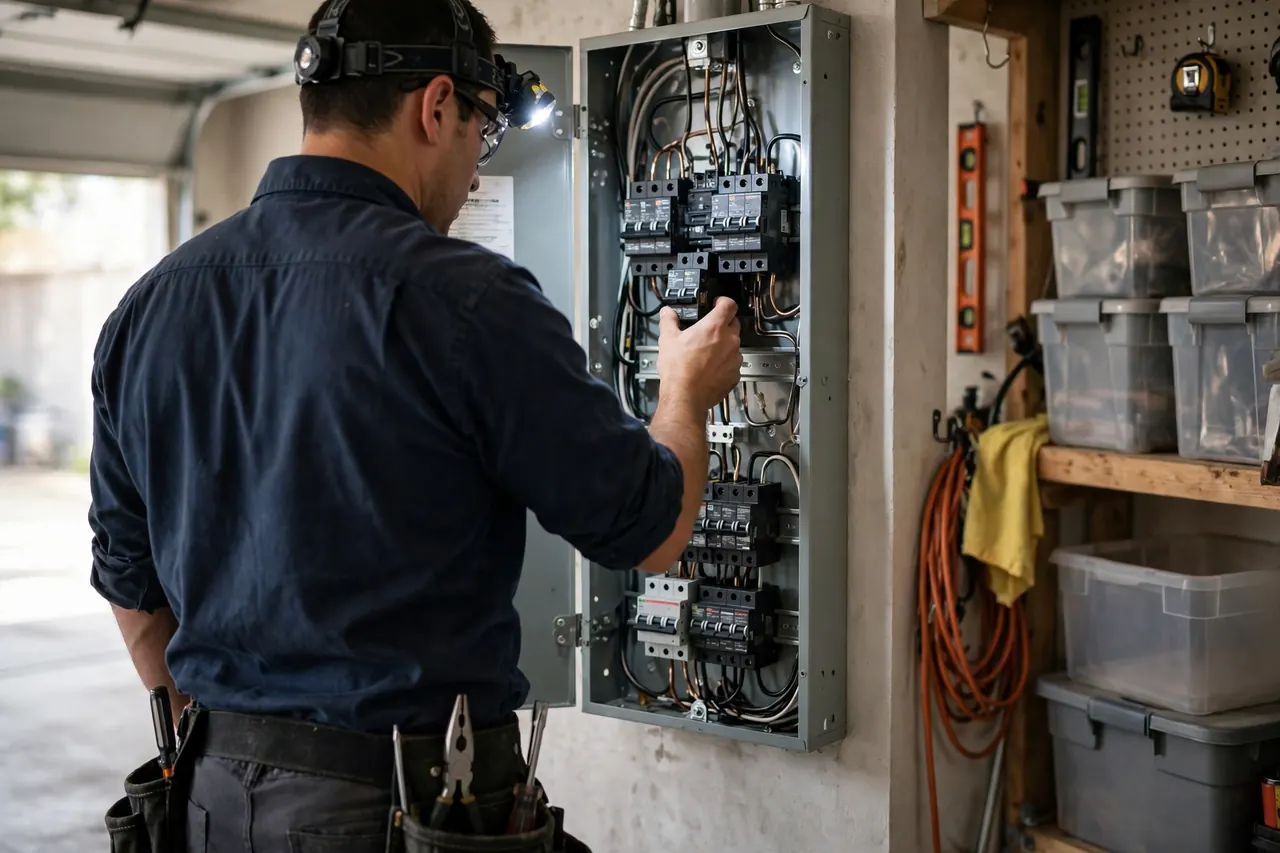
A Level 2 charger is one of the larger continuous electrical loads in a home, and it runs for hours at a time. Whether your existing panel can support it depends on your home's overall capacity and on everything else the panel already supplies — heating and cooling, cooking, laundry, hot water, and any other major systems. That is why a load calculation comes before installation, not after. In a load calculation, an electrician assesses the size and demands of your home and works out how much spare capacity your service genuinely has. The outcome guides everything else: in some homes, the existing panel can accommodate a charger circuit directly; in others, the right answer may involve managing the load, adjusting the charging rate, or upgrading the panel as part of the project. Skipping this step and simply adding a large new load risks repeated breaker trips, and an overloaded installation in more serious cases. If an electrician proposes installation without asking about your panel or your other major appliances, that is a reason to ask more questions. The calculation is a short piece of work that protects the rest of the project.
Choosing where the charger will live
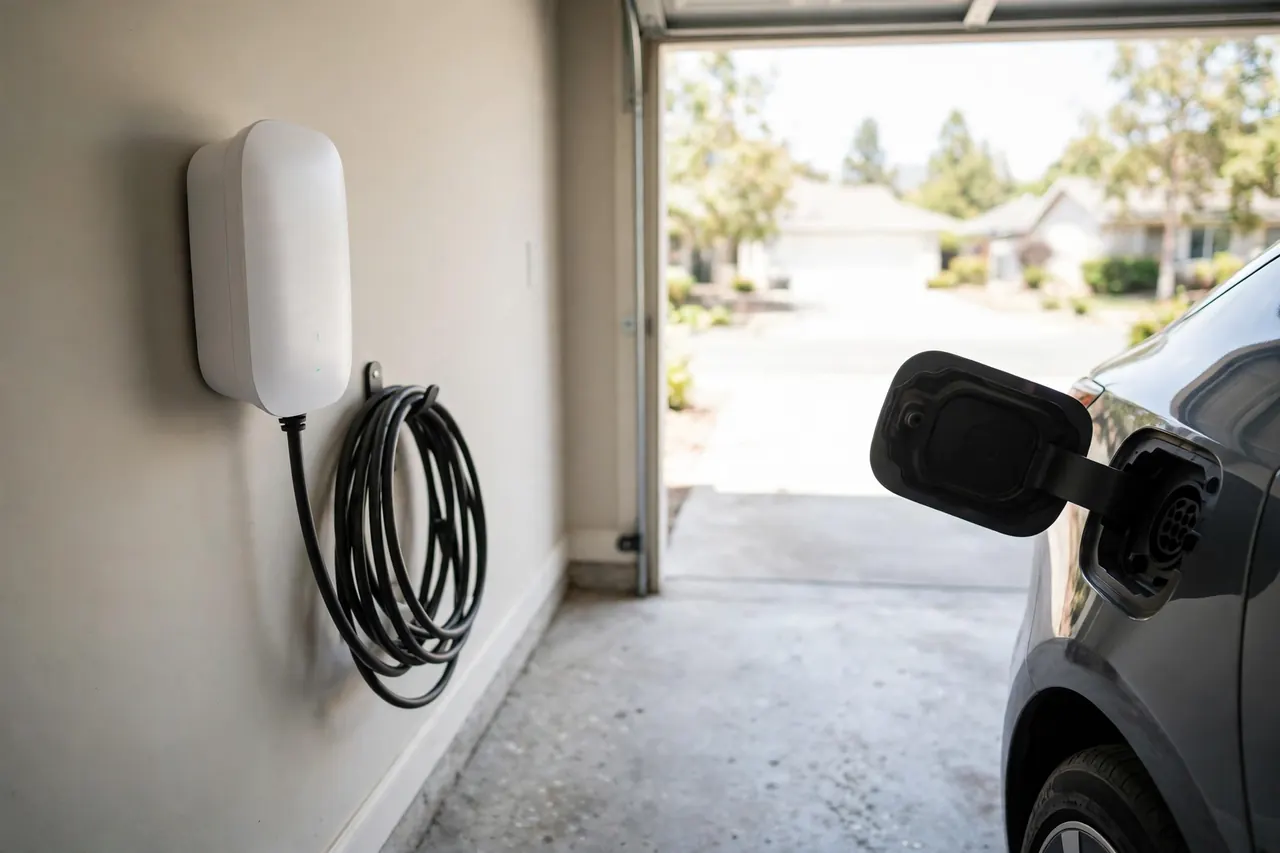
Placement sounds simple — the charger goes where the car parks — but several practical details are worth thinking through in advance. In a garage, consider which side the vehicle's charging port is on, how the cable will reach it without stretching across walkways or being driven over, and whether the charger will be clear of stored items, doors, and anything that could knock it. For a driveway installation, the charger needs a suitable mounting point and appropriate protection from the weather, and the cable route should not create a trip hazard for visitors or a problem for anyone using the path at night. Distance matters too, because the charger needs a circuit run from your panel, and a long or complicated run through finished walls is a different job from a short run in an unfinished garage on the same wall as the panel. Think also about the future: a second vehicle, a change in parking arrangement, or a house move can all affect what placement makes sense. Discussing these details with your electrician before installation day avoids a charger that technically works but is awkward to live with every single day.
Permits and inspection, described generally
In most areas, installing a new circuit for a vehicle charger is electrical work that is subject to local rules, and a permit and an inspection are a normal part of the process. The specifics vary by city and county, so treat any general description — including this one — as an outline rather than a statement of your local requirements. Typically, a permit is obtained before the work begins, the installation is carried out to the applicable electrical code, and an inspector then checks the finished work before it is signed off. This process exists for good reasons: it creates a record that the work was done and checked, it helps protect future owners of the home as well as the current household, and it can matter for insurance and for resale, where undocumented electrical work can raise questions. Ask your electrician who will arrange the permit, whether the fee and scheduling are included in their proposal, and what access the inspector will need. Keeping the permit and inspection paperwork with your other home documents is a small habit that pays off later. If a proposal treats permits as optional, ask why, and be cautious.
Questions to ask an electrician before you commit
A short set of questions will tell you a great deal about both the project and the professional. Ask whether they have carried out a load calculation for your home and what it showed about spare capacity. Ask what they recommend for your driving pattern, and why — a good answer connects the recommendation to how you actually use the vehicle. Ask where they propose to place the charger, how the cable will run from the panel, and what that route means for walls, ceilings, or outdoor areas. Ask about permits and inspection: who arranges them, and what paperwork you will receive. Ask what the proposal includes in full, what would count as an extra, and what happens if the panel needs work that was not expected. Finally, ask about the charger itself: whether they supply it or you do, what happens if it develops a fault, and who you contact in that case. Clear, unhurried answers to these questions, set out in writing, are a strong sign that the project has been properly thought through for your home rather than treated as a one-size-fits-all job.
Living with home charging, day to day
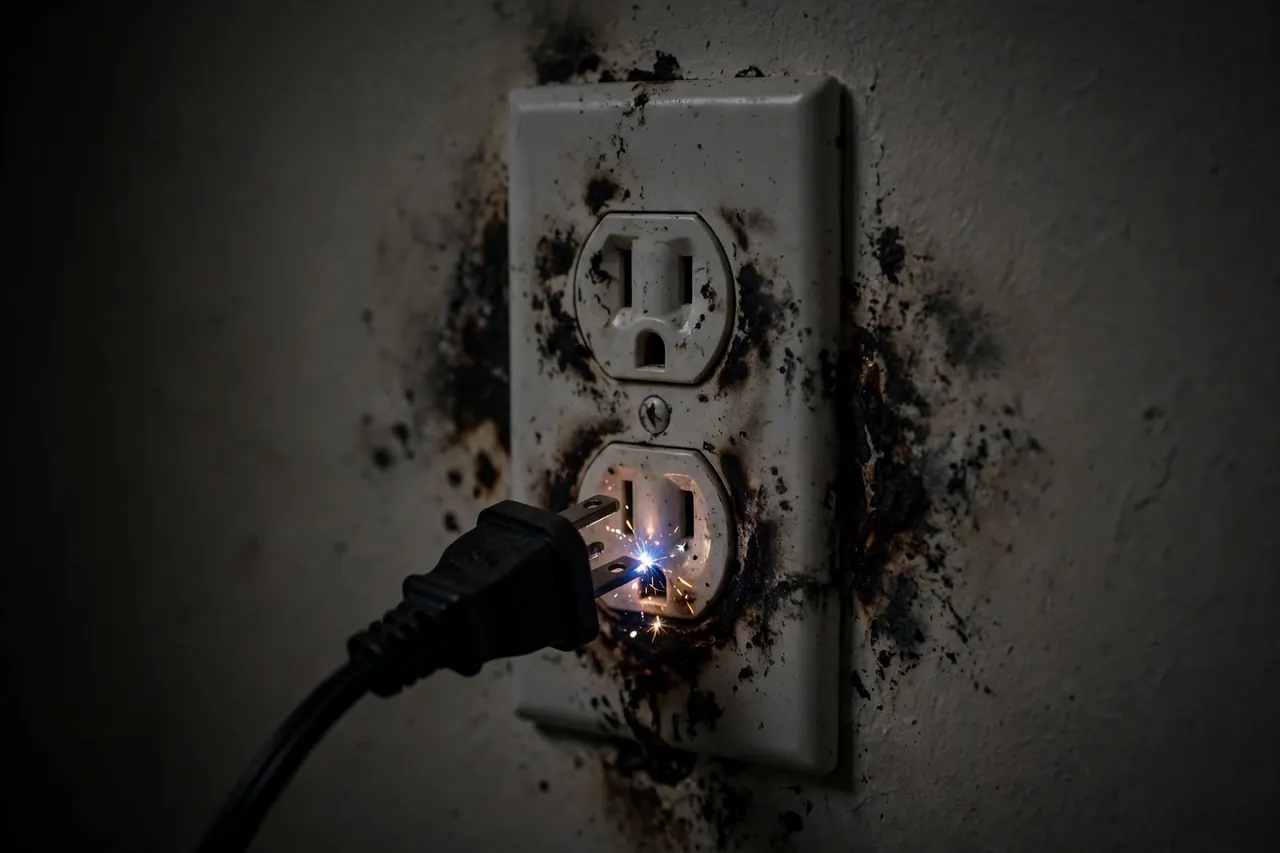
Once installed and inspected, home charging quickly becomes routine, but a few habits keep it that way. Check the cable and connector regularly for damage, cuts, or wear, keep them stored off the ground and away from standing water, and do not use a cable that is damaged or a connector that feels loose or hot. Charge at the times that suit your household's routine and, where your utility offers different arrangements for different times of day, follow the current information from your utility rather than general advice. Keep the area around the charger clear so air can circulate and the equipment is easy to reach, and make sure everyone in the household knows how to stop a charge safely. If you notice repeated breaker trips, a charger that regularly stops mid-charge, warmth around the outlet or panel, or any smell or damage, stop using the equipment and have it checked professionally rather than working around the problem. Treat the installation as part of your home's electrical system, because that is what it is: when you later add other major appliances or change your heating, mention the charger, so the whole picture of your home's load stays accurate.
Renters, condos and older garages
Not every charging setup starts with a single-family home and its own garage. Renters need the property owner's permission for any hardwired installation, and the conversation goes better when it starts with the load calculation and the electrician's plan rather than with the charger itself; a plug-in unit on an existing suitable outlet is sometimes the practical route where permission for new wiring is not available. Condo owners face an extra layer: the parking space, the meter and the panel may all sit in different ownership arrangements, and building management usually has a say in how charging is added, so the assessment begins with the building's rules as much as with the electrics. Older garages bring their own questions - many were wired for a light and a single outlet, some are fed by ageing underground or overhead runs, and a detached garage can need its feed upgraded before charging enters the picture. None of these situations rules home charging out; they change which questions come first. In each case the pattern of this guide holds: establish what the electrical service can support, then choose equipment that fits it, with a professional doing the assessment and the installation.
 PROBLEM
 SOLUTION
Related service: EV Charger Installation
Do I need Level 2 charging, or is Level 1 enough?
Will my electrical panel need upgrading for a charger?
Can a charger be installed if I park on a driveway?
What paperwork should I have when the job is finished?
Need an electrician now?
One call connects you with an independent local electrical professional in your metro.